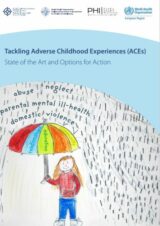
Tackling Adverse Childhood Experiences (ACEs) State of the Art and Options for Action

This new report brings together what is known about ACEs across Europe and internationally, showing the on-going toxic impact that ACEs can have across the life course and how ACEs and their consequences can be prevented. The report supports the development of a trauma-informed society that is invested in action to prevent ACEs and better support those affected by them.

Authors: Sara Wood, Mark Bellis+ 3 more
, Karen Hughes, Zara Quigg, Nadia Butler

Time to Talk Public Health: January 2023 Panel Survey Findings

Time to Talk Public Health is a new nationally representative panel of Welsh residents established by Public Health Wales to enable regular public engagement to inform public health policy and practice.
This month’s survey covered mental well-being, vaccines, risk-taking behaviour and health inequalities.

Authors: Catherine Sharp, Karen Hughes

Gambling Health Needs Assessment for Wales

This health needs assessment aims to review the needs of people experiencing harms from gambling to inform a public health approach to reducing gambling harm in Wales. It includes the epidemiology of harmful gambling, a summary of the evidence base around preventative and treatment interventions, a summary of existing services, and themes identified from qualitative research, which explored in detail the views of people with lived experiences of harmful gambling, service providers and stakeholders.

Authors: Annie Ashman, Claire Beynon

Time to Talk Public Health: Panel Recruitment Survey

Time to Talk Public Health is a new nationally representative panel of Welsh residents established by Public Health Wales to enable regular public engagement to inform public health policy and practice.
This report presents the demographics of the 2,000 panel members recruited during the first stage of the project. Findings from the initial recruitment survey, focusing on cost of living, coronavirus and priorities for Public Health Wales, are also reported.

Authors: Catherine Sharp, Karen Hughes

Be the Change – Procurement that doesn’t cost the earth

Procurement is costly. Welsh public sector spends £7 billion on procurement. A huge 62% of the 2018/19 carbon footprint for NHS Wales was from procurement.
Sustainable procurement can mean considering not buying things at all, buying energy and resource efficient goods, ethical goods such as Fairtrade coffee, or locally sourced products and services which support local businesses. It can also support the delivery of organisational priorities and well-being objectives, and ultimately improve the economic, environmental, social, and cultural well-being of Wales.
The e-guide gives advice for anyone buying goods and services on ways we can take action by thinking about what we need, where it comes from, how long it will last and the impact it has on people, nature and planet.

Authors: Tracy Evans, Eurgain Powell

Biodiversity and Resilience of Ecosystems Duty Report 2022

The first Public Health Wales’ ‘Biodiversity Duty report’ was published in 2019, in response to the enhanced biodiversity and resilience of ecosystems duty under Section 6 of the Environment (Wales) Act 2016. The duty requires public authorities to “maintain and enhance biodiversity (so far as is consistent with the proper exercise of their functions) and in doing so promote the resilience of ecosystems”.
In 2023 we have published an updated Biodiversity and Resilience of Ecosystems Duty Report outlining the steps Public Health Wales is taking to promote biodiversity, highlighting progress made between 2019 and 2022 including against actions identified in our Biodiversity Action Plan, Making Space for Nature.

Authors: Eurgain Powell

International Horizon Scanning and Learning Report: Early childhood education and care

The International Horizon Scanning and Learning reports were initiated as part of the COVID-19 public health response, to support dynamic response and recovery measures and planning in Wales. In spring 2022, the scope of the reports was expanded to cover priority public health topics, including in the areas of health improvement and promotion, health protection, and health care public health.

In focus: Early childhood education and care

Authors: Abigail Malcolm (née Instone), Leah Wargent+ 5 more
, Lauren Couzens (née Ellis), Golibe Ezenwugo, Sara Cooklin-Urbano, Emily Clark, Mariana Dyakova

Understanding health inequalities in Wales using the Blinder-Oaxaca decomposition method

Throughout Wales and the world, health inequality remains a problem that is interconnected with a wider and complex social, economic and environmental dynamic. Subsequently, action to tackle inequality in health needs to take place at a structural level, acknowledging the constraints affecting an individual’s (or community’s) capability and opportunity to enable change. While the ‘social determinants of health’ is an established concept, fully understanding the composition of the health gap is dependent on capturing the relative contributions of a myriad of social, economic and environmental factors within a quantitative analysis. The decomposition analysis sought to explain the differences in the prevalence of these outcomes in groups stratified by their ability to save at least £10 a month, whether they were in material deprivation, and the presence of a limiting long-standing illness, disability of infirmity. The analysis not only quantified the significant health gaps that existed in the years leading up to the COVID-19 pandemic, but it has also shown what determinants of health were most influential. Understanding the factors most closely associated with disparities in health is key in identifying policy levers to reduce health inequalities and improve the health and well-being across populations.

Authors: James Allen, Andrew Cotter-Roberts+ 4 more
, Oliver Darlington, Mariana Dyakova, Rebecca Masters, Luke Munford

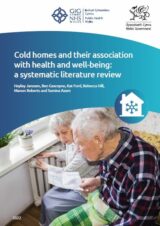
Cold homes and their association with health and well-being: a systematic literature review

As part of a wider project to determine whether current indoor temperature standards for households in Wales are optimal for people’s comfort, health, and well-being, this review aims to identify and appraise the current evidence on the association between cold homes and health and well-being.

Authors: Hayley Janssen, Ben Gascoyne+ 4 more
, Kat Ford, Rebecca Hill, Manon Roberts, Sumina Azam

Associations between Adverse Childhood Experiences (ACEs) and Lifetime Experience of Car Crashes and Burns: A Cross-Sectional Study

Using a UK general population sample, this study has identified relationships between exposure to ACEs and lifetime experience of car crashes and burns; two major markers of unintentional injury. Findings highlight the need for effective interventions to prevent ACEs and reduce their impacts on health and well-being. A better understanding of the relationships between ACEs and unintentional injury, and the mechanisms that link childhood adversity to injury risks, can benefit the development of multifaceted approaches to injury prevention.

Authors: Kat Ford, Karen Hughes+ 3 more
, Katie Cresswell, Nel Griffith, Mark Bellis

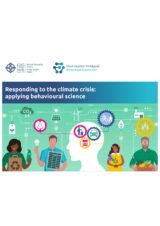
Responding to the climate crisis: applying behavioural science

The climate crisis presents a persistent and growing environmental burden of disease with significant public health consequences. Addressing the crisis via mitigation and adaptation methods requires changing our behaviour. This guide is for professionals/practitioners working on policy, services or communications to tackle the climate crisis, offering useful tips on incorporating behavioural insights and increasing the likelihood of a change in behaviour being adopted.

Authors: Oliver Williams, Ashley Gould

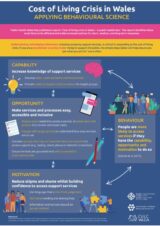
Cost of living crisis in Wales: A public health lens

The cost of living crisis is having, and will continue to have, wide-ranging and long-term impacts on the day-to-day lives of people in Wales.
This report summarises the ways in which the cost of living crisis can impact on health and well-being. It takes a public health lens to identify actions for policy makers and decision-makers to protect and promote the health and well-being of people in Wales in their response to the cost of living crisis, outlining what a public health approach to the crisis could look like in the short and longer-term.

Authors: Manon Roberts, Louisa Petchey+ 4 more
, Aimee Challenger, Sumina Azam, Rebecca Masters, Jo Peden

Predicted and observed impacts of COVID-19 lockdowns: two Health Impact Assessments in Scotland and Wales

Health Impact Assessment is a key approach used internationally to identify positive or negative impacts of policies, plans and proposals on health and well-being. In 2020, HIAs were undertaken in Scotland and Wales to identify the potential health and well-being impacts of the ‘stay at home’ and physical distancing measures implemented at the start of the coronavirus disease (COVID-19) pandemic. There is sparse evidence evaluating whether the impacts predicted in HIAs occur following policy implementation. This paper evaluates the impacts anticipated in the COVID-19 HIAs against actual observed trends.

Authors: Liz Green, Kathryn Ashton+ 3 more
, Mark Bellis, Timo Clements, Margaret Douglas

Improving health and wellbeing: A guide to using behavioural science in policy and practice

This guide for practitioners and policy makers provides a brief introduction to behavioural science and a step-by-step process for developing behaviour change interventions – whether policy, service or communications. It’s designed to support topic-matter experts to optimise their interventions – helping to ensure we more often ‘get what we aim for’. Improving health and wellbeing: a guide to using behavioural science in policy and practice

Authors: Robert West, Ashley Gould

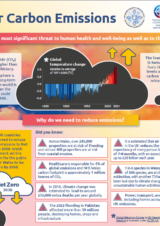
Cutting our Carbon Emissions

This infographic explains why climate change is a significant threat to health. It includes facts about climate change and suggests actions we can all take to reduce our impact to help protect human health as well as the health of the planet.

Authors: Ann Jones

Preventing homelessness in care experienced individuals

The number and rate of children in local authority care in Wales has been increasing year on year and care experienced individuals are more likely to experience homelessness than other adolescents.
There are various models of practice to support young people when they leave care to prevent an experience of homelessness. The aim of this study was to identify and analyse Welsh, United Kingdom (UK) and international models of response in relation to care experienced individuals (aged 16-25) and homelessness prevention, and to identify promising practice in this field and further areas for improvement.
This study sought to give a voice to care experienced young people. It summarises the international evidence and the lived experience of care experienced individuals and provides suggestions from service providers on new models of care and how these could best be implemented.
It will be of interest to policy makers and housing and social care practitioners alike.

Authors: Claire Beynon, Laura Morgan+ 5 more
, Laura Evans, Oliver Darlington, Louise Woodfine, Lewis Brace, Manon Roberts

Communities and Climate Change in a Future Wales

Communities and Climate Change in a Future Wales explores how particular communities feel about the impacts of climate change, and how these impacts might exacerbate existing inequalities. The project was designed collaboratively and involved participants in long-term thinking about climate and inequalities, considering what problems might need preventing, and integrating the findings with other studies and projects in the field.
The project reports not only contain the findings from this work, but also provide resources for policymakers to implement similar creative futuring techniques to involve communities in long-term thinking.
The Storybook is produced by FLiNT under Partnership Agreement between FLiNT and the Office of the Future Generations Commissioner for Wales, and in association with Public Health Wales.

Authors: Genevieve Liveley, Will Slocombe+ 1 more
, Emily Spiers

International Horizon Scanning and Learning Report: COVID-proofing the educational environment: 4-18 years

The International Horizon Scanning and Learning reports were initiated as part of the COVID-19 public health response, to support dynamic response and recovery measures and planning in Wales. In spring 2022, the scope of the reports was expanded to cover priority public health topics, including in the areas of health improvement and promotion, health protection, and health care public health.

In focus: COVID-proofing the educational environment: 4-18 years

Authors: Mark Bellis, Mariana Dyakova+ 5 more
, Anna Stielke, Abigail Malcolm (née Instone), James Allen, Lauren Couzens (née Ellis), Emily Clark

Facilitators, Barriers and Views on the Role of Public Health Institutes in Promoting and Using Health Impact Assessment—An International Virtual Scoping Survey and Expert Interviews

Public health institutes have an important role in promoting and protecting the health and well-being of populations. A key focus of such institutes are the wider determinants of health, embracing the need to advocate for ‘Health in All Policies’ (HiAP). A valuable tool to support this is the health impact assessment. This scoping study aims to support public health institutes to advocate more successfully for the use of health impact assessments and HiAP in order to promote and protect health, well-being and equity. It highlights the enablers and barriers to the use of HIA in the contexts of the participants and suggests some actions which PHIs can take and Units they can learn from. The results from this study can serve as a platform to help build knowledge, networks and expertise, to help support a ‘Health in All Policies’ approach and address inequalities which exist in all societies.

Authors: Liz Green, Kathryn Ashton+ 4 more
, Lee Parry-Williams, Mariana Dyakova, Timo Clemens, Mark Bellis

What Works in the Prevention and Early Intervention of ACEs at the Community Level? Identifying and Supporting Projects across Wales

Previous research undertaken by ACE Hub Wales indicated that community projects across Wales provide support for community members in respect of a range of adversities. Building on this research, the aim of this project is to identify and map further community projects; to understand the most effective methods of supporting these projects as well as barriers to engagement; and finally to explore the impact of services on community groups

Authors: Samia Addis, Joanne C. Hopkins

Parental adverse childhood experiences and perpetration of child physical punishment in Wales

In 2022, Wales joined the growing number of countries to ban physical punishment of children in all settings. Using data collected a year prior to legislative change, this study explores relationships between Welsh parents’ exposure to ACEs whilst growing up and their use of physical punishment towards children.

Authors: Karen Hughes, Kat Ford+ 2 more
, Mark Bellis, Rebekah Amos

Climate Change and Health in Wales: Views from the public

This report presents initial findings from a survey of adult residents in Wales on their perceptions of climate change and health. Whilst work to understand and mitigate climate change is gaining momentum in Wales, there remains a lack of information on population views and behaviours. Such data are critical for the co-creation of effective and acceptable approaches to climate change that help protect public health; the targeting of key messages and information; and the establishment of long-term solutions across Wales that will continue to be supported across multiple generations. To address this gap, a public survey was developed to seek the population’s views about climate change, its relationship with health, their current climate friendly behaviours, their willingness to engage in action, and views on policy solutions. This report presents initial findings from the survey, providing population-level views on climate change among adult residents in Wales.

Authors: Sara Wood, Karen Hughes+ 3 more
, Rebecca Hill, Natasha Judd, Mark Bellis

Has Brexit changed how Wales participates in global infectious disease prevention, preparedness and response?

The COVID-19 pandemic has pushed infectious diseases to the top of government agendas around the world. Simultaneously, Brexit has influenced how the UK, and therefore Wales collaborates with international partners on infectious diseases.
Timelines for Brexit and the COVID-19 pandemic overlapped, many post-Brexit arrangements were still in development. The next international public health emergency will test the new systems in Wales/the UK.
Brexit has been shown to have the potential to impact on the health and well-being of the Welsh population and is therefore a consideration in the context of infectious disease prevention, preparedness and response.
This briefing explores how the UK’s exit from the EU has changed its international relationships and processes for dealing with future infectious disease threats.

Authors: Katie Cresswell, Louisa Petchey

Cost of health inequality to the NHS in Wales

There are wide inequalities in health and healthcare use between people living in more deprived neighborhoods and those living in less deprived neighborhoods in Wales. Tackling health inequality through a combination of health promotion and early intervention policies targeted toward deprived communities could yield substantial improvement in health and wellbeing, as well as savings for the Welsh NHS.

Authors: Rajendra Kadel, James Allen+ 8 more
, Oliver Darlington, Rebecca Masters, Brendan Collins, Joanna M. Charles, Miqdad Asaria, Mariana Dyakova, Mark Bellis, Richard Cookson

A Service Evaluation of the Delivery and Implementation of a Hospital-Based Violence Prevention Team within the University Hospital of Wales

When it was established in 2019, the Violence Prevention Unit commissioned a new nurse-led intervention at the University Hospital of Wales, with the understanding that Emergency Departments have a unique opportunity to intervene early, and prevent victims of violence from being hurt again. The evaluation of the Violence Prevention Team explores the development and implementation of the service within the Emergency Department, and the nature and level of support provided to patients with violence-related injury. The evaluation included interviews with clinical staff and other professionals, for example, police, as well as analysis of service data.

Authors: Annemarie Newbury

The public health impact of loneliness during the COVID‑19 pandemic

Social distancing measures have been effective in mitigating the spread of COVID-19; however, they have imposed a significant burden on population mental health and well-being. This study established an association between loneliness and self-reported worsening health during the pandemic, and identified factors increasing the risk of loneliness. The effect that social control measures have on loneliness should influence the design of future public health policy.

Authors: James Allen, Oliver Darlington+ 2 more
, Karen Hughes, Mark Bellis

International Horizon Scanning and Learning Report: The Cost of Living Crisis

The International Horizon Scanning and Learning reports were initiated as part of the COVID-19 public health response, to support dynamic response and recovery measures and planning in Wales. In spring 2022, the scope of the reports was expanded to cover priority public health topics, including in the areas of health improvement and promotion, health protection, and health care public health.
In focus: Cost of living crisis

Authors: Emily Clark, Anna Stielke+ 3 more
, Abigail Malcolm (née Instone), James Allen, Mariana Dyakova

Exploring the social value of Public Health Institutes: An international scoping survey and expert interviews

Making the case for investing in preventative public health by illustrating not only the health impact but the social, economic and environmental value of Public Health Institutes is imperative. This is captured by the concept of Social Value, which when measured, demonstrates the combined intersectoral value of public health. This research can inform future work to understand how to measure the holistic social value of Public Health Institutes, in order to strengthen institutional capacity and impact, as well as to achieve a more equitable society, and a more sustainable health system and economy, making the case for investing in public health, as we recover from COVID-19.

Authors: Kathryn Ashton, Liz Green+ 4 more
, Timo Clemens, Lee Parry-Williams, Mariana Dyakova, Mark Bellis