This publication focuses on the use of Health Impact Assessment (HIA) by public bodies in Wales as a process that can support policymakers and those involved in decision making to maximise well-being benefits, minimise harm to health, and avoid widening health inequalities.
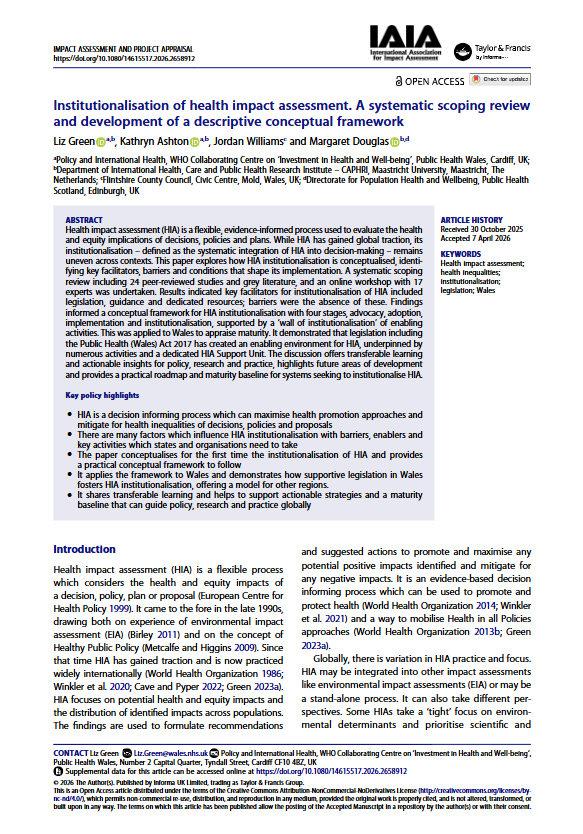
Liz Green and Kathryn Ashton of the Wales Health Impact Assessment Support Unit (WHIASU) recently published an article titled ‘Institutionalisation of health impact assessment. A systematic scoping review and development of a descriptive conceptual framework’ in the journal of Impact Assessment and Project Appraisal.
The paper is the first practical framework for the field/other nation states/organisations to use to measure how mature they are (or not) in HIA. It highlights the enablers and barriers and the 4 key stages of HIA institutionalisation, namely: advocacy, adoption, implementation and finally institutionalisation. These are mapped against a practical ‘wall of institutionalisation’ which contains the critical activities, factors and facilitators needed for institutionalising HIA. Other nation states and organisations can use these to measure themselves against to identify how mature they are (or not) in the path to institutionalisation and critical factors they presently have or need to strive for.
The Welsh Health Equity Solutions Platform (WHESP) has published a new Spotlight Feature Blog exploring how the Health Impact Assessment (Wales) Regulations is set to transform strategic decision-making and strengthen health equity across Wales.
Authors: Zuwaira Hashim, Lauren Couzens (née Ellis)+ 2 more
This guide is designed for organisations and practitioners who wish to undertake a HIA voluntarily as part of good practice. The guide: • Encourages the proactive, best practice use of HIA to strengthen decision-making and consider inequalities • Is not limited to strategic decisions but is suitable for a range of decisions • Outlines the HIA process and flexible methods that can be tailored to projects, policies, or plans of any scale • Promotes a participatory approach by engaging with stakeholders to identify a wide range of positive and unintended negative impacts.
This guide provides step-by-step support to public bodies required to carry out HIAs under the HIA regulations in Wales. The Guide:
• Explains the legal requirements and when an HIA is needed • Sets out a clear process and steps to follow, from start to finish • Includes practical tools, templates, and examples to help ensure compliance and transparency.
This guidance is designed to help you understand the Regulations, but it should not be treated as a comprehensive or full explanation of the law in this area. From 06 April 2027, it is the responsibility of the relevant organisations and individuals to make sure they comply.
You should always check the full legislation and consider getting independent legal or professional advice if you’re unsure about your obligations.
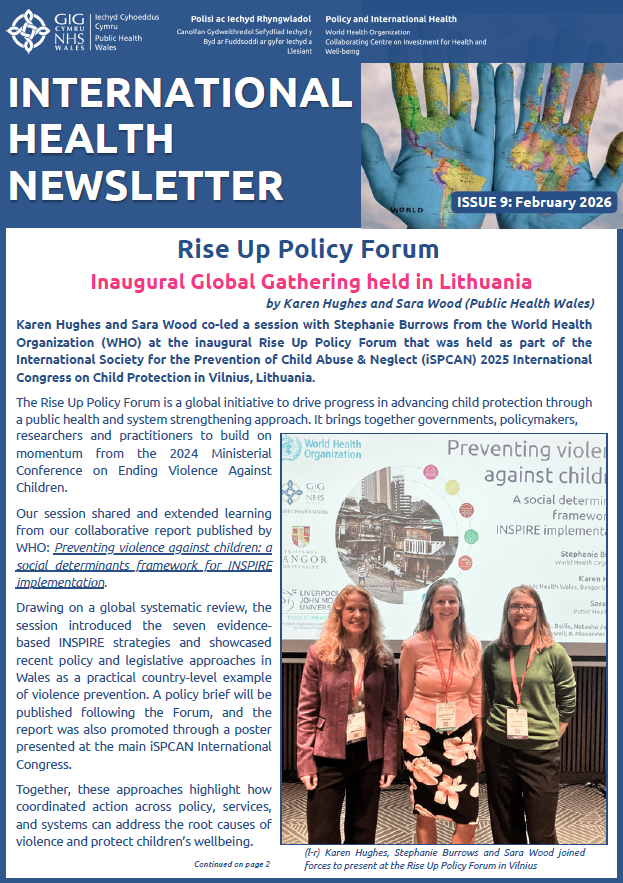
The International Health Coordination Centre’s (IHCC) International Health Newsletter promotes and shares international news, events and initiatives with partners across Wales and beyond.
The newsletter was piloted in May 2023, thereon issued quarterly.
View the latest issue here.
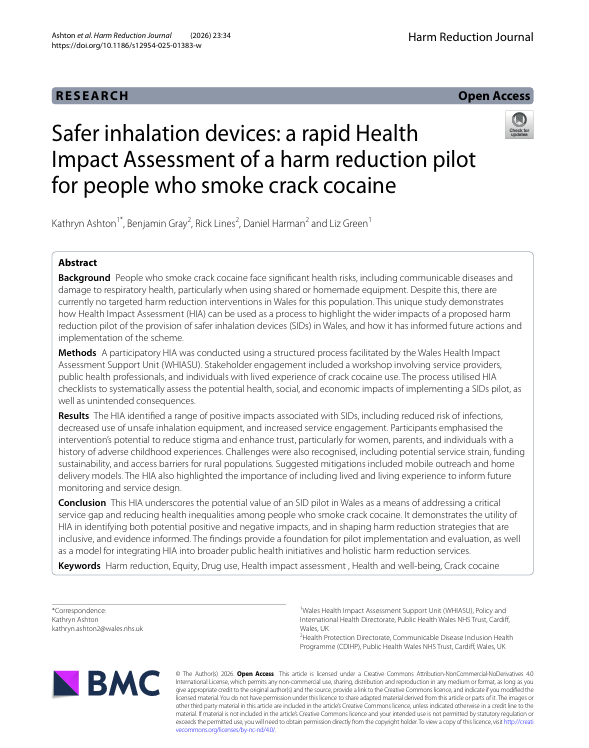
Authors: Laura Holt, Jo Harrington+ 5 more
, Karen Hughes, Sara Wood, Joanne C. Hopkins, Keira Charteris, Liz Green
This study explores how a Health Impact Assessment (HIA) was used to evaluate a proposed harm reduction pilot programme in Wales providing safer inhalation devices (SIDs) for people who smoke crack cocaine, a group facing significant health risks and lacking targeted harm reduction services. Through stakeholder engagement, including people with lived experience, the HIA identified potential benefits such as reduced risk of infections, safer equipment use, and improved engagement with services, alongside challenges like resource pressures and access issues.
Overall, the findings highlight that an SID pilot could help reduce health inequalities and stigma, while demonstrating the value of HIA in shaping inclusive, evidence-informed public health interventions and guiding future implementation and evaluation.
This briefing paper, developed by the Wales Health Impact Assessment Support Unit (WHIASU), discusses the potential health, well-being and equity impacts of trade tariffs on the Welsh population. It is aimed at stakeholders in Wales working in the areas of trade, public health and health services to support them to better understand the potential impacts that trade tariffs can have on population health.
It begins with a brief introduction to trade agreements and to tariff and non-tariff barriers to trade. It then outlines the most recent trade deals the United Kingdom (UK) has signed up to before discussing how tariffs can affect population health, well-being and equity in Wales. It concludes with some options on how health and well-being can be better considered in trade agreements and identifying the impacts of tariffs. Finally, it presents two case study examples of how trade can impact the people and economy in Wales.
This guidance aims to support those working across urban and rural local authorities in Wales to consider, include and promote health and wellbeing through Local Development Plans (LDPs) and the planning system. It provides evidence and guidance about how this can be achieved and why the links between planning and health are so important. The guide can form the basis of an evidence background paper for LDPs or supplementary planning guidance (SPG) and includes five sections.
This report presents a summary of the methods and key findings of a review of how health is included in case study Local Development Plans (LDPs) in Wales and the effectiveness of LDPs in supporting the delivery of health and well-being priorities. The report is intended to inform and support the Wales Health Impact Assessment Support Unit.
The planning system in Wales operates at three levels: national, regional, and local. Local Development Plans (LDPs) guide land use and development at the local authority level. This report, commissioned by Public Health Wales, Wales Health Impact Assessment Support Unit (WHIASU), presents a summary review of how health is included in Local Development Plans (LDPs) across Wales. The primary aim of this report is to inform WHIASU’s approach to supporting local governments in integrating health considerations into LDPs. The findings will also add value for other stakeholders working to improve health and wellbeing as it highlights opportunities for strengthening the inclusion of health in local plans. The review of Local Development Plans across Wales revealed several opportunities to strengthen their role in promoting population health and reducing health inequities. Currently, most LDPs address health-related factors indirectly through planning policies such as housing, transportation, and environmental quality. Few plans explicitly define health or health inequalities, and none include specific health indicators or measures. While all LDPs incorporate elements that influence social determinants of health, such as access to services and quality of housing, these connections to health outcomes are often implicit rather than clearly articulated. Our analysis found that LDPs already contain many elements that can support population health and wellbeing. By making these health implications explicit, defining key health concepts clearly, and incorporating measurable health indicators, LDPs could more effectively advance their potential to improve health outcomes and reduce health inequities across Welsh communities.
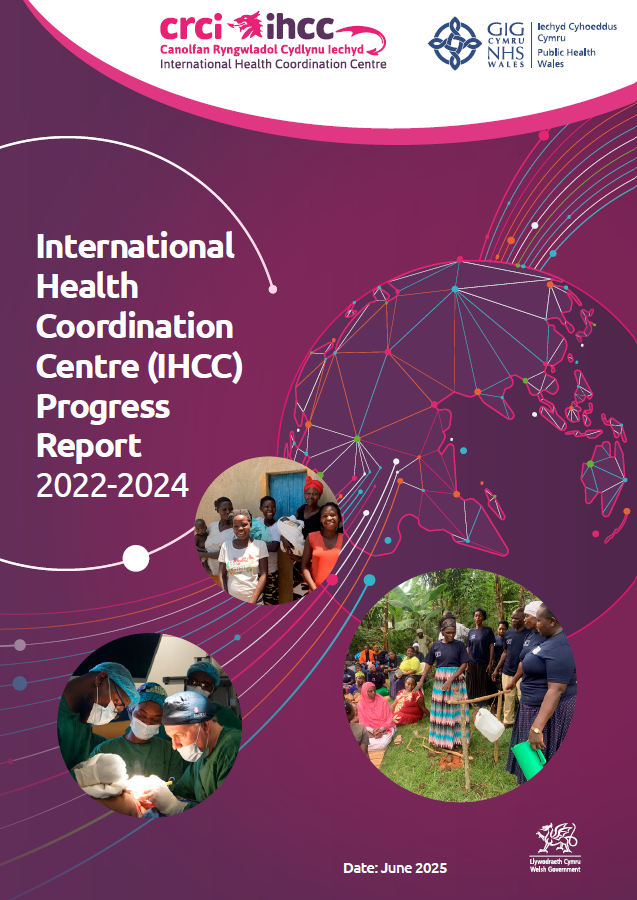
This report describes activities of the International Health Coordination Centre (IHCC), and the wider international health activity and partnership working which took place within NHS Wales between 2022 and 2024. It outlines the IHCC’s progress in driving and enabling implementation of the Charter for International Health Partnerships in Wales (the Charter) across the NHS and demonstrates the tools used to enable shared learning, facilitate cross-NHS and cross-sector synergies, and maximise benefits to the health and well-being of the people in Wales and beyond.
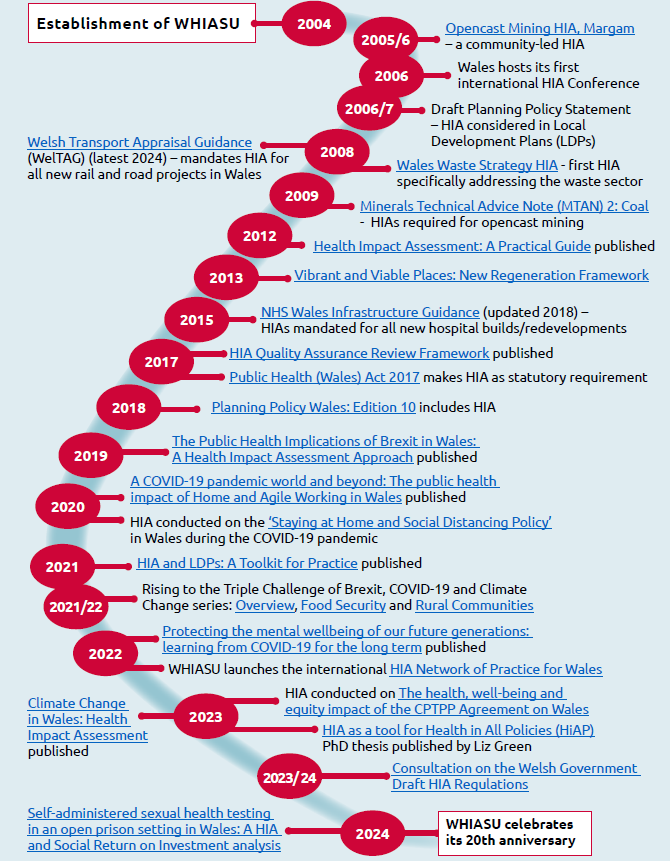
The 20th anniversary of WHIASU marks two decades of advancing HIA as a vital tool for healthier decision-making and reducing health inequalities in Wales. Established in 2004, WHIASU has led the way in enabling the integration of HIA into policy at local, regional and national levels.
The timeline highlights key milestones, documents, and publications in WHIASU’s history and the practice of HIA in Wales. Looking ahead, WHIASU will continue to champion HIA and Health in All Policies (HiAP), supporting public bodies in implementing upcoming HIA regulations under the Public Health Act (Wales) Act 2017.
Authors: Michael Fletcher, Kathryn Ashton+ 7 more
, Laura Evans, Cheryl Williams, Abigail Malcolm (née Instone), Catrin Lyddon, Lee Parry-Williams, Nerys Edmonds, Liz Green
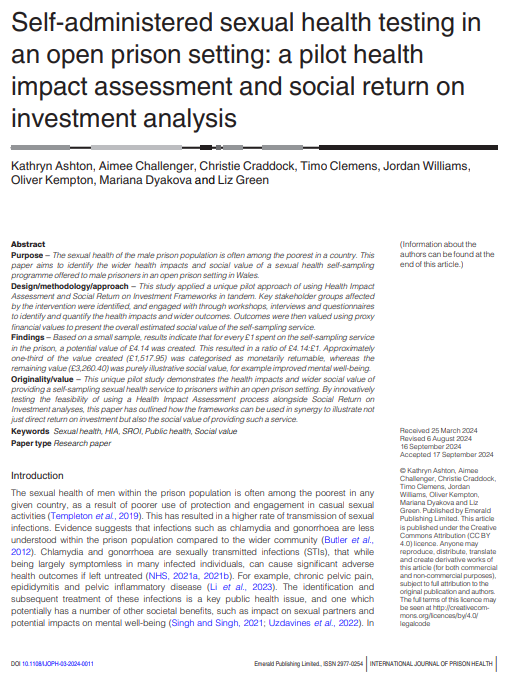
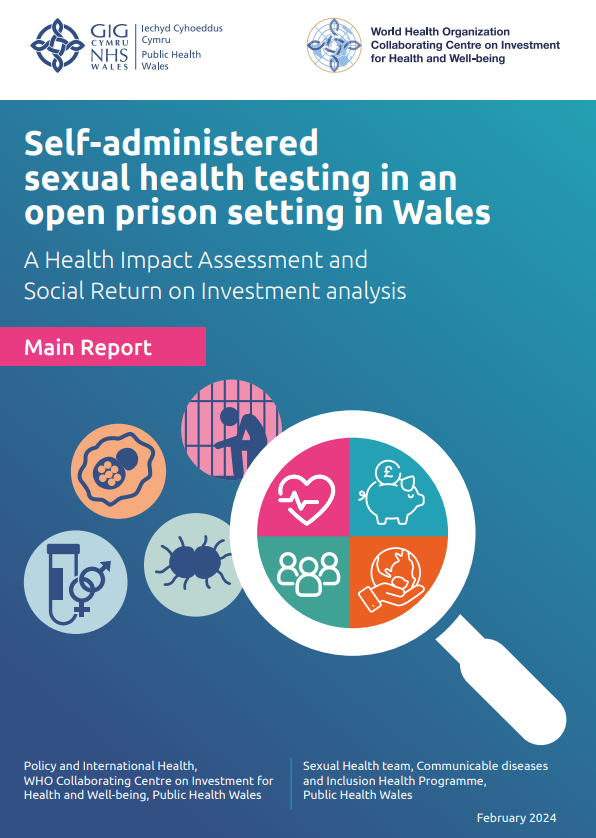
The sexual health of the male prison population is often among the poorest in a country. This paper aims to identify the wider health impacts and social value of a sexual health self-sampling programme offered to male prisoners in an open prison setting in Wales.
This study applied a unique pilot approach of using Health Impact Assessment and Social Return on Investment Frameworks in tandem. Key stakeholder groups affected by the intervention were identified, and engaged with through workshops, interviews and questionnaires to identify and quantify the health impacts and wider outcomes. Outcomes were then valued using proxy financial values to present the overall estimated social value of the self-sampling service.
Based on a small sample, results indicate that for every £1 spent on the self-sampling service in the prison, a potential value of £4.14 was created. This resulted in a ratio of £4.14:£1. Approximately one-third of the value created (£1,517.95) was categorised as monetarily returnable, whereas the remaining value (£3,260.40) was purely illustrative social value, for example improved mental well-being.
This unique pilot study demonstrates the health impacts and wider social value of providing a self-sampling sexual health service to prisoners within an open prison setting. By innovatively testing the feasibility of using a Health Impact Assessment process alongside Social Return on Investment analyses, this paper has outlined how the frameworks can be used in synergy to illustrate not just direct return on investment but also the social value of providing such a service.
Authors: Kathryn Ashton, Aimee Challenger+ 6 more
, Christie Craddock, Timo Clemens, Jordan Williams, Oliver Kempton, Mariana Dyakova, Liz Green
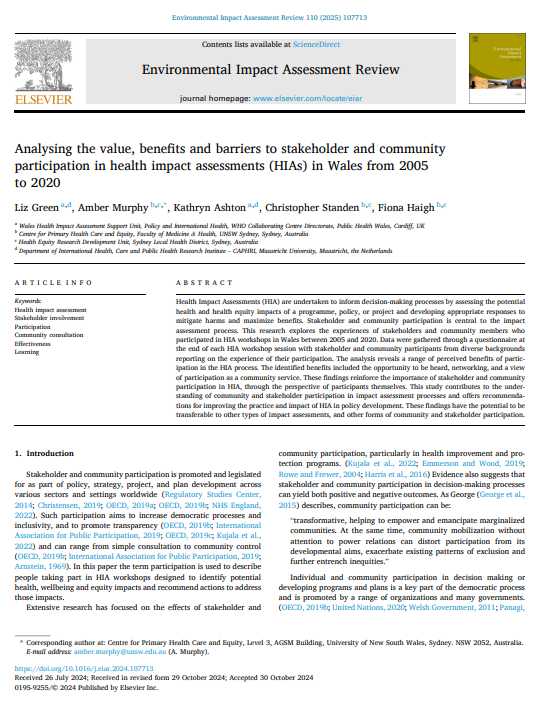
Health Impact Assessments (HIA) are undertaken to inform decision-making processes by assessing the potential health and health equity impacts of a programme, policy, or project and developing appropriate responses to mitigate harms and maximize benefits. Stakeholder and community participation is central to the impact assessment process. This research explores the experiences of stakeholders and community members who participated in HIA workshops in Wales between 2005 and 2020. Data were gathered through a questionnaire at the end of each HIA workshop session with stakeholder and community participants from diverse backgrounds reporting on the experience of their participation. The analysis reveals a range of perceived benefits of participation in the HIA process. The identified benefits included the opportunity to be heard, networking, and a view of participation as a community service. These findings reinforce the importance of stakeholder and community participation in HIA, through the perspective of participants themselves. This study contributes to the understanding of community and stakeholder participation in impact assessment processes and offers recommendations for improving the practice and impact of HIA in policy development. These findings have the potential to be transferable to other types of impact assessments, and other forms of community and stakeholder participation.
Authors: Liz Green, Amber Murphy+ 3 more
, Kathryn Ashton, Christopher Standen, Fiona Haigh
Reflections from the Wales Health Impact Assessment Support Unit (WHIASU), Policy and International Health, World Health Organization (WHO) Collaborating Centre on Investment for Health and Well-being, Public Health Wales.
A toolkit is available to staff whose work involves international health and working with global stakeholders. The implementation toolkit helps staff in Health Boards and NHS Trusts translate the Charter for International Health Partnerships in Wales into operational practices.
In 2016, the United Kingdom voted to exit the European Union, which was surrounded by political and social uncertainty. The United Kingdom now negotiates its own trade agreements, and in March 2023, it agreed to join the Comprehensive and Progressive Trans-Pacific Partnership Agreement (CPTPP). A health impact assessment (HIA) was undertaken in 2022–23 to predict the potential impact of the CPTPP on the health and well-being of the Welsh Population. This paper explores the HIA findings and highlights the value of the approach in engaging with stakeholders and informing policymakers. This HIA followed a standard five-step approach which involved a literature review to identify potential health impacts, qualitative interviews with cross-sectoral stakeholders and the development of a community health profile. The HIA identified potential impacts across the wider determinants of health and specific vulnerable population groups. Investor state dispute settlement mechanisms, economic uncertainty and loss of regulatory policy space were identified as key pathways for health impacts. The findings have been beneficial in informing decision-makers to prepare for the CPTPP in Wales using an evidence-informed approach. This work has demonstrated the value of a HIA approach that uses a transparent process to mobilise a wide range of evidence, resulting in transferrable learning.
Authors: Liz Green, Kathryn Ashton+ 6 more
, Leah Wargent, Courtney McNamara, Michael Fletcher, Louisa Petchey, Timo Clemens, Margaret Douglas
Climate change is recognised as the biggest threat to global health of the 21st century and impacts on health and wellbeing through a range of factors. Due to this, the need to take action in order to protect population health and wellbeing is becoming ever more urgent.
In 2019, Public Health Wales carried out a comprehensive mixed-method Health Impact Assessment (HIA) of climate change. Unlike other risk assessments, it appraised the potential impact of climate change on health and inequalities in Wales through participatory workshops, stakeholder consultations, systematic literature reviews and case studies.
The HIA findings indicate potential impacts across the wider determinants of health and wellbeing. For example, air quality, excess heat/cold, flooding, economic productivity, infrastructure, and community resilience. A range of impacts were identified across population groups, settings, and geographical areas.
These findings can inform decision-makers to prepare for climate change plans and policies using an evidence-informed approach. The work has demonstrated the value of a HIA approach by mobilising a range of evidence through a transparent process, resulting in transferrable learning for others.
Authors: Liz Green, Kathryn Ashton+ 6 more
, Nerys Edmonds, Michael Fletcher, Sumina Azam, Karen Hughes, Phil Wheater, Mark A Bellis
This report outlines findings from a study that aims to understand the health impacts and social return on investment of a self-sampling service for Sexually Transmitted Infections (STIs) in an open prison setting in Wales. The study applies an innovative approach by using a Health Impact Assessment (HIA) lens and approach, in combination with the Social Return on Investment (SROI) framework.
Authors: Kathryn Ashton, Aimee Challenger+ 4 more
, Andrew Cotter-Roberts, Christie Craddock, Jordan Williams, Liz Green
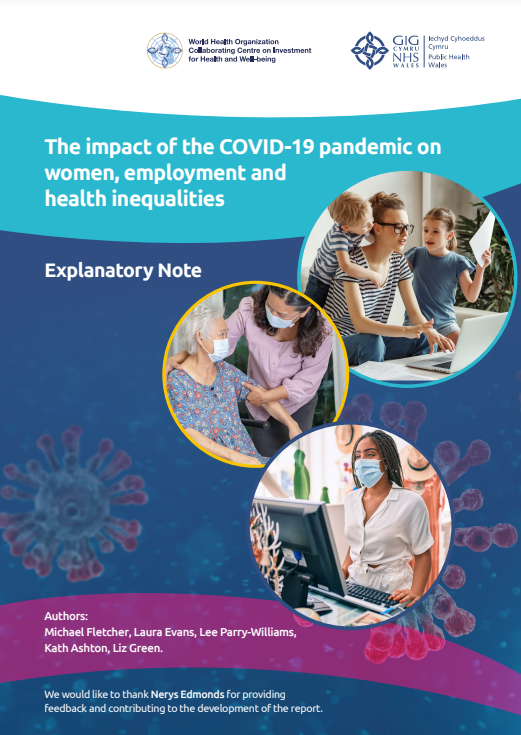
The infographic summarises the findings, looking at the Population Groups and Determinants of Health impacted, along with the key statistics, mitigating actions and potential areas of future research. The Explanatory Note goes into further detail on the above, giving a breakdown of the evidence that informed our positive and negative findings on women, employment and health inequalities. It also offers readers the chance to see the HIA methodology that was used by the team.
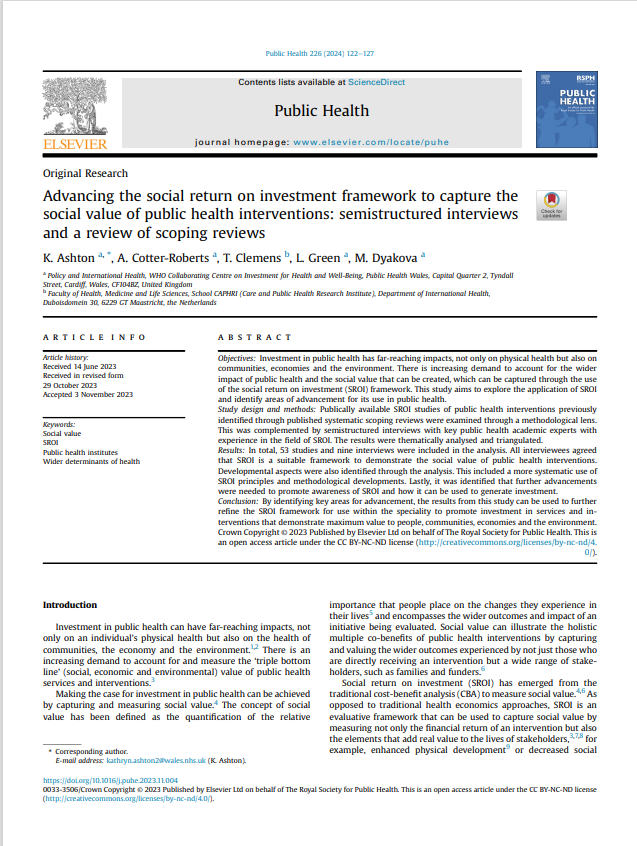
Investment in public health has far-reaching impacts, not only on physical health but also on communities, economies, and the environment. There is increasing demand to account for the wider impact of public health and the social value that can be created, which can be captured through the use of the social return on investment (SROI) framework. This study aims to explore the application of SROI and identify areas of advancement for its use in public health.
Authors: Kathryn Ashton, Andrew Cotter-Roberts+ 3 more
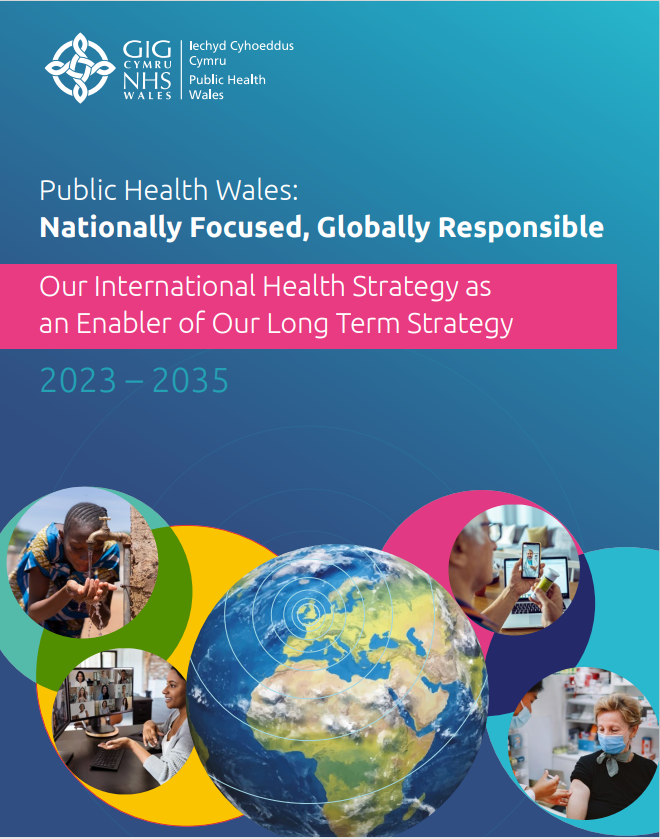
Public Health Wales has updated its 2017 International Health Strategy to better reflect the significant changes in the global landscape and to enable Public Health Wales’ new Long-Term Strategy.
This briefing focusses on adaptation to address climate change and the application of Health Impact Assessment (HIA) as a process that can support policy makers to maximise wellbeing benefits, minimise harm to health, and avoid widening health inequalities when designing adaptation policies. It contains five case studies – two international and three from Wales, and provides action oriented examples of putting HIA into practice.
This health impact assessment (HIA) is a strategic and comprehensive appraisal of the potential implications of climate change on population health in Wales. It provides robust evidence to inform public bodies, agencies and organisations in their preparations for, and responses to, climate change and climate change events. It aims to support adoption of policies and plans that can promote and protect health and wellbeing for all in Wales and in those population groups and geographical areas particularly at risk of negative impacts.
The outputs of the HIA available to download here are:
• An evidence based HIA Summary report • Individual chapters on the evidence of impact of climate change on the wider determinants of health and population groups in Wales • A set of 4 infographics • A PowerPoint slide deck • A Technical Report
This report provides a short summary of the findings of a Health Impact Assessment (HIA) of the Comprehensive and Progressive Trans-Pacific Partnership (CPTPP) Agreement on Wales. This report is a high-level, evidence-based strategic overview. It summarises the main health, well-being and equity impacts that could potentially occur in the short and longer-term following the UK’s accession to the CPTPP.
Authors: Liz Green, Leah Wargent+ 6 more
, Michael Fletcher, Louisa Petchey, Laura Morgan, Margaret Douglas, Sumina Azam, Courtney McNamara
The Welsh Health Equity Solutions Platform will act as a repository of information, case studies, and previous interventions used to help combat inequity and share good practice in Wales. The platform features searchable data tools and a report-generating function which allows users to input their search terms and produce outputs related to those terms. The platform also offers a spotlight feature that can be used to highlight particular solutions or themes. The team will develop the platform over time to add additional content and features.
Authors: Rebecca Hill, Jo Peden+ 12 more
, Lauren Couzens (née Ellis), Mariana Dyakova, Daniela Stewart, James Allen, Liz Green, Rebecca Masters, Leah Wargent, Sara Cooklin-Urbano, Golibe Ezenwugo, Abigail Malcolm (née Instone), Jason Roberts, Rajendra Kadel
This report outlines the International Health Coordination Centre’s (IHCC) progress in driving and enabling implementation of the Charter for International Health Partnerships in Wales (the Charter) across the NHS over the last four years. It also provides examples of international health partnership working from across the Health Boards and NHS Trusts. The report highlights the IHCC’s plans and aspirations for the future, in supporting a healthier, more equal, globally responsible, resilient and prosperous NHS in Wales.
The report highlights the IHCC’s role, achievements, ways of working, collaborative structures and activities; and outlines the evolution of the IHCC in relation to global, UK, national and local developments. These include challenges and opportunities such as the UK withdrawal from the European Union (‘Brexit’), the COVID-19 pandemic and the ‘cost of living’ crisis. It demonstrates the tools used to enable shared learning, facilitate cross-NHS and cross-sector synergies, and maximise benefits to the health and well-being of the people in Wales and beyond.
To provide the best experiences, we use technologies like cookies to store and/or access device information. Consenting to these technologies will allow us to process data such as browsing behavior or unique IDs on this site. Not consenting or withdrawing consent, may adversely affect certain features and functions.
Functional Always active
The technical storage or access is strictly necessary for the legitimate purpose of enabling the use of a specific service explicitly requested by the subscriber or user, or for the sole purpose of carrying out the transmission of a communication over an electronic communications network.
Preferences
The technical storage or access is necessary for the legitimate purpose of storing preferences that are not requested by the subscriber or user.
Statistics
The technical storage or access that is used exclusively for statistical purposes.The technical storage or access that is used exclusively for anonymous statistical purposes. Without a subpoena, voluntary compliance on the part of your Internet Service Provider, or additional records from a third party, information stored or retrieved for this purpose alone cannot usually be used to identify you.
Marketing
The technical storage or access is required to create user profiles to send advertising, or to track the user on a website or across several websites for similar marketing purposes.