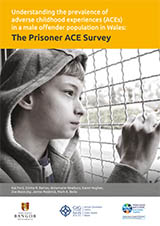
The prisoner ACE survey surveyed a prison population to understand how many ACEs they had experienced and the associations between ACEs and offending histories.
This study compares UK nightlife users’ ideal levels of drunkenness to their expected drunkenness on a night out and their perceptions of descriptive nightlife norms
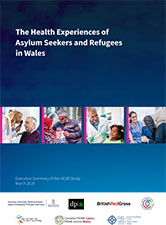
This study addresses the gaps in knowledge of health services experiences of adult asylum seekers and refugees in Wales, to inform policy and practice with the view to realising Wales’ ambition to become a Nation of Sanctuary, and supporting universal health coverage in line with the Well-being of Future Generations Act.
Authors: Ashrafunessa Khanom, Wdad Alanazy+ 20 more
, Lauren Couzens (née Ellis), Bridie Angela Evans, Lucy Fagan, Alex Glendenning, Matthew Jones, Ann John, Talha Khan, Mark Rhys Kingston, Catrin Manning, Sam Moyo, Alison Porter, Melody Rhydderch, Gill Richardson, Grace Rungua, Daphne Russell, Ian Russell, Rebecca Scott, Anna Stielke, Victoria Williams, Helen Snooks
A study to examine if data routinely collected by child death overview panels (CDOPs) could be used to measure ACE exposure and examine any associations between ACEs and child death categories. Data covering four years (2012-2016) of cases from a CDOP in North West England were studied.
‘Sustainability on the Agenda’ highlights some of the practical ways in which we can contribute to Wales’ Well-being Goals when we arrange meetings and events/ conferences.
Public Health Wales’ ‘Biodiversity Duty report’ has been produced in response to the enhanced biodiversity and resilience of ecosystems duty under Section 6 of the Environment (Wales) Act 2016 which requires that public authorities must seek to maintain and enhance biodiversity so far as is consistent with the proper exercise of their functions and in doing so promote the resilience of ecosystems.
The Biodiversity and Resilience of Ecosystems Duty Report 2019 outlines how Public Health Wales has addressed its biodiversity duty under the Environment (Wales) Act 2016 and achieved the actions identified in its Biodiversity Plan, Making Space for Nature.
‘A Healthy Heritage’ highlights some of the practical ways in which we can contribute to Wales’ Well-being Goals by supporting our culture and Welsh language in the workplace.
By preserving and learning from our history and culture we can re-energise, safeguard and share our heritage for future generations.
Our heritage is a key tool to support positive change, people who know more about each other and their local area tend to get more involved in their local communities, building a sustainable future where people feel they belong.
‘Creating Inclusive Workplaces’ highlights some of the practical ways in which we can contribute to Wales’ Well-being Goals by helping to create ‘a more equal Wales’ which enables people to fulfil their potential no matter what their background or circumstance.
This study combines data from 10 European cross-sectional ACE studies among young adults in educational institutions, to explore ACE prevalence, supportive childhood relationships and health outcomes (early alcohol initiation, problem alcohol use, smoking, drug use, therapy, suicide attempt).
Authors: Karen Hughes, Mark Bellis+ 16 more
, Dinesh Sethi, Rachel Andrew, Yongjie Yon, Sara Wood, Kat Ford, Adriana Baban, Larisa Boderscova, Margarita Kachaeva, Katarzyna Makaruk, Marija Markovic, Robertas Povilaitis, Marija Raleva, Natasa Terzic, Milos Veleminsky, Joanna WÅ‚odarczyk, Victoria Zakhozha
Police safeguarding notifications over a one-year period for a local authority in Wales were matched to social care records to understand levels of police-identified vulnerability and their outcomes following referral to social services.
This guide identifies ten key evidence-informed policy opportunities for investment in Wales. Opportunities identified in the report address areas of high burden and cost in Wales, delivering economic as well as social and environmental returns, and supporting sustainable inclusive economic growth. The guide will help decision-makers to implement the Welsh Government’s Prosperity for All national strategy.
Authors: Mariana Dyakova, Mark Bellis+ 4 more
, Sumina Azam, Kathryn Ashton, Anna Stielke, Elodie Besnier
Gambling is increasingly being recognised as a public health priority. Recent years have seen a rapid growth in the availability and advertising of gambling, driven by factors including relaxed gambling regulations and technological development.
Authors: Robert D. Rogers, Heather Wardle+ 6 more
, Catherine Sharp, Sara Wood, Karen Hughes, Timothy J. Davies, Simon Dymond, Mark Bellis
The United Kingdom’s withdrawal from the European Union (EU) (informally referred to as “Brexit”) is an unprecedented event in UK history, and evidence of the impact of Brexit on a wide range of policy areas is either unknown or highly contested. The Wales Health Impact Assessment Support Unit, Public Health Wales, has carried out a Health Impact Assessment (HIA) to better understand the potential implications of Brexit for future health and well-being in Wales.
Authors: Liz Green, Nerys Edmonds+ 5 more
, Laura Morgan, Rachel Andrew, Malcolm Ward, Sumina Azam, Mark Bellis
This report explores key findings from the evaluation of an initial pilot of ACE enquiry delivered with mothers during early engagement with health visiting services across Anglesey, North Wales. The pilot took place between October 2017 and July 2018 and engaged 321 mothers in a supportive, ACE-informed discussion about childhood adversity and its impacts on health, wellbeing and parenting.
This resource: School-based violence prevention: a practical handbook, is about schools, education and violence prevention. It provides guidance for school officials and education authorities on how schools can embed violence prevention within their routine activities and across the points of interaction schools provide with children, parents and other community members. If implemented, the handbook will contribute much to helping achieve the SDGs and other global health and development goals.
Be the Change is a movement/campaign to encourage and support staff to take sustainable steps in the workplace to individually contribute towards Wales’ well-being goals.
Following the level of interest in the ‘Be the Change’ e-guides produced for Public Health Wales to-date, the Hub has developed a toolkit to help public bodies and wider stakeholders to adopt ‘Be the Change’ in their places of work. This toolkit aims to provide information and knowledge, but also support staff to become ‘agents of change’ by helping them to make small sustainable changes on an individual level, or by working together as teams.
A study to examine if, and to what extent, a history of adverse childhood experiences (ACEs) combines with adult alcohol consumption to predict recent violence perpetration and victimisation.
Authors: Mark Bellis, Karen Hughes+ 5 more
, Kat Ford, Sara Edwards, Olivia Sharples, Katie Hardcastle, Sara Wood
‘Reducing our Waste Measurements’ highlights some of the practical ways in which we can contribute to the health and well-being of our planet by helping to create a lower carbon (greener) society which uses resources more efficiently.
This article examines the emotions associated with drinking different types of alcohol, whether these emotions differ by socio demographics and alcohol dependency and whether the emotions associated with different drink types influence people’s choice of drinks in different settings.
This publication aims to address the gap caused by the downsizing or closure of a single large employer in a localised area, and provides a public health informed response framework which takes into consideration the impact on the wider determinants of health and the populations affected.
The ACE-informed Training for Housing resource was developed with partners in consultation with Housing representatives from different tenures across Wales, and aims to raise awareness of and increase confidence in responding to ACEs and vulnerability in the Housing sector. This report evaluates the training and makes recommendations for future ACE based training in the housing sector.
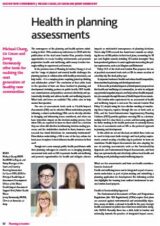
In the latest edition of Planning in London, Michael Chang (Town and Country Planning Association), Liz Green (WHIASU) and Jenny Dunwoody (Arup) provided an overview of opportunities to integrate health considerations in a range of assessments in the process. These include the Strategic Environmental Assessment, Environmental Impact Assessment and the Health Impact Assessment. This article is set in the context of the forthcoming London Plan, a statutory strategic planning document for whole of London, which will see Boroughs adopt the policy of using HIAs in the planning applications process. Many of the issues and themes set out in the article will also be relevant and of interest to practitioners in Wales. (pp52-53)
We are living in an increasingly changing and globalised world, where new developments and transformation over the next century will be greater than those of the previous millennia. This poses multiple and sometimes unknown challenges as well as bringing new opportunities.
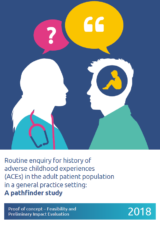
An initial exploration of the feasibility and acceptability of asking about a history of ACEs in a large multi-site GP practice in North West England. Findings explore practitioner experiences of delivery and potential impacts on patients.
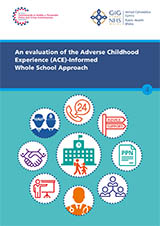
The impact that Adverse Childhood Experiences (ACEs) have on children’s development and the consequent outcomes in later life have been widely evidenced. However, building resilience in children can help protect against the effects of trauma and reduce the risks of poor outcomes in adulthood. The ACE-informed whole school approach is a programme that has been developed to introduce and implement trauma-informed practices within schools. This report captures the findings from the independent evaluation of this pilot approach.
To provide the best experiences, we use technologies like cookies to store and/or access device information. Consenting to these technologies will allow us to process data such as browsing behavior or unique IDs on this site. Not consenting or withdrawing consent, may adversely affect certain features and functions.
Functional
Always active
The technical storage or access is strictly necessary for the legitimate purpose of enabling the use of a specific service explicitly requested by the subscriber or user, or for the sole purpose of carrying out the transmission of a communication over an electronic communications network.
Preferences
The technical storage or access is necessary for the legitimate purpose of storing preferences that are not requested by the subscriber or user.
Statistics
The technical storage or access that is used exclusively for statistical purposes.The technical storage or access that is used exclusively for anonymous statistical purposes. Without a subpoena, voluntary compliance on the part of your Internet Service Provider, or additional records from a third party, information stored or retrieved for this purpose alone cannot usually be used to identify you.
Marketing
The technical storage or access is required to create user profiles to send advertising, or to track the user on a website or across several websites for similar marketing purposes.