Behavioural Science in Action: BeSci Unit @ Public Health Wales Progress to Impact 2025-26

This impact report is for Public Health Wales staff, and stakeholders working across the wider public health system in Wales. It sets out the range of work which the Behavioural Science Unit has undertaken over 2025-2026, focusing on how the Unit is progressing against the areas outlined in the Behavioural Science Enabling Plan for Wales. It acknowledges the partners who have worked with the Unit, provides insight for those that are considering future collaboration, and reflects on the contribution of collective activities towards the routine application of behavioural science for better health and equity.
Authors: Jason Roberts, Jennifer Thomas+ 8 more
, Jonathan West, Ashley Gould, Nicky Knowles, Alice Cline, Melda Lois Griffiths, Paulina Kuczynska, Khudayja Datoo-Jaffer, James Smolinski

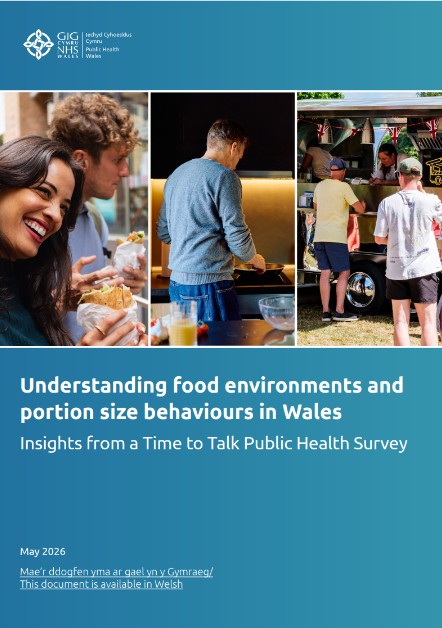
Time to Talk Public Health: Food environments and portion size behaviours in Wales

Understanding food environments and portion size behaviours in Wales

This report presents findings from a cross-sectional survey of 1,460 people aged 16 years and over who live in Wales, conducted through the Time to Talk Public Health (TTPH) population panel. The sample was broadly representative of people living in Wales. The survey explored types of main meals eaten, lunchtime behaviours when away from the home, meal finishing behaviour, and portion size behaviours and attitudes. Analysis by socio-demographic characteristics identified population groups more likely at risk of engaging in behaviours associated with living with overweight and obesity. These groups were young adults, males, people living in more deprived areas, and those who perceive themselves as heavier. More action is needed to address what drives these behaviours.

Authors: Catherine Sharp, Carys Dale+ 3 more
, Charlotte Welch, Karen Hughes, Ilona Johnson

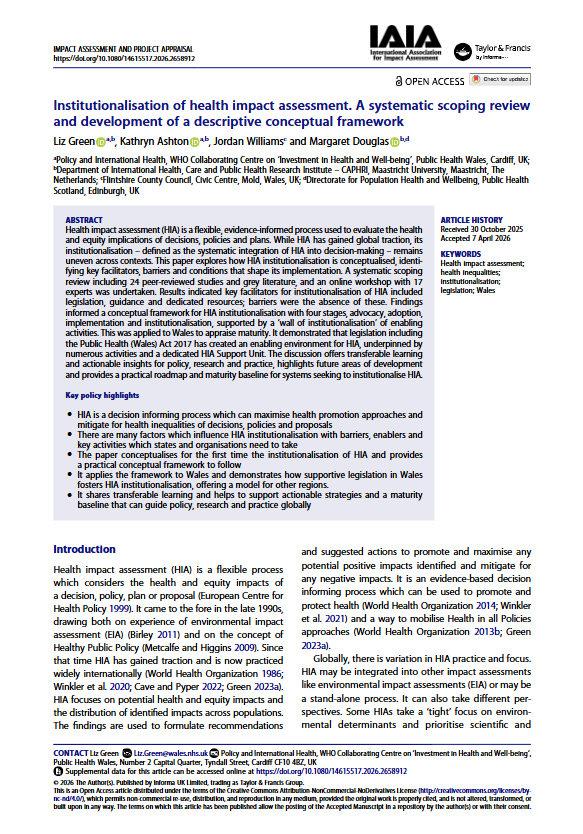
Institutionalisation of health impact assessment. A systematic scoping review and development of a descriptive conceptual framework

Liz Green and Kathryn Ashton of the Wales Health Impact Assessment Support Unit (WHIASU) recently published an article titled ‘Institutionalisation of health impact assessment. A systematic scoping review and development of a descriptive conceptual framework’ in the journal of Impact Assessment and Project Appraisal.

The paper is the first practical framework for the field/other nation states/organisations to use to measure how mature they are (or not) in HIA. It highlights the enablers and barriers and the 4 key stages of HIA institutionalisation, namely: advocacy, adoption, implementation and finally institutionalisation. These are mapped against a practical ‘wall of institutionalisation’ which contains the critical activities, factors and facilitators needed for institutionalising HIA. Other nation states and organisations can use these to measure themselves against to identify how mature they are (or not) in the path to institutionalisation and critical factors they presently have or need to strive for.

Authors: Liz Green, Kathryn Ashton+ 2 more
, Jordan Williams, Margaret Douglas

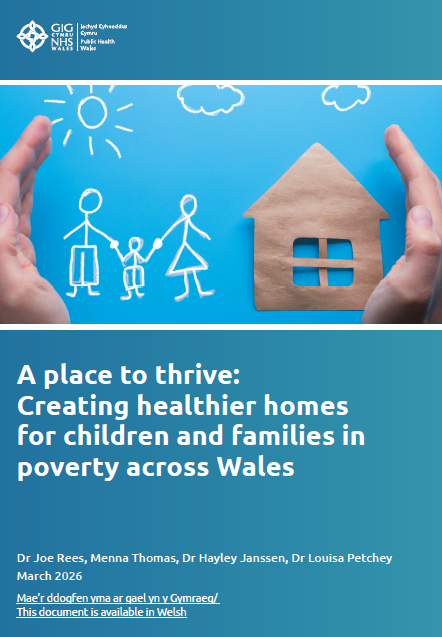
A place to thrive: Creating healthier homes for children and families in poverty across Wales

Healthy homes are a fundamental building block for wellbeing, opportunity, and a fair start in life. Yet across Wales, too many families continue to live in housing that is cold, damp, insecure, overcrowded, or unaffordable. These conditions can have profound and lasting impacts on children’s physical and mental health, educational outcomes, and long term life chances.
This publication brings together the voices of families living in unhealthy homes with evidence and insights from stakeholders to inform policy, build a shared and holistic understanding of “healthy homes,” and highlight practical examples and solutions that demonstrate how housing can promote health and wellbeing for all people in Wales.

Authors: Joe Rees, Menna Thomas+ 2 more
, Hayley Janssen, Louisa Petchey
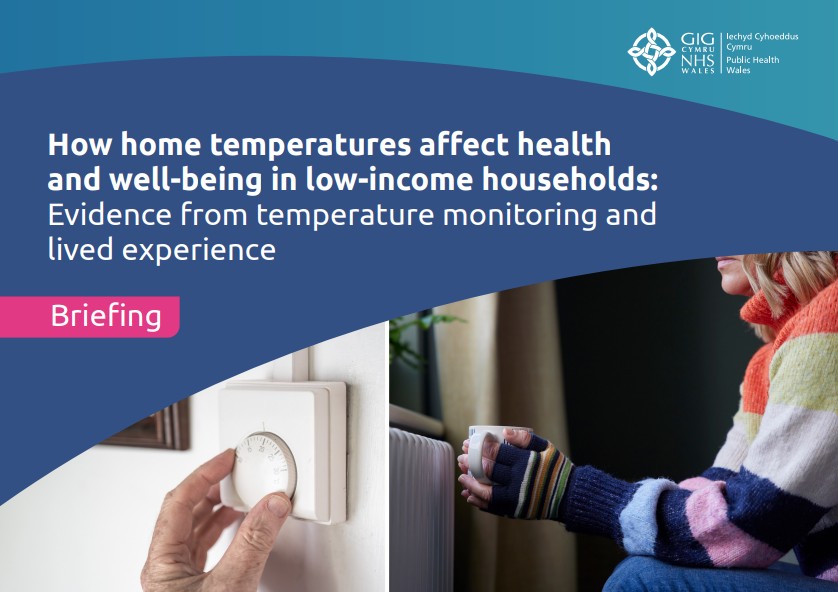
How home temperatures affect health and well-being in low-income households report cover

How home temperatures affect health and well-being in low-income households: Evidence from temperature monitoring and lived experience

This briefing presents the experiences of 15 people living in low-income households. It draws on objective indoor temperature monitoring and interviews exploring awareness and understanding of healthy indoor temperature guidelines and the impacts of home temperature on health and well-being.

Authors: Hayley Janssen, Daniella Griffiths+ 1 more
, Rebecca Hill
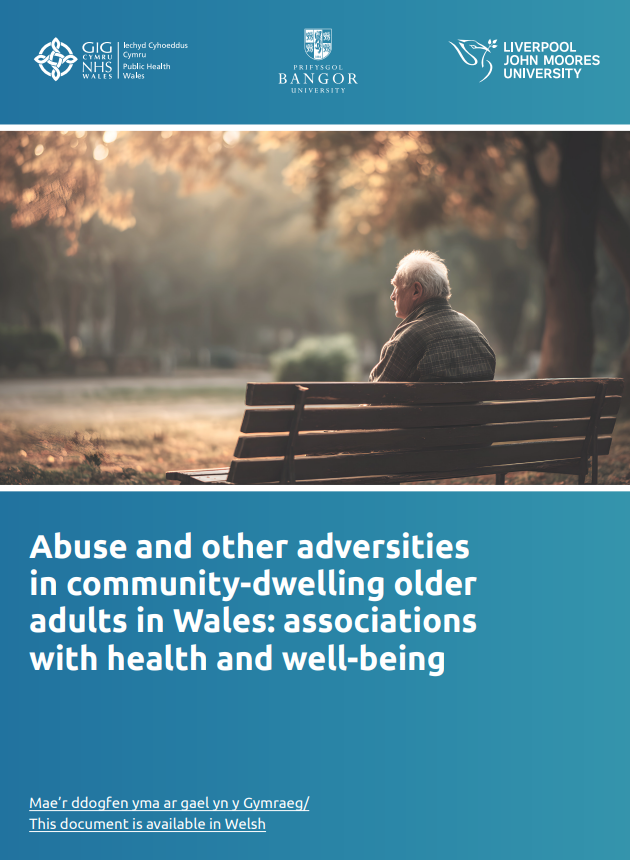
Abuse and other adversities in older adults in Wales report cover showing older adult sitting on a park bench

Abuse and other adversities in community-dwelling older adults in Wales: associations with health and well-being

This report presents findings from a national household survey of adults aged 60 years and over in Wales. The survey asked about a range of adverse experiences since the age of 60, including exposure to abuse, feeling lonely or socially isolated, struggling financially, being unable to access health or social care, and feeling overwhelmed by caregiving responsibilities. The report examines relationships between these five experiences and participants’ health and wellbeing, including self-rated bad health, alcohol and tobacco use, mental health, life satisfaction and ageism experience. It finds that abuse, feeling lonely or socially isolated and struggling financially in later life are independently associated with poorer health.

Authors: Karen Hughes, Kat Ford+ 2 more
, Joanne C. Hopkins, Mark Bellis
Dementia Prevention report cover

International Health Insights: Dementia Prevention

This International Health Insights report explores global evidence on dementia prevention and the importance of supporting brain health across the life course.

The report reviews international best practice and highlights successful approaches from countries including Finland, Japan, South Korea, Uruguay, and the United Kingdom.

Key messages:

Dementia is not an inevitable part of ageing. Addressing modifiable risk factors across the life course could prevent up to 45% of cases. Effective prevention requires integrated action at three levels:

1. Single component behavioural change interventions remain essential foundations, targeting individual risk factors such as physical inactivity, smoking, social isolation, alcohol misuse, and untreated hearing or vision loss. component behavioural change interventions

2. Multi component interventions that target multiple, clustered risk factors represent the most promising strategy.

3. Structural population-level measures such as fiscal policies, legislation, marketing restrictions, environmental adaptations are critical to complement lifestyle-based approaches.

Authors: Keira Charteris, Daniela Stewart+ 2 more
, Zuwaira Hashim, Mariana Dyakova

Health Impact Assessment (Wales) Regulations 2025: A guide for public bodies in Wales

This guide provides step-by-step support to public bodies required to carry out HIAs under the HIA regulations in Wales. The Guide:

• Explains the legal requirements and when an HIA is needed
• Sets out a clear process and steps to follow, from start to finish
• Includes practical tools, templates, and examples to help ensure compliance and transparency.

This guidance is designed to help you understand the Regulations, but it should not be treated as a comprehensive or full explanation of the law in this area. From 06 April 2027, it is the responsibility of the relevant organisations and individuals to make sure they comply.

You should always check the full legislation and consider getting independent legal or professional advice if you’re unsure about your obligations.

Authors: Liz Green, Kathryn Ashton+ 3 more
, Lee Parry-Williams, Laura Evans, Sumina Azam

Health Impact Assessment (HIA): A practical guide for voluntary best practice in Wales

This guide is designed for organisations and practitioners who wish to undertake a HIA voluntarily as part of good practice. The guide:
• Encourages the proactive, best practice use of HIA to strengthen decision-making and consider inequalities
• Is not limited to strategic decisions but is suitable for a range of decisions
• Outlines the HIA process and flexible methods that can be tailored to projects, policies, or plans of any scale
• Promotes a participatory approach by engaging with stakeholders to identify a wide range of positive and unintended negative impacts.

Authors: Liz Green, Kathryn Ashton+ 3 more
, Lee Parry-Williams, Laura Evans, Sumina Azam

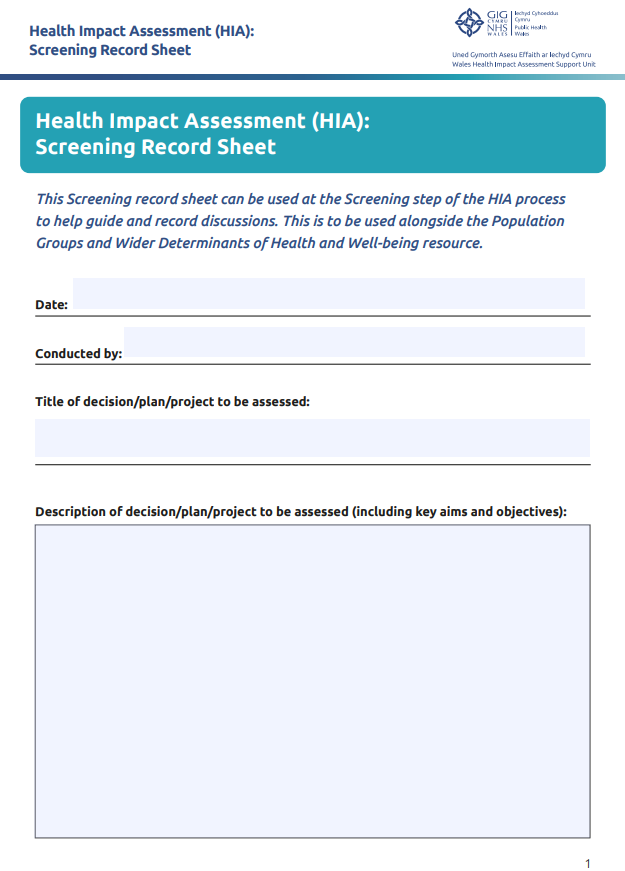
Health Impact Assessment (HIA): Screening Record Sheet

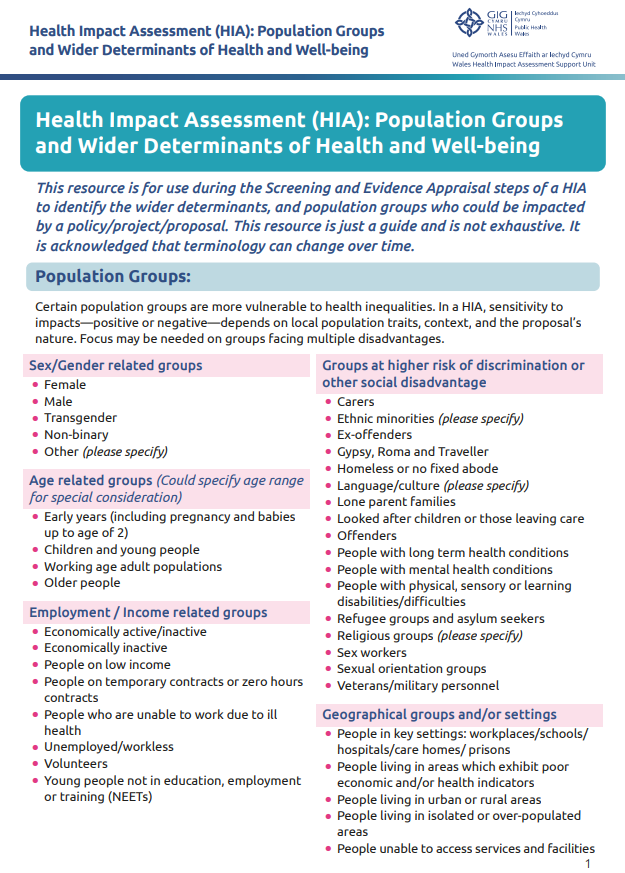
This Screening record sheet can be used at the Screening step of the HIA process to help guide and record discussions. This is to be used alongside the Population Groups and Wider Determinants of Health and Well-being resource.

This document has been designed to be downloaded to your computer. The document will need to opened in Adobe Acrobat or Adobe Acrobat Reader which can be downloaded for free from https://get.adobe.com/uk/reader/

Please note that, without Acrobat, you will be able to view the document but you will not be able to add your own information or save the file.

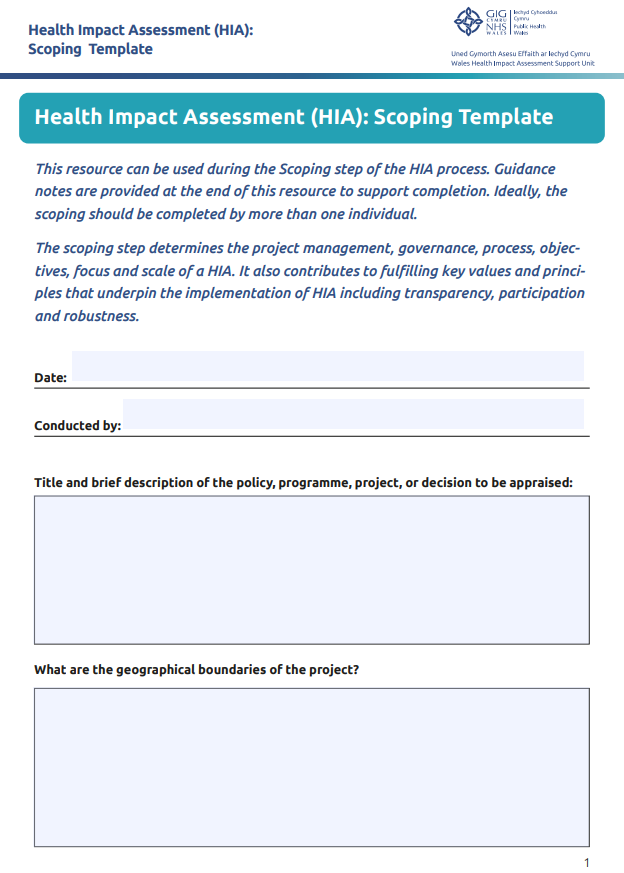
Health Impact Assessment (HIA): Scoping Template

This resource can be used during the Scoping step of the HIA process. Guidance notes are provided at the end of this resource to support completion. Ideally, the scoping should be completed by more than one individual.

The scoping step determines the project management, governance, process, objectives, focus and scale of a HIA. It also contributes to fulfilling key values and principles that underpin the implementation of HIA including transparency, participation and robustness.

This document has been designed to be downloaded to your computer. The document will need to opened in Adobe Acrobat or Adobe Acrobat Reader which can be downloaded for free from https://get.adobe.com/uk/reader/

Please note that, without Acrobat, you will be able to view the document but you will not be able to add your own information or save the file.

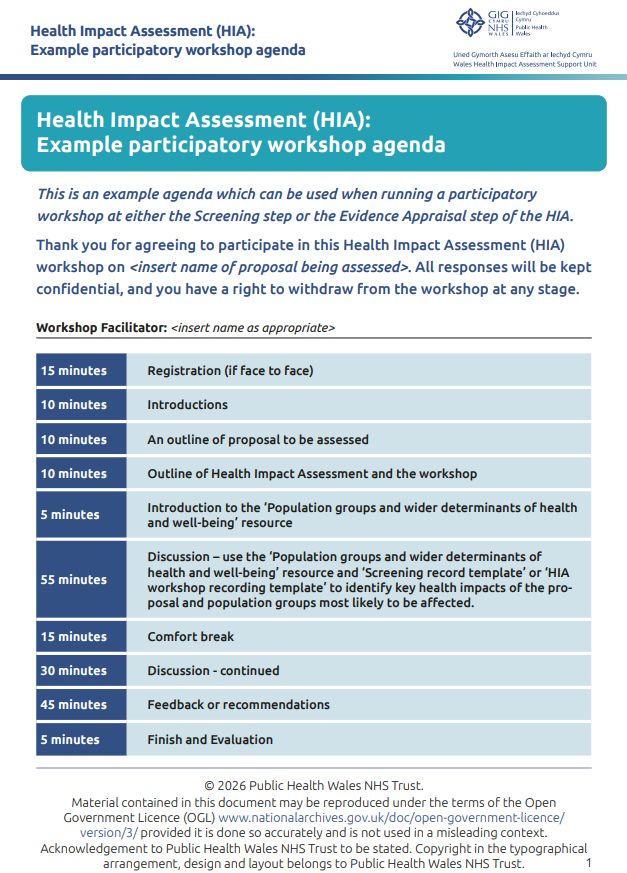
Health Impact Assessment (HIA): Participatory Workshop Recording Template

This template can be used at the Evidence Appraisal step of the HIA process to help record discussions during a participatory workshop. This is to be used alongside the Population Groups and Wider Determinants of Health and Well-being resource.

This document has been designed to be downloaded to your computer. The document will need to opened in Adobe Acrobat or Adobe Acrobat Reader which can be downloaded for free from https://get.adobe.com/uk/reader/

Please note that, without Acrobat, you will be able to view the document but you will not be able to add your own information or save the file.

Welsh Health Equity Solutions Platform - acronym WHESP

The New Health Impact Assessment (Wales) Regulations: A Framework for Advancing Health Equity in Wales 

The Welsh Health Equity Solutions Platform (WHESP) has published a new Spotlight Feature Blog exploring how the Health Impact Assessment (Wales) Regulations is set to transform strategic decision-making and strengthen health equity across Wales. 

Authors: Zuwaira Hashim, Lauren Couzens (née Ellis)+ 2 more
, Liz Green, Cheryl Williams

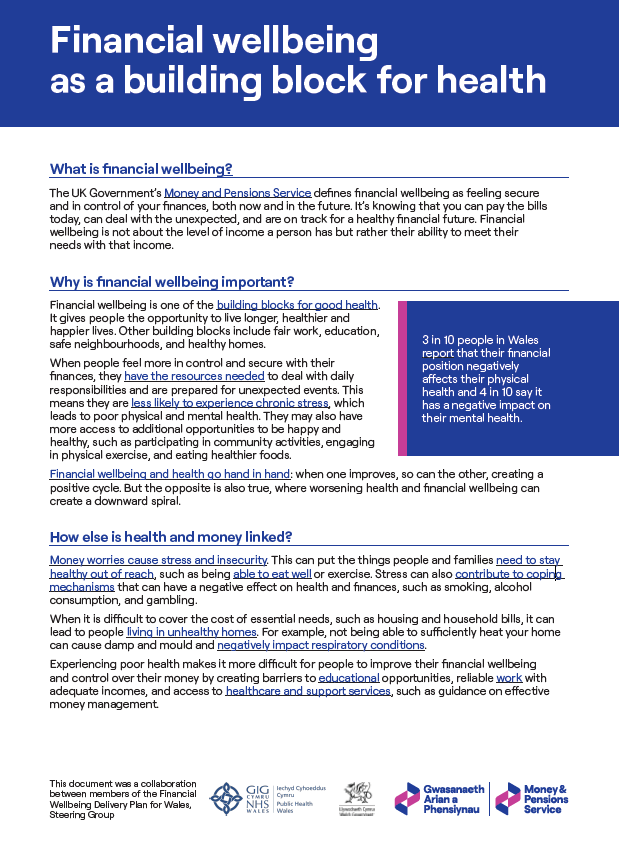
Financial wellbeing as a building block for health

Public Health Wales has worked in collaboration with members of the Financial Wellbeing Delivery Plan for Wales Steering Group, including the Money and Pensions Service and Welsh Government, to set out the links between money and health outcomes in Wales. Financial wellbeing is a key building block of people’s health and wellbeing because when people have money worries it can lead to chronic stress, which is harmful to our physical and mental health. Here we highlight who is most affected by these issues and how a public health approach can improve long-term health and financial wellbeing.

Authors: Louisa Petchey, Leah Wargent
Loneliness, social isolation and social connection

Loneliness, social isolation and social connection in Wales: A public health perspective

Loneliness and social isolation are increasingly being recognised as public health challenges. This report aims to present loneliness, social isolation and social connection in Wales from a public health perspective. Intended for professionals, policymakers and other individuals working directly or indirectly in the field of social connection, it includes data and evidence on: the prevalence of loneliness, social isolation and social connection in Wales and the population groups most affected; factors that increase the risk of loneliness and social isolation; impacts on health and well-being; evidence on solutions; examples of good practice in Wales; and key areas for future action.

Authors: Sara Wood, Carys Dale+ 1 more
, Karen Hughes

Time to Talk Public Health October 2025 Survey Findings

Time to Talk Public Health is a nationally representative panel of Welsh residents established by Public Health Wales to enable regular public engagement to inform public health policy and practice. The panel is designed to be broadly representative of the Welsh population by age, sex, deprivation, ethnicity and health board. This report presents findings from the October 2025 survey covering: Source of Health Information, Health Policy, Health and Well-Being After Pregnancy, Ageism, and Public Health Wales.

Authors: Catherine Sharp, Karen Hughes+ 1 more
, Carys Dale
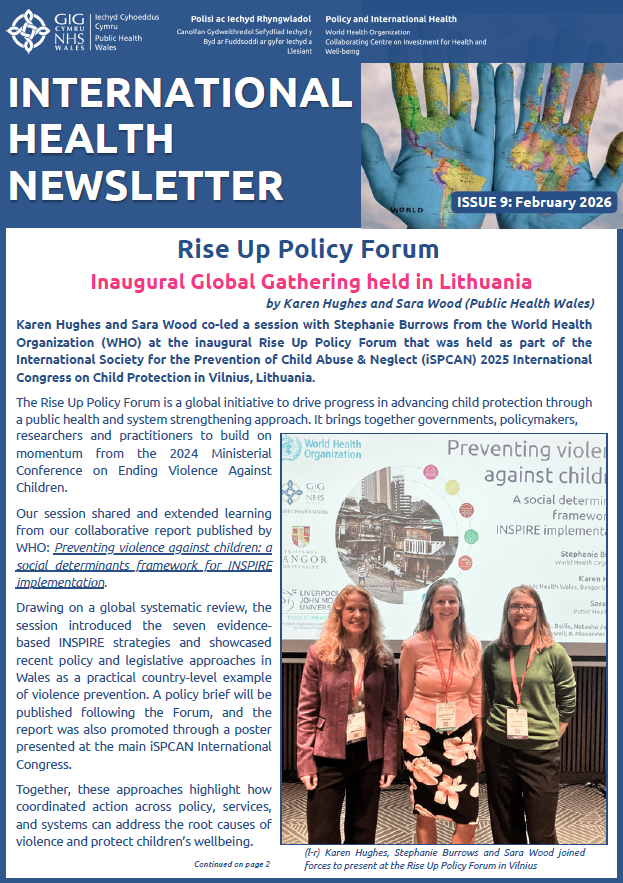
Front cover of International Health Newsletter 9: February 2026

International Health Newsletter Issue 9: February 2026

The International Health Coordination Centre’s (IHCC) International Health Newsletter promotes and shares international news, events and initiatives with partners across Wales and beyond.

The newsletter was piloted in May 2023, thereon issued quarterly.

View the latest issue here.

Authors: Laura Holt, Jo Harrington+ 5 more
, Karen Hughes, Sara Wood, Joanne C. Hopkins, Keira Charteris, Liz Green

Rapid Participatory Health Impact Assessment (HIA) of the Introduction of a National Lung Cancer Screening Programme in Wales

This HIA report was undertaken by the Lung Cancer Screening Project Team, consisting of representatives from across the NHS, which was supported by the Wales Health Impact Assessment Support Unit (WHIASU), through the facilitation of a HIA participatory workshop. The project team was established in April 2024, with the final report being published in September 2025. The rapid participatory HIA, concentrated on gathering Welsh stakeholder knowledge and insight into the proposed introduction of a national lung cancer screening programme from the perspective of both the service users and those involved with the delivery of the service.

This report gives a background to the project and to HIA itself, before looking at the Participatory HIA workshop in more detail, which was carried out in October 2024, showing what population groups were identified and the determinants of health individually, using WHIASUs Population Groups and Determinants of Health checklists. The report suggests that the National Lung Cancer Screening Programme has the potential to highly benefit the population of Wales, by identifying lung cancers early and through the integrated promotion of smoking cessation services. In addition, the report also highlights the work necessary to ensure that an accessible and equitable screening programme is delivered.

Authors: Catrin Lyddon, Jen Sharp

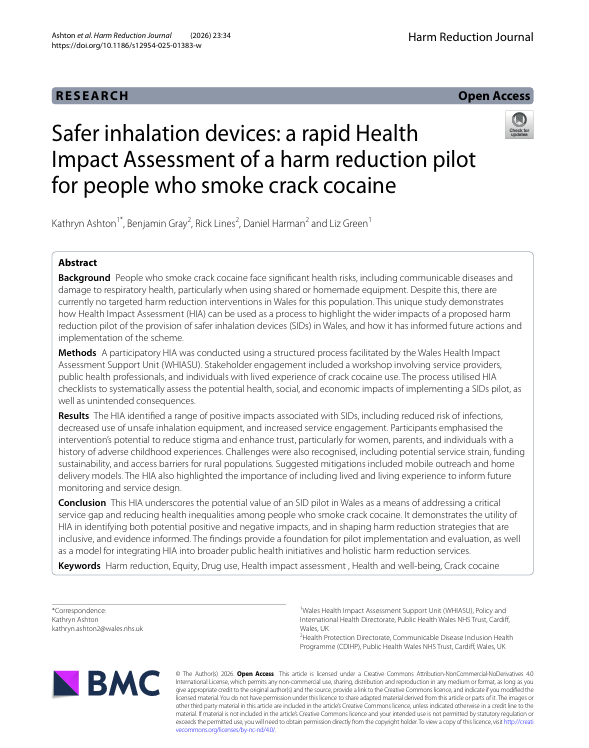
Safer inhalation devices: a rapid Health Impact Assessment of a harm reduction pilot for people who smoke crack cocaine

This study explores how a Health Impact Assessment (HIA) was used to evaluate a proposed harm reduction pilot programme in Wales providing safer inhalation devices (SIDs) for people who smoke crack cocaine, a group facing significant health risks and lacking targeted harm reduction services. Through stakeholder engagement, including people with lived experience, the HIA identified potential benefits such as reduced risk of infections, safer equipment use, and improved engagement with services, alongside challenges like resource pressures and access issues.

Overall, the findings highlight that an SID pilot could help reduce health inequalities and stigma, while demonstrating the value of HIA in shaping inclusive, evidence-informed public health interventions and guiding future implementation and evaluation.

Authors: Kathryn Ashton, Benjamin J. Gray+ 3 more
, Rick Lines, Daniel Harman, Liz Green
Engaging Men as Prosocial Bystanders in Nightlife Settings

Engaging Men as Prosocial Bystanders in Nightlife Settings: Behavioural Insights for Sexual Harassment Prevention

This article explores how men can be effectively supported to intervene as prosocial bystanders in incidents of sexual harassment within South Wales’ nighttime economy. Using interviews and focus groups with men aged 18–54, the research developed five behavioural “personas” that capture the diverse psychological perspectives influencing decisions to step in.

Through the COM-B model, the study identifies common barriers—particularly limited knowledge of safe intervention techniques and uncertainty around legal implications—as well as important motivational and contextual factors. The persona-based approach demonstrates that men cannot be treated as a single audience; instead, tailored strategies are needed to meet different support needs.

Authors: Emma Barton, Bryony Parry+ 1 more
, Lara Snowdon

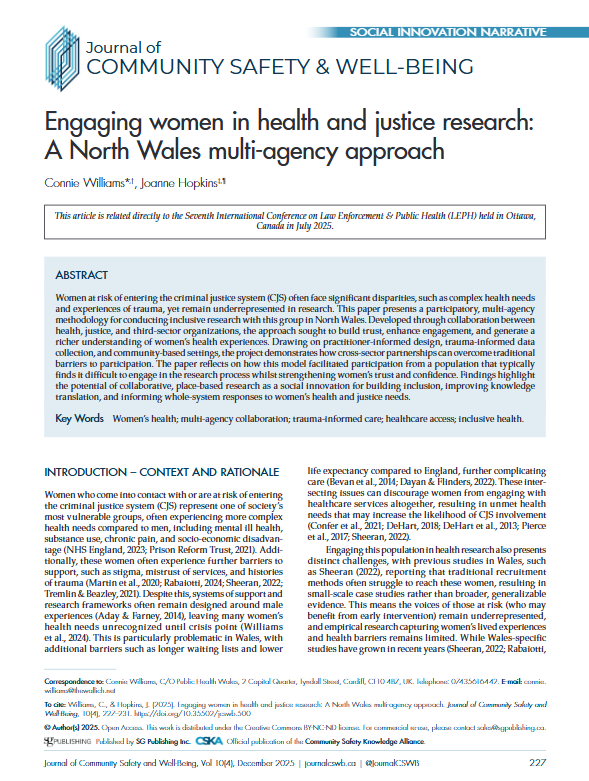
Engaging women in health and justice research: A North Wales multi-agency approach

This social innovation narrative presents a collaborative, trauma-informed research model designed to engage women at risk of entering the criminal justice system in North Wales. The narrative draws on empirical research originally conducted by the Women’s Justice Blueprint and ACE Hub Wales, which explored women’s physical and mental health, substance use, and the barriers they face when seeking support. This narrative reframes this work through a methodological lens, illustrating how innovative, multi-agency approaches enabled deeper understanding and participation. 

By demonstrating how collaborative research infrastructures can enhance access, voice, and data quality, this narrative shows how methodological innovation can support more effective and inclusive responses to women’s health and justice. 

Authors: Connie Williams, Joanne C. Hopkins
Journal of Community Safety and Wellbeing - Building a Wales without violence

Building a Wales Without Violence: Using Behavioural Science to Implement a Public Health Approach

This social innovation narrative presents how the Violence Prevention Team and Behavioural Science Unit collaborated on the development of an implementation plan for the Wales Without Violence Framework (2023). By applying behavioural science—and specifically the COM-B model—the Violence Prevention Team worked with professionals across sectors to explore what supports and influences their ability to embed the framework’s nine principles of violence prevention into everyday practice.

The article outlines key insights into the behaviours, barriers, and facilitators identified by practitioners, and highlights how understanding capability, opportunity, and motivation can strengthen the adoption of a public-health approach across sectors. It also reflects on how this process helped the Violence Prevention Team clarify its role within the wider prevention landscape in Wales, supporting more effective coordination and resource use.

Authors: Bryony Parry, Lara Snowdon+ 5 more
, Emma Barton, Alex Walker, Joanne C. Hopkins, Alice Cline, Nicky Knowles
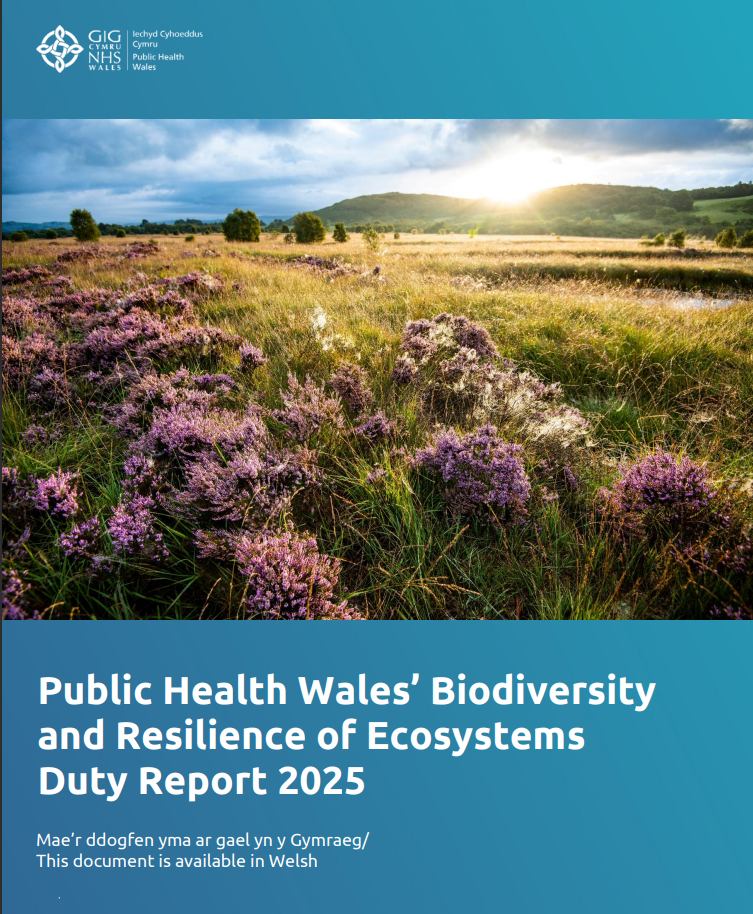
The front cover has the title of the report - Biodiversity and Resilience of Ecosystems Report - and a photo of a Welsh mountain landscape with heather and mountains

Biodiversity and Resilience of Ecosystems Report 2025

This report summarises the work undertaken by Public Health Wales (PHW) to support biodiversity over the last three years. Section 6 of the Environment (Wales) Act 2016 requires public authorities to ‘seek to maintain and enhance biodiversity and promote the resilience of ecosystems’ ensuring biodiversity is considered in business planning, policies, plans and projects.

Authorities are required to report on progress every three years. PHW has published reports in 2019 and 2022, and this report highlights progress made between 2023 and 2025.

Authors: Helen Bradley, Eurgain Powell

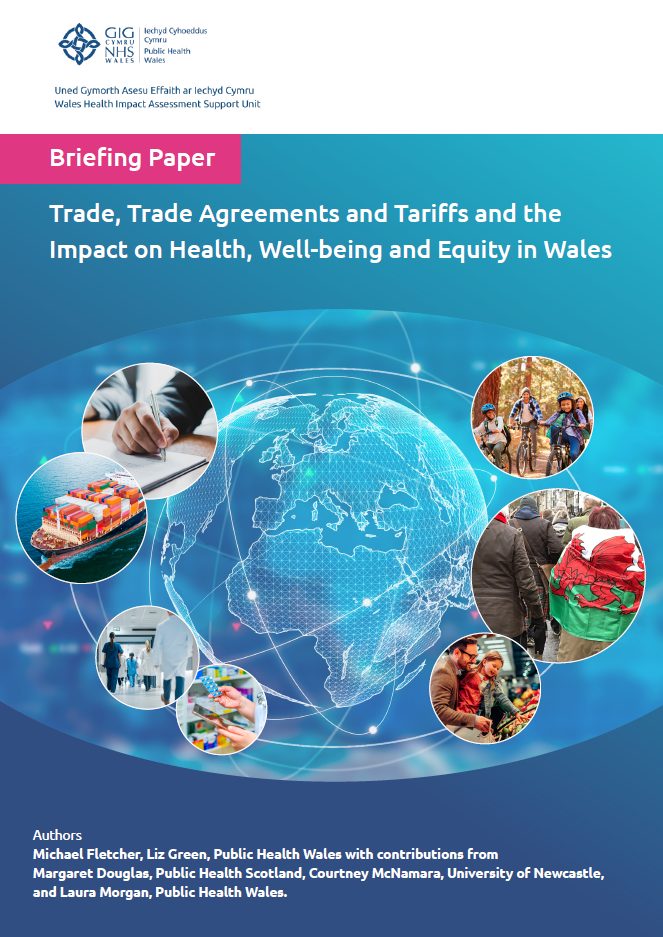
Trade, Trade Agreements and Tariffs and the Impact on Health, Well-being and Equity in Wales

This briefing paper, developed by the Wales Health Impact Assessment Support Unit (WHIASU), discusses the potential health, well-being and equity impacts of trade tariffs on the Welsh population. It is aimed at stakeholders in Wales working in the areas of trade, public health and health services to support them to better understand the potential impacts that trade tariffs can have on population health.

It begins with a brief introduction to trade agreements and to tariff and non-tariff barriers to trade. It then outlines the most recent trade deals the United Kingdom (UK) has signed up to before discussing how tariffs can affect population health, well-being and equity in Wales. It concludes with some options on how health and well-being can be better considered in trade agreements and identifying the impacts of tariffs. Finally, it presents two case study examples of how trade can impact the people and economy in Wales.

Authors: Michael Fletcher, Liz Green