Planning Healthy Places: A guide for local authorities in Wales for embedding health in planning policy

This guidance aims to support those working across urban and rural local authorities in Wales to consider, include and promote health and wellbeing through Local Development Plans (LDPs) and the planning system. It provides evidence and guidance about how this can be achieved and why the links between planning and health are so important. The guide can form the basis of an evidence background paper for LDPs or supplementary planning guidance (SPG) and includes five sections.
Authors: Cheryl Williams, Sue Toner+ 1 more
, Liz Green

Urgent care components and their effectiveness: A rapid review of evidence and international insights

This report explores how different components of urgent care services can help reduce pressure on emergency departments and support patient independence. Drawing on the latest research through a systematic rapid review and international insights, it highlights best practices from across the UK and globally to inform urgent care service design in Wales. The review covers a range of urgent care service components, including:
• Task shifting strategies to optimise workforce capacity and efficiency
• Improved access to diagnostic services, such as radiology
• Smart tools like digital triage and decision-support systems for staff
• Expansion of urgent care/treatment centres for timely, appropriate care
• Virtual urgent care, including phone and video consultations for urgent advice
The findings suggest that well-designed urgent care services can deliver safer, faster, and more effective care. While further research is needed, the evidence highlights a promising opportunity to ease pressure on hospitals and ensure patients receive the right care, in the right place, at the right time.

About the review:
This work is a collaboration between the Evidence Service (Research, Data and Digital Directorate) and the International Health Insights team (Policy and International Health Directorate, WHO Collaborating Centre on Investment for Health and Wellbeing) within Public Health Wales.

Authors: Anamica Patel, Keira Charteris+ 8 more
, Kate Shiells, Laura Johnson, Helen Morgan, Hannah Shaw, Daniela Stewart, Zuwaira Hashim, Kirsty Little, Mariana Dyakova

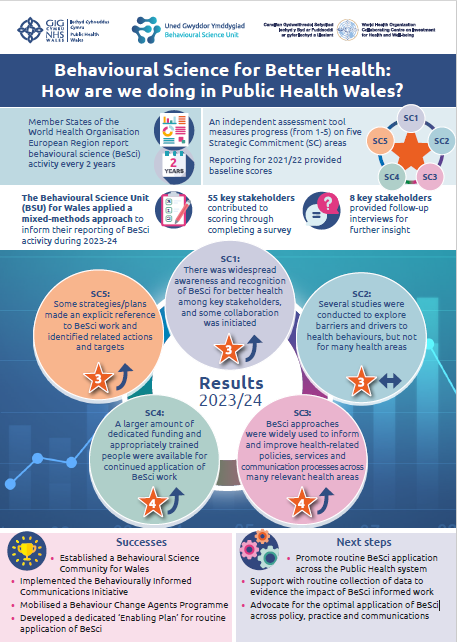
Better Health Through Behavioural Science: An Enabling Plan for Wales

This plan describes a route map of important actions that can secure the conditions to enable the more routine and systematic use of behavioural science in services, improvement and innovation, communications, policy and systems approaches that that are aiming for better health and wellbeing.

Developed with a technical and strategic advisory group, and input from our Behavioural Science Community for Wales, the plan draws on regional and international approaches to behavioural science application in health and wellbeing, and describes how, through applying behavioural science in our work, we can get what we aim for more often, and in doing so realise a behavioural dividend that optimises our impact for better health and equity.

Authors: Ashley Gould, Jonathan West

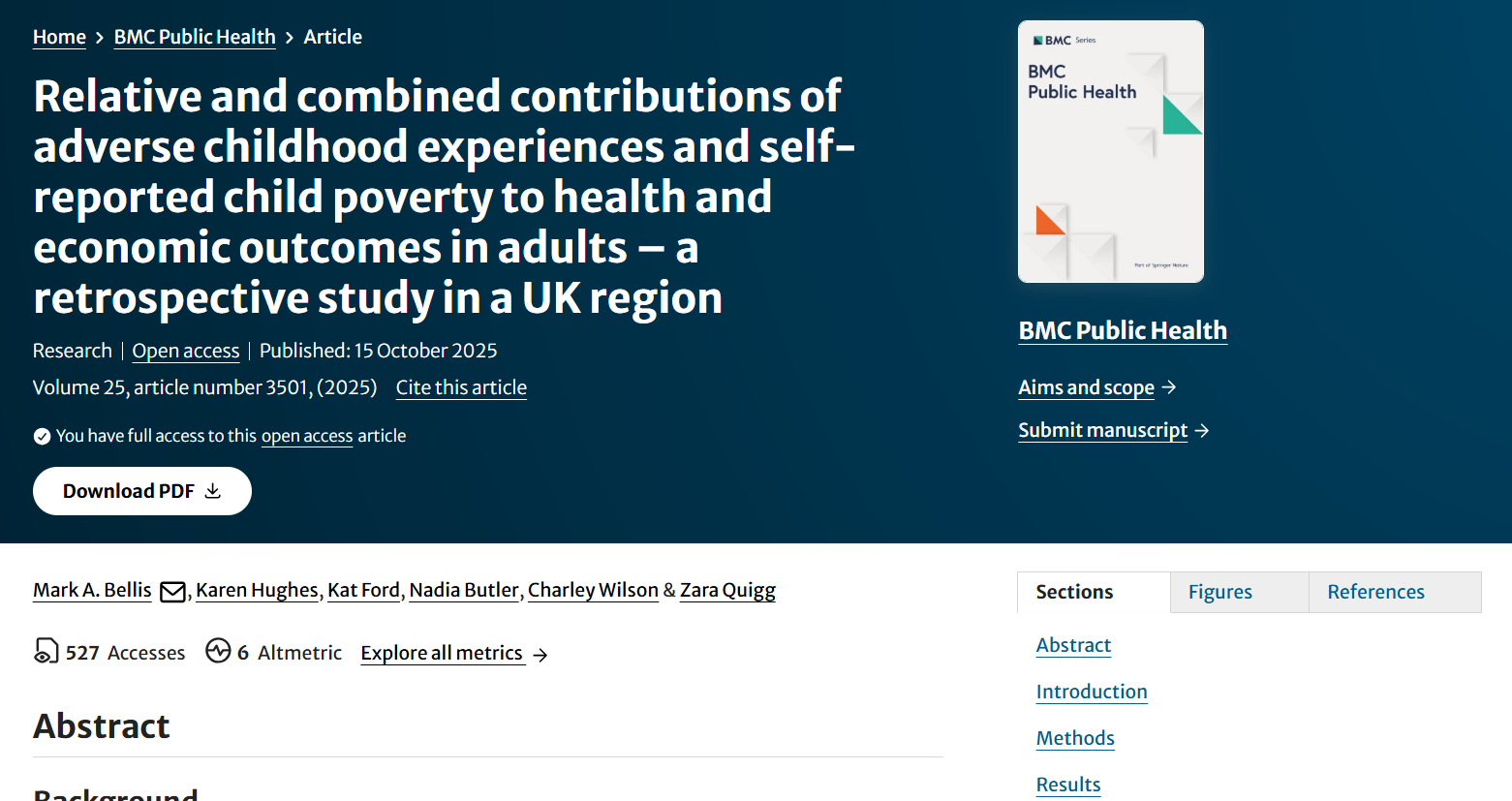
Childhood Poverty and ACEs

This study, published in the journal BMC Public Health, examined the role of adverse childhood experiences (ACEs) and childhood poverty in life course health and prosperity.

Using a sample of 5,330 adults from five local authorities in England, the study found that ACEs were significantly related to childhood poverty. Both ACEs and childhood poverty were associated with poorer life outcomes, including for self-rated health, chronic health conditions, mental well-being, employment and income.

The findings underscore the need for investment in interventions and policies to prevent intergenerational cycles of abuse and poverty.

Authors: Mark Bellis, Karen Hughes+ 4 more
, Kat Ford, Nadia Butler, Charley Wilson, Zara Quigg

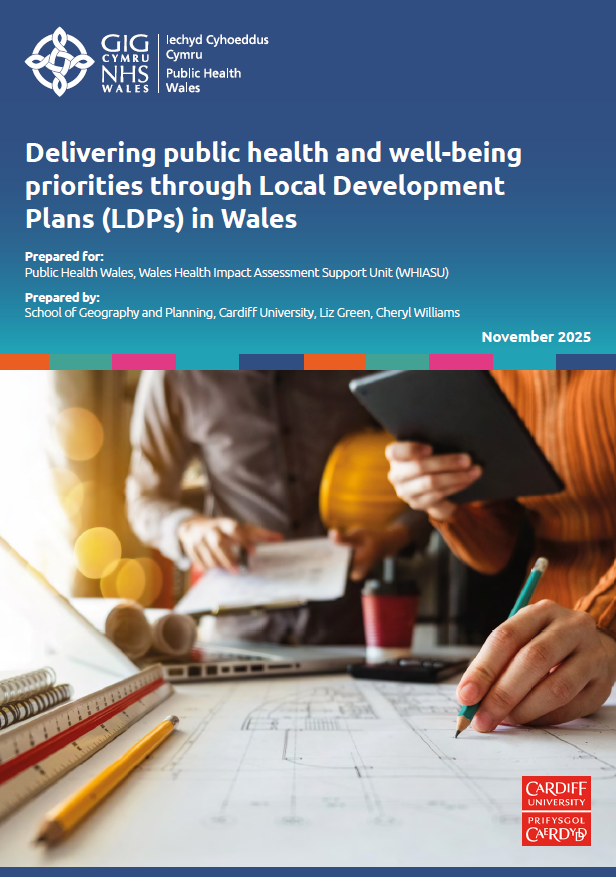
Delivering public health and well-being priorities through Local Development Plans (LDPs) in Wales

This report presents a summary of the methods and key findings of a review of how health is included in case study Local Development Plans (LDPs) in Wales and the effectiveness of LDPs in supporting the delivery of health and well-being priorities. The report is intended to inform and support the Wales Health Impact Assessment Support Unit.

Authors: Neil Harris, Andrew Ivins+ 3 more
, Matthew Wargent, Liz Green, Cheryl Williams

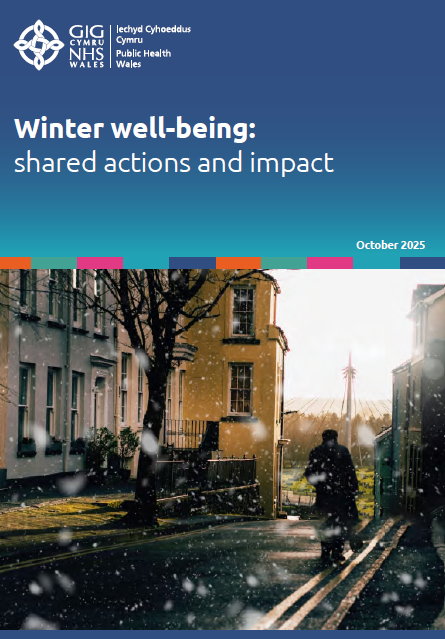
Winter well-being: shared actions and impact

A new report by Public Health Wales brings together the latest evidence, behavioural insights and practical tools to support health and care colleagues and services in preparing for the winter months.

The report, Winter Well-being: Shared Actions and Impact, is designed to complement existing NHS and Welsh Government winter planning frameworks. It provides actionable guidance and checklists to help teams strengthen system resilience, maintain population health, and ease demand on services.

The report also highlights the importance of prevention, including protecting against winter viruses by getting vaccinated against flu, RSV and COVID-19, staying active, eating warm meals, checking in on neighbours, and taking vitamin D daily to stay healthy through the colder months.

Authors: Ashley Gould, Kat Ford+ 7 more
, Elizabeth Augarde, Karen Hughes, Natasha Judd, Alice Cline, Molly Bellis, Carys Dale, Sumina Azam

Strengthening Health with Equitable International Partnerships: Key Learning and Best Practices

Wales has an enabling legislative and policy context for international health partnerships, illustrated by the Well-being of Future Generations Act goal of creating a ‘globally responsible Wales’.

This discussion paper explored how Welsh and international communities’ benefit from collaborative partnerships through a scoping review. The objectives were to identify current knowledge, evaluate advantages, and determine best practice.

Authors: James Rees, Joshua Yawo Malcolm+ 2 more
, Jo Peden, Zuwaira Hashim
Welsh Health Equity Solutions Platform - acronym WHESP

Tackling Child Poverty: A Scottish Policy Model

Child Poverty rates in the UK have worsened in recent years, exacerbated by the cost-of-living crisis.

Scotland is the only nation in the UK where average year-on-year poverty rates are improving, with progress being underpinned by strategies that incorporate income, employment, and social protection, supported by targeted policy and investment.

This spotlight feature explores Scotland’s approach to solution-based action, combining policy, investment, and a public health perspective. Its experience offers valuable lessons for Wales and other countries.

Authors: Lewis Brace

Time to Talk Public Health – June 2025 Survey Findings

Time to Talk Public Health is a nationally representative panel of Welsh residents established by Public Health Wales to enable regular public engagement to inform public health policy and practice. The panel is designed to be broadly representative of the Welsh population by age, sex, deprivation, ethnicity and health board. This report presents findings from the June 2025 Survey covering: Type 2 diabetes, use of gloves in healthcare settings, incontinence, dental health, climate change and public health policy.

Authors: Catherine Sharp, Karen Hughes+ 1 more
, Carys Dale
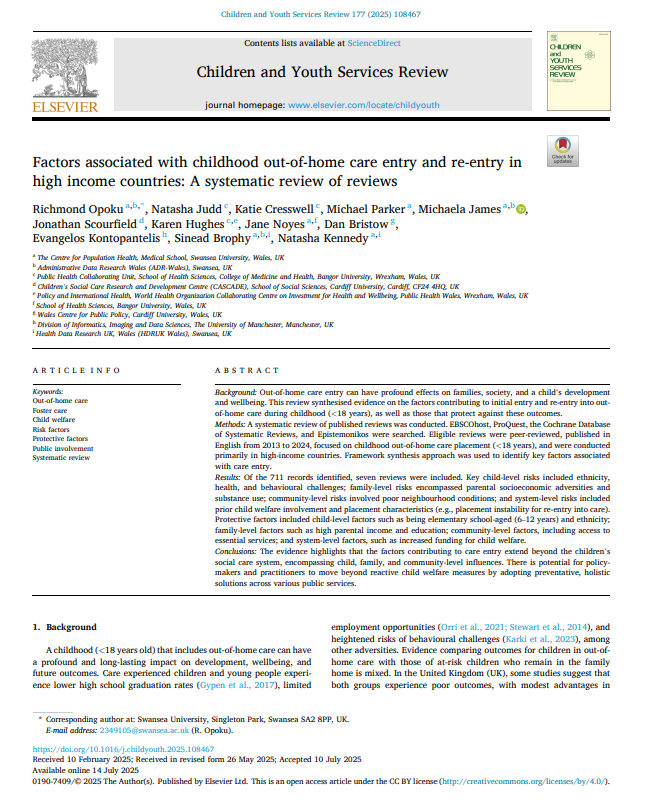
Factors associated with childhood out-of-home care entry and re-entry in high income countries A systematic review of reviews

Factors associated with childhood out-of-home care entry and re-entry in high income countries: A systematic review of reviews

Out-of-home care placements can profoundly impact children, families, and society. This systematic review synthesises findings from existing reviews on factors associated with entry and re-entry into out-of-home care.

The evidence highlights key factors associated with out-of-home care entry, including child-level factors (ethnicity, health, behaviour), family-level factors (parental socioeconomic adversities, substance use), community-level factors (neighbourhood conditions), and system-level factors (prior child welfare involvement). The review also identifies several factors associated with children remaining with their birth families and not entering out-of-home care.

Factors associated with childhood out-of-home care entry are multi-faceted and complex. There is opportunity for policymakers and practitioners to adopt preventative and holistic interventions to promote the wellbeing and stability of children and families.

Authors: Richmond Opoku, Natasha Judd+ 10 more
, Katie Cresswell, Michael Parker, Michaela James, Jonathan Scourfield, Karen Hughes, Jane Noyes, Dan Bristow, Evangelos Kontopantelis, Sinead Brophy, Natasha Kennedy

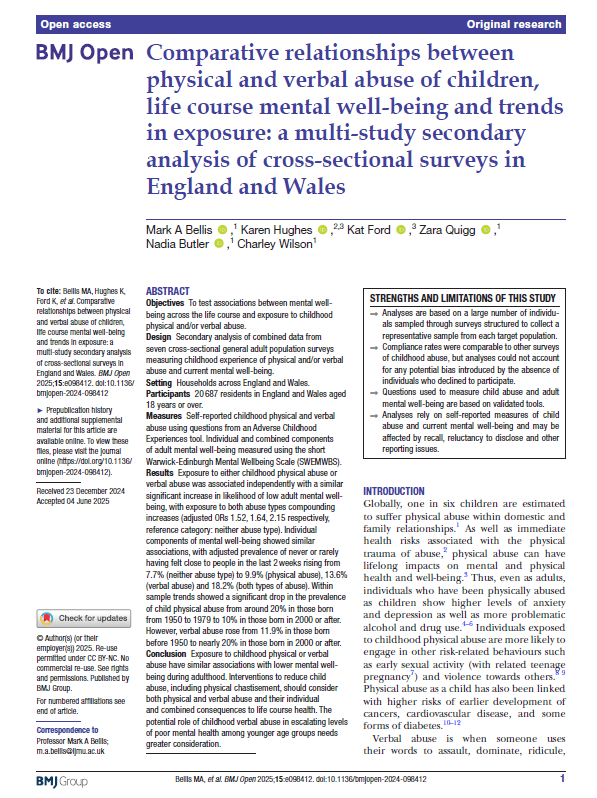
Comparative relationships between physical and verbal abuse of children, life course mental well-being and trends in exposure: a multi-study secondary analysis of cross-sectional surveys in England and Wales

This study examined relationships between physical and verbal abuse in childhood and adult mental well-being. The study, published in the journal BMJ Open, used data from surveys conducted in Wales and England between 2012 and 2024. It found that childhood verbal abuse was associated with similar increases in risk of low mental well-being as childhood physical abuse. The study also measured trends in self-reported physical and verbal abuse across birth cohorts.

Authors: Mark Bellis, Karen Hughes+ 4 more
, Kat Ford, Zara Quigg, Nadia Butler, Charley Wilson

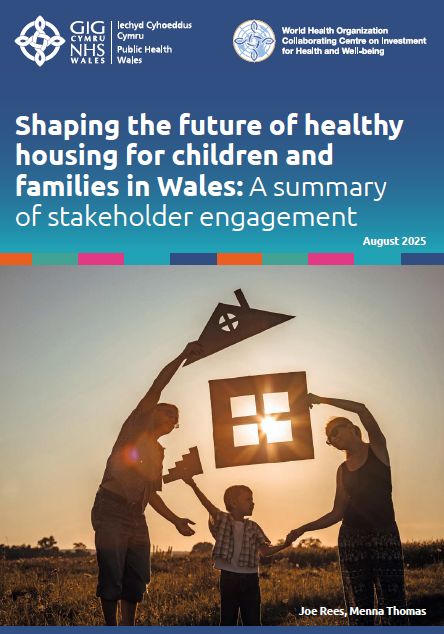
Shaping the future of healthy housing for children and families in Wales: A summary of stakeholder engagement

Our homes can significantly shape our physical and mental health and well-being.
This paper sets out the work that Public Health Wales has conducted alongside other housing stakeholders to envision a future of healthier of homes, especially for those living in poverty. It summarises insights drawn from stakeholder conversations and a futures-focused workshop, held in November 2024.
This work builds on two previous reports from Public Health Wales – an overarching report, homes for health and well-being, and a second on affordability. Here we go further and shine a light on housing quality, affordability, and security, and the impact this has particularly on the well-being of children and families.

Authors: Joe Rees, Menna Thomas

Health in Planning: The role of health in Local Development Plans in Wales

The planning system in Wales operates at three levels: national, regional, and local. Local Development Plans (LDPs) guide land use and development at the local authority level. This report, commissioned by Public Health Wales, Wales Health Impact Assessment Support Unit (WHIASU), presents a summary review of how health is included in Local Development Plans (LDPs) across Wales. The primary aim of this report is to inform WHIASU’s approach to supporting local governments in integrating health considerations into LDPs. The findings will also add value for other stakeholders working to improve health and wellbeing as it highlights opportunities for strengthening the inclusion of health in local plans. The review of Local Development Plans across Wales revealed several opportunities to strengthen their role in promoting population health and reducing health inequities. Currently, most LDPs address health-related factors indirectly through planning policies such as housing, transportation, and environmental quality. Few plans explicitly define health or health inequalities, and none include specific health indicators or measures. While all LDPs incorporate elements that influence social determinants of health, such as access to services and quality of housing, these connections to health outcomes are often implicit rather than clearly articulated. Our analysis found that LDPs already contain many elements that can support population health and wellbeing. By making these health implications explicit, defining key health concepts clearly, and incorporating measurable health indicators, LDPs could more effectively advance their potential to improve health outcomes and reduce health inequities across Welsh communities.

Authors: Fiona Haigh, Amber Murphy+ 3 more
, Jinhee Kim, Liz Green, Cheryl Williams

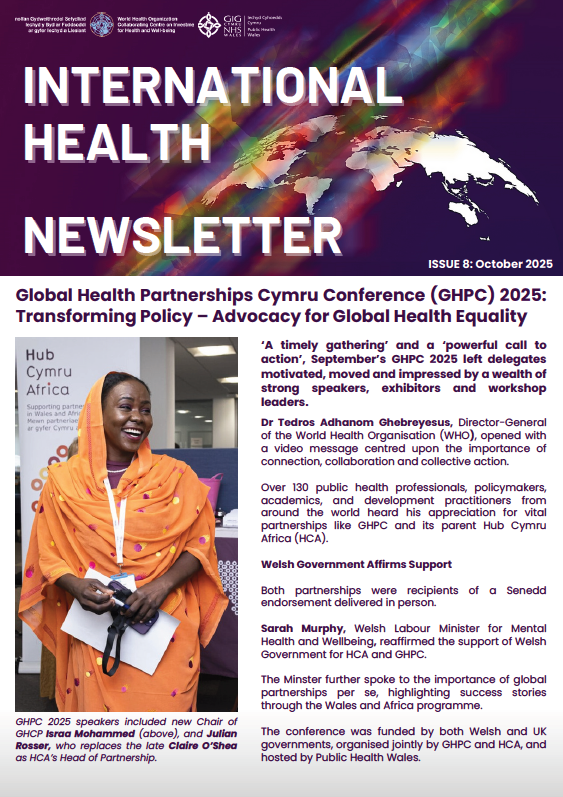
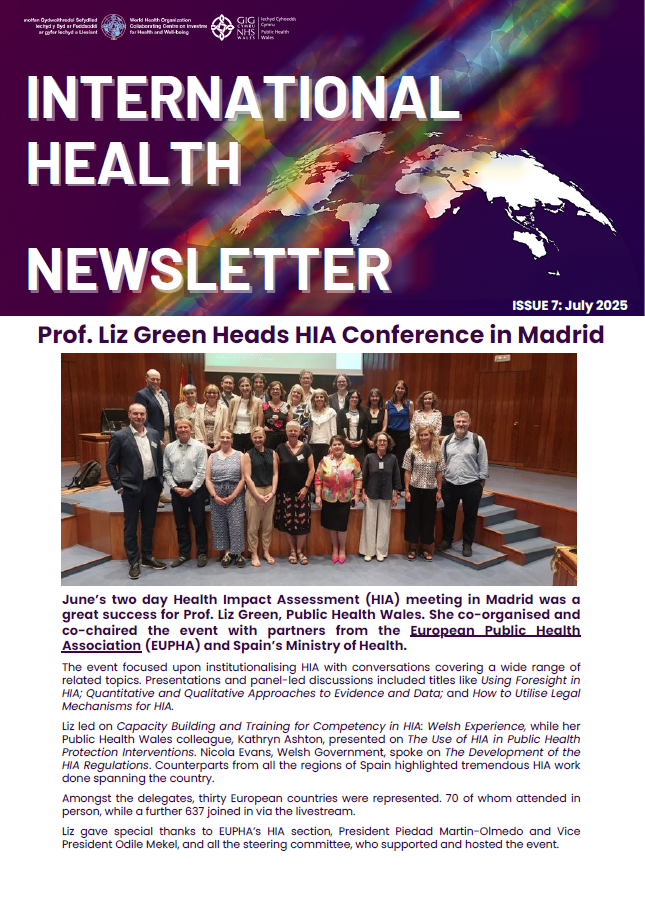
International Health Newsletter Issue 7: July 2025

The International Health Coordination Centre’s (IHCC) International Health Newsletter promotes and shares international news, events and initiatives with partners across Wales and beyond.

The newsletter was piloted in May 2023, thereon issued quarterly.

View the latest issue here.

Authors: Laura Holt, Jo Harrington+ 4 more
, Daniela Stewart, Zuwaira Hashim, Dr Stanley Upkai, Malek Mhd Al Dali

Social Value E-Guide for Public Health

The Social Value E-Guide for Public Health is a step-by-step resource that explains how to use socially focused approaches for decision-making and financial prioritisation.

It aims to support stakeholders including practitioners, researchers and decision-makers in understanding and capturing the social value of the interventions and services they design and deliver.

The E-Guide presents approaches and resources for adopting a social value approach including methods such as Social Return on Investment and Social Cost Benefit Analysis, tailored specifically to the public health context.

Authors: Andrew Cotter-Roberts, Anna Stielke+ 2 more
, Cathy Madge, Mariana Dyakova
Time to Talk Public Health Findings of Neath Port Talbot Regional Survey 2025

Time to Talk Public Health: Findings of Neath Port Talbot Regional Survey 2025

To support the response of the Community Relations and Wellbeing Workstream of the TATA Steel UK Transition Board, Public Health Wales commissioned a regional survey as part of Time to Talk Public Health to investigate the health, social and financial status of people living in Neath Port Talbot as the area experiences the changes at TATA Steel. The survey was completed between January and March 2025 with 301 people who were representative of the local area by age, sex and deprivation. This report presents the findings of the regional survey.

Authors: Catherine Sharp, Karen Hughes+ 3 more
, Charlotte Grey, Carys Dale, Lucia Homolova

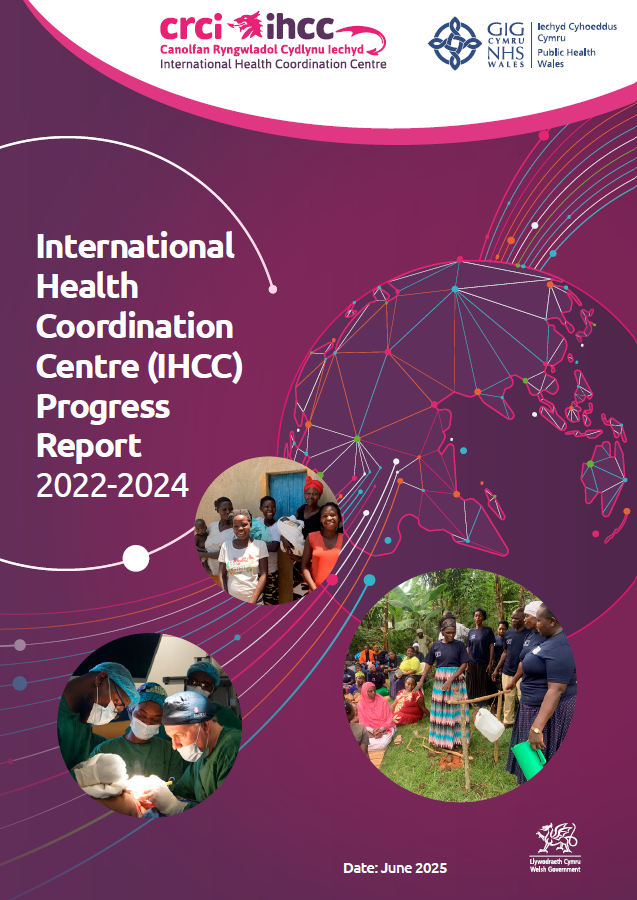
IHCC Progress Report 2022-2024

This report describes activities of the International Health Coordination Centre (IHCC), and the wider international health activity and partnership working which took place within NHS Wales between 2022 and 2024. It outlines the IHCC’s progress in driving and enabling implementation of the Charter for International Health Partnerships in Wales (the Charter) across the NHS and demonstrates the tools used to enable shared learning, facilitate cross-NHS and cross-sector synergies, and maximise benefits to the health and well-being of the people in Wales and beyond.

Authors: Liz Green, Laura Holt+ 1 more
, Graeme Chisholm

Time to Talk Public Health: February 2025 Panel Survey Findings

Time to Talk Public Health is a nationally representative panel of Welsh residents established by Public Health Wales to enable regular public engagement to inform public health policy and practice. The panel is designed to be broadly representative of the Welsh population by age, sex, deprivation, ethnicity and health board. This report presents findings from the February 2025 Survey covering: Primary care and health inequalities; Delivery of primary care services; Social connectedness; Personal well-being; Financial security; Minimum unit pricing (MUP) for alcohol; Breast screening and artificial intelligence (AI).

Authors: Catherine Sharp, Karen Hughes+ 2 more
, Lewis Brace, Carys Dale

Behavioural Science In Action | BeSci Unit @ Public Health Wales | 2024-25 Review

This report is for the staff, teams and services in Public Health Wales, and the wider public health system in Wales. It sets out the range of work which the BSU has undertaken over the last year, with a spotlight on some of our key activities. It acknowledges the partners who have worked with us, provides insight for those that are considering working with us and, reflects on our impact as well as delivery.

Authors: Jason Roberts, Jennifer Thomas+ 2 more
, Jonathan West, Ashley Gould

Identifying policy options to tackle health inequalities: policy analysis and opportunities for learning for Wales

The key findings from this report highlight the need for comprehensive and multi-faceted policy approaches to address health inequalities. The evidence highlights the importance of preserving equitable healthcare access, expanding the welfare state, and targeting health-related behaviours through coordinated intersectoral strategies. By learning from international examples and adapting successful policies, Wales can work towards effective actions to reducing health inequalities and improving overall population health and wellbeing.

Authors: Lisa Jones, Mennatallah Abdelgawad+ 1 more
, Professor Mark Bellis

Behaviourally Informed Communications Initiative Case Studies

The Behaviourally Informed Communications Initiative (BICI) first launched in 2024, with 30+ attendees from a range of different teams bringing a piece of communication to optimise using behavioural science. This collection of case studies helps to outline the real-world application of BICI – including work from screening teams, vaccination teams, as well as Greener Primary Care and Primary Care.

Authors: Alice Cline, Ashley Gould

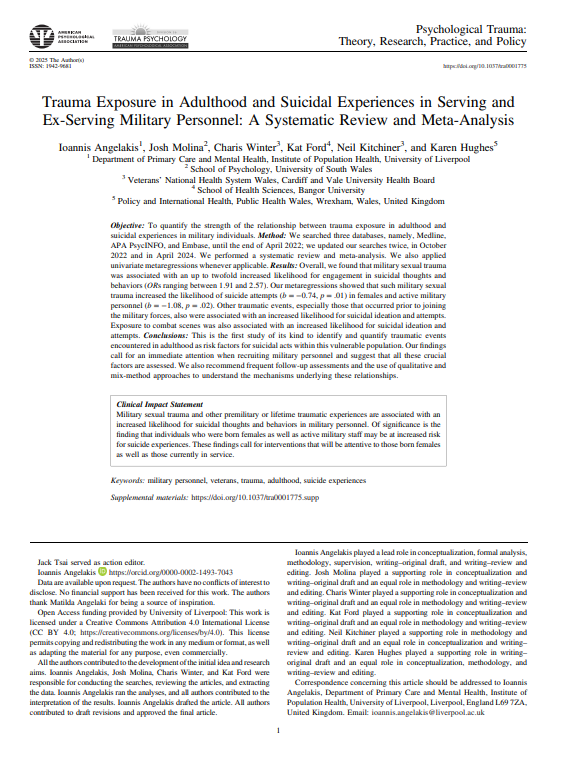
Trauma Exposure in Adulthood and Suicidal Experiences in Military Members and Veterans: A Systematic Review and Meta-analysis

Research has consistently shown a higher prevalence of mental health challenges and suicidal ideation and attempts among active-duty military personnel and veterans compared to the general population. Traumatic experiences in adulthood, particularly those encountered during military deployment, can significantly increase the risk of suicidal ideation and attempts. This systematic review and meta-analysis aimed to examine the relationship between trauma exposure in adulthood and suicidal experiences within military populations.

The findings indicate that both pre-service traumatic events and those experienced during employment are linked to a higher likelihood of suicidal ideation and attempts. The study underscores the critical need for targeted interventions to address trauma in military personnel.

Authors: Ioannis Angelakis, Josh Molina+ 4 more
, Charis Winter, Kat Ford, Neil Kitchiner, Karen Hughes