Early experience of implementing a national HIV pre-exposure prophylaxis service in Wales, United Kingdom 2017
This article looks at the early findings following the introduction of pre-exposure prophylaxis for HIV prevention in Wales.

This article looks at the early findings following the introduction of pre-exposure prophylaxis for HIV prevention in Wales.
This article examines the emotions associated with drinking different types of alcohol, whether these emotions differ by socio demographics and alcohol dependency and whether the emotions associated with different drink types influence people’s choice of drinks in different settings.
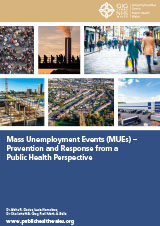
This publication aims to address the gap caused by the downsizing or closure of a single large employer in a localised area, and provides a public health informed response framework which takes into consideration the impact on the wider determinants of health and the populations affected.
Paper summarising MUE report
The ACE-informed Training for Housing resource was developed with partners in consultation with Housing representatives from different tenures across Wales, and aims to raise awareness of and increase confidence in responding to ACEs and vulnerability in the Housing sector. This report evaluates the training and makes recommendations for future ACE based training in the housing sector.
In the latest edition of Planning in London, Michael Chang (Town and Country Planning Association), Liz Green (WHIASU) and Jenny Dunwoody (Arup) provided an overview of opportunities to integrate health considerations in a range of assessments in the process. These include the Strategic Environmental Assessment, Environmental Impact Assessment and the Health Impact Assessment. This article is set in the context of the forthcoming London Plan, a statutory strategic planning document for whole of London, which will see Boroughs adopt the policy of using HIAs in the planning applications process. Many of the issues and themes set out in the article will also be relevant and of interest to practitioners in Wales. (pp52-53)
Part of a compendium that provides inspirational examples of building resilience at individual, community and system levels.

We are living in an increasingly changing and globalised world, where new developments and transformation over the next century will be greater than those of the previous millennia. This poses multiple and sometimes unknown challenges as well as bringing new opportunities.
An initial exploration of the feasibility and acceptability of asking about a history of ACEs in a large multi-site GP practice in North West England. Findings explore practitioner experiences of delivery and potential impacts on patients.
The impact that Adverse Childhood Experiences (ACEs) have on children’s development and the consequent outcomes in later life have been widely evidenced. However, building resilience in children can help protect against the effects of trauma and reduce the risks of poor outcomes in adulthood. The ACE-informed whole school approach is a programme that has been developed to introduce and implement trauma-informed practices within schools. This report captures the findings from the independent evaluation of this pilot approach.
The structured multi-agency, early intervention approach to vulnerability pilot tested new arrangements.

The structured multi-agency, early intervention approach to vulnerability pilot tested new arrangements between NPTs and the Bridgend County Borough Council (BCBC) Early Help team to enable a more effective, response to vulnerability demand, with a focus on children, young people and their parents/ carers.

‘Walking our talk’ highlights some of the practical ways in which we can contribute to Wales’ Well-being Goals by travelling actively and sustainably.
Adverse childhood experiences (ACEs) including maltreatment and exposure to household stressors can impact the health of children. Community factors that provide support, friendship and opportunities for development may build children’s resilience and protect them against some harmful impacts of ACEs. This paper examines if a history of ACEs is associated with poor childhood health and school attendance and the extent to which such outcomes are counteracted by community resilience assets.

This work is an extension of Public Health Wales’ Making a Difference report and draws on research evidence and expert opinion to identify action to reduce road traffic-related air pollution, risks and inequalities.

The International Health Coordination Centre (IHCC) published a report highlighting its achievements in supporting implementation of the Charter for International Health Partnerships in Wales. The latest IHCC Progress Report outlines the work, progress and achievements from 2015 to 2017 made by the IHCC and the Welsh Health Boards and Trusts in this field. It also shows how the IHCC has evolved in relation to global, UK, national and local developments.

The increasing popularity and rapid growth of electronic cigarettes has raised considerable concern about their impact on children and young people. Concerns relate to electronic cigarettes acting as a potential gateway to tobacco smoking for young never smokers, increased experimentation leading to a renormalisation of smoking behaviour and potential health harms of vaping.
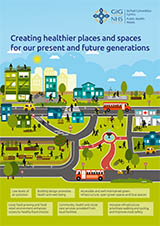
This resource demonstrates how the health and well-being opportunities afforded by the natural and built environment, such as walking and cycling infrastructure, food growing and access to nature, can contribute to a thriving, sustainable Wales for current and future generations.

A comprehensive review of sexual health in Wales, delivered by Public Health Wales’ Health Protection and Policy Divisions.

A review of the legislative and policy framework for sharing patient information in relation to sexual health in Wales. This paper presents officials with a series of options that could be taken to improve patient care, whilst also seeking to respect confidentiality and maintain trust.

The Stay Well in Wales survey sought to obtain the views of residents of Wales on a range of public health issues in order to inform the development and implementation of Public Health Wales’ strategy for 2018-2030.

We can all act by using a mug or reusable coffee cup.

Looking to 2030, Public Health Wales has identified seven key priorities for population health. These priorities have been identified through listening to the views of people in Wales and our staff; and taking into account key policies in Wales such as the Public Health (Wales) Act and the Wellbeing of Future Generations (Wales) Act.

Public Health Wales is involved in a wide variety of national and international research. Research is an essential part of what we do as an organisation, enabling us to understand the most effective approaches to improving the health and well-being of those living in Wales and beyond.
The Welsh Adverse Childhood Experience (ACE) and Resilience Survey was undertaken to examine individual and community factors that may offer protection from the harmful impacts of ACEs on health, well-being and prosperity across the life course.

The United Nations 2030 Agenda for Sustainable Development (2015), complemented by the WHO European policy framework and strategy for the 21st century, Health 2020, represents a milestone for human and planetary development. This publication proposes ways of maximizing opportunities to implement these agendas at the national and regional levels across the WHO European Region.
The night time economy in Wales concerns the economic activity occurring between the hours of 6pm to 6am. This encompasses a range of activities from restaurants and establishments serving food, the on and off trade sale of alcohol, music venues and clubs with dancing and entertainment, cinemas and other leisure activities.
This case study outlines the approach of a prospective Health Impact Assessment (HIA) to re-develop an existing reactive framework for managing the night-time economy in Wales. Inclusion of a range of stakeholders in the process enabled the reformulation of realistic proactive objectives which account for both health and well-being. This article highlights the benefits of HIA and can be used to inform future policy developments.
In recent years demand for policing in the UK has increased for occurrences relating to complex welfare, public safety and vulnerability. Research on the response to vulnerability by South Wales Police (SWP) identified a need for staff to be trained to understand the impact of Adverse Childhood Experiences (ACEs) and trauma to ensure that they have the right skills to assist vulnerable individuals in times of crisis and need. In response to these findings, the ACE-Informed Approach to Policing Vulnerability Training (AIAPVT) was developed. This report captures the independent evaluation of the training.

To investigate whether sharing and linking routinely collected violence data across health and criminal justice systems can provide a more comprehensive understanding of violence, establish patterns of under-reporting and better inform the development, implementation and evaluation of violence prevention initiatives.