This strategy has been developed by the Wales Violence Prevention Unit. It is designed as a framework for the prevention of serious youth violence in South Wales. The primary audience is policy makers and professionals working on preventing and responding to serious youth violence. It is designed to empower individuals, communities and organisations to take a public health approach to violence prevention, with the support and leadership of the Violence Prevention Unit.
Public Health Wales conducted a public engagement telephone survey to ask members of the public in Wales how coronavirus and related control measures are affecting their health and wellbeing. Weekly Survey reports aimed to provide data representative of the Welsh population and data are adjusted to represent the Welsh population by age, sex and deprivation.
This report aims to bring together what we know about ACEs in refugee and asylum seeking children arriving and settling into host countries, highlighting their nature, extent and impact.
Authors: Sara Wood, Kat Ford+ 4 more
, Katie Hardcastle, Jo Hopkins, Karen Hughes, Mark Bellis
Public Health Wales conducted a public engagement telephone survey to ask members of the public in Wales how coronavirus and related control measures are affecting their health and wellbeing. Weekly Survey reports aimed to provide data representative of the Welsh population and data are adjusted to represent the Welsh population by age, sex and deprivation.
The pan-Wales Early Action Together (E.A.T.) programme aimed to develop a whole systems response to vulnerability to enable police and multi-agency (MA) partners to recognise signs of vulnerability at the earliest opportunity and to work together to provide access to support beyond statutory services. Key to achieving this was the development and delivery of the Adverse Childhood Experience Trauma Informed Multi-agency Early Action Together (ACE TIME) training programme. The current report evaluated the phase one roll out of the ACE TIME training (from September 2018 to January 2019).
Authors: Freya Glendinning, Emma Barton+ 7 more
, Annemarie Newbury, Hayley Janssen, Georgia Johnson, Gabriela Ramos Rodriguez, Michelle McManus, Sophie Harker, Mark Bellis
This report provides an assessment of the epidemiology of serious youth violence in the SW police force area. This includes the established and emerging trends in violence, the cohorts most vulnerable to involvement in violence, the risk and protective factors for violence and the impact of violence on health care systems.
Assessing the positive and negative impact of policies, services and interventions on health and well-being is of great importance to public health. Health Impact Assessment (HIA) and Social Return on Investment (SROI) are established methodologies which assess potential effects on health and well-being, including social, economic and environmental factors, indicating synergies, and cross-over in their approach. Within this paper, we explore how HIA and SROI could complement each other to capture and account for the impact and social value of an assessed intervention or policy.
Authors: Kathryn Ashton, Lee Parry-Williams+ 2 more
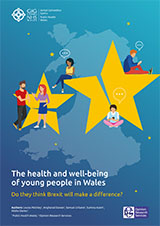
The Horizon toolkit can help public bodies and people in general to think and plan for the longer term rather than being so stuck in the here and now that they miss the opportunities , don’t spot risks or make decisions that don’t stand the test of time.
In the years that have followed the European Union (EU) referendum in 2016, Brexit has seldom been out of the news. Despite considerable activity, there was still uncertainty around Brexit at the time of this research; not just around the logistics of if, when and how the UK might leave the EU but also what the implications of Brexit might be for the UK and for Wales – or even what effect the last few years might already have had.
An increasing number of studies are identifying associations between adverse childhood experiences (ACEs) and ill health throughout the life course. We aimed to calculate the proportions of major risk factors for and causes of ill health that are attributable to one or multiple types of ACE and the associated financial costs.
Authors: Mark Bellis, Karen Hughes+ 4 more
, Kat Ford, Gabriela Ramos Rodriguez, Dineshi Sethi, Jonathon Passmore
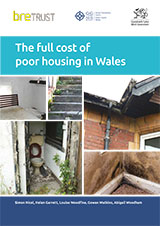
This joint report from the BRE Trust, Public Health Wales and Welsh Government looks in detail at the links between poor housing conditions, in this case ‘hazards in the home’ and their impact on health and well-being and cost to the NHS and wider society. It supplements findings in the previously published Making a Difference Housing and Health: A Case for Investment report, and also builds on previous publications by the BRE Trust and Shelter.
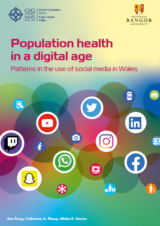
This report examines population health in a digital age and focuses on social media use in Wales. These insights help us to better understand the extent to which people in Wales use social media, and how patterns of use vary across population groups. The findings challenge some preconceptions (for example, that only younger age groups engage with social media), and identify opportunities warranting further consideration.
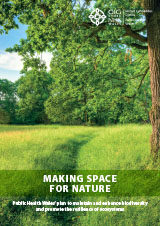
Nature is declining globally at rates unprecedented in human history and the rate of species extinctions is accelerating, with grave impacts now likely on people around the world. Our health and well-being depends upon a healthy environment, which includes using our natural resources in a sustainable way and supporting biodiversity.
This e-guide will help individuals take action for biodiversity at every opportunity to reverse its decline in Wales and globally, for its intrinsic value, and to secure our own well-being.
Making Space for Nature is Public Health Wales’ Biodiversity Plan to maintain and enhance biodiversity and promote the resilience of ecosystems.
Healthy ecosystems are vital for health and well-being, providing our food, clothing and medicines, regulating our air and water and controlling disease. However, biodiversity is in decline.
The Environment (Wales) Act 2016 sets out the requirement for the ‘sustainable management of natural resources’ together with new ways of working to achieve this. Under the Environment (Wales) Act 2016, public bodies are required to maintain and enhance biodiversity and promote the resilience of ecosystems in order to reverse this trend, as part of the S6 Duty.
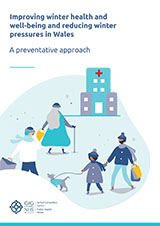
This report aims to describe the impact of winter and cold weather on health and well-being in Wales and the subsequent effects on health and care services, in a way that can inform strategic planning for the future.
Authors: Sumina Azam, Thomas Jones+ 4 more
, Sara Wood, Emily Bebbington, Louise Woodfine, Mark Bellis
This technical report acknowledges the effects of traditional seasonal factors that cause poor health such as influenza and injuries due to falls, as well as finding wider issues such as poverty, poor housing and unhealthy behaviours having a significant impact on winter health and well-being.
Authors: Sumina Azam, Thomas Jones+ 4 more
, Sara Wood, Emily Bebbington, Louise Woodfine, Mark Bellis
Efforts for local violence prevention have used mainly emergency department (ED) data to inform police operations. However, research has shown the effectiveness of health data sharing in violence prevention. This project builds on this evidence and utilises data from Police, the Ambulance Service and EDs from three health boards to provide a holistic representation of violence at a local level so that contributing factors can be identified and used to inform preventative action. This report outlines the set up of a local routine surveillance system to inform violence prevention.
SIFT stands for Sustainability Improvements For Teams and the SIFT workshop is being developed to support the delivery of the Well-being of Future Generations Act which:
• makes public bodies accountable for appropriately embedding the five ways of working in all work;
• requires public bodies to demonstrate how they have done this. SIFT workshops create an evidence base and this pool of evidence can be incorporated into the objectives of the organisation to support improved learning, planning, collaboration and delivery of the Wellbeing of Future Generations Act.
This is a short supplementary follow up report and builds on a detailed analysis of The Public Health Implications of Brexit in Wales: A Health Impact Assessment Approach, originally published in January 2019, which examines the potential effects of Brexit on the short, medium and long-term health and well-being of people living in Wales.
Authors: Louisa Petchey, Liz Green+ 5 more
, Nerys Edmonds, Mischa Van Eimeren, Laura Morgan, Sumina Azam, Mark Bellis
Adverse childhood experiences, including physical, sexual or emotional abuse, can have detrimental impacts on child and adult health. However, little research has explored the impact that such early life experiences have on oral health. This study examines whether experiencing adverse childhood experiences before the age of 18 years is associated with self-reported poor dental health in later life.
This resource provides key learning and actions that public bodies, policy makers and practitioners can take to implement the sustainable development principle, as set out in the Well-being of Future Generations (Wales) Act 2015.
Authors: Victoria Hands, Radu Cinpoes+ 8 more
, Fatima Annan-Diab, Annette Boaz, Carol Hayden, Richard Anderson, Alisha Davies, Sumina Azam, Cathy Weatherup, William King
This report is the first in a series of reports that has sought to understand the landscape in policing vulnerability across Wales, which in turn will support the E.A.T programme approach. It outlines the reality of responding to vulnerable individuals for frontline officers, the enablers and blockers in current service delivery and examines the introduction of the Adverse Childhood Experience Trauma-Informed Multi-agency Early Action Together training (ACE TIME training). This report provides the individual, situational and organisational context within which to view post-ACE TIME training findings and provide key recommendations when preparing to deliver a National transformational and cultural change programme within policing.
Authors: Emma Barton, Michelle McManus+ 7 more
, Georgia Johnson, Gabriela Ramos Rodriguez, Annemarie Newbury, Hayley Janssen, Felicity Morris, Bethan Morris, Jo Roberts
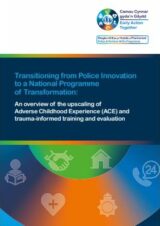
This report provides a high-level overview of the journey and transition from the localised South Wales Police PIF project to a National Programme of Transformational change. It details the key framework of the E.A.T programme, its aims and objectives, key roles, mechanisms of delivery in the ACE TIME training and evaluation measures used. The findings from a small pilot study are presented, which considers the fidelity of the training package and the evaluation tools developed to measure the impact of the training prior to national roll-out.
The article was published by Journal of COMMUNITY SAFETY & WELL-BEING, and provides a narrative of the delivery of the ACE TIME training to police officers and partners, as part of a Wales-wide police transformation. This highlights that following training, officers are identifying and applying root cause understanding of crime and harm and developing public understanding of existing early intervention assets and pathways of support in their local area. The article also provides considerations for future planning to ensure approaches continue to be embedded.
Authors: Jo Ramessur-Williams, Annemarie Newbury+ 2 more
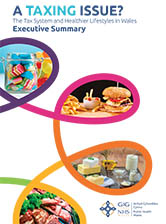
The report focuses on contemporary population health concerns related to diets where taxation has been considered or implemented elsewhere, and/or is a viable innovation within the Welsh context. Excluded from the scope of this report are topic areas where taxation and other fiscal policy approaches are already in place by UK Government (for example, on alcohol and tobacco) and environmental-related taxation.
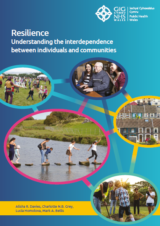
This report supports action by bringing together evidence and understanding of resilience at an individual and community level and the interdependence between them, how to measure change in resilience (Section 4), and provides an overview of programmes which seek to strengthen resilience at an individual and community level.
Health inequities are not inevitable. Coordinated policy action on the determinants of health combined with well designed and implemented governance approaches have a dual effect on reducing the health gap and improving overall population health. This guide is the first product developed under Public Health Wales’ WHO Collaborating Centre (WHO CC) on Investment for Health and Well-being work programme and outlines four key phases on how to synthesize, translate and communicate public health economics evidence into policy and practice. The interrelated four phases guide the reader through the process of developing evidence-informed products, which are context and target audience specific. The guide aims to (i) prevent disinvestment in health; (ii) increase investment in prevention (public health); and (iii) and mainstream cross-sectoral investment to address the wider determinants of health and equity, driving sustainable development for prosperity for all. It has been developed based on a mixed-method approach including an evidence review, interviews with national and international experts, and a multisectoral stakeholder consultation which ensured relevance and transferability across sectors, contexts, settings and countries.
To provide the best experiences, we use technologies like cookies to store and/or access device information. Consenting to these technologies will allow us to process data such as browsing behavior or unique IDs on this site. Not consenting or withdrawing consent, may adversely affect certain features and functions.
Functional
Always active
The technical storage or access is strictly necessary for the legitimate purpose of enabling the use of a specific service explicitly requested by the subscriber or user, or for the sole purpose of carrying out the transmission of a communication over an electronic communications network.
Preferences
The technical storage or access is necessary for the legitimate purpose of storing preferences that are not requested by the subscriber or user.
Statistics
The technical storage or access that is used exclusively for statistical purposes.The technical storage or access that is used exclusively for anonymous statistical purposes. Without a subpoena, voluntary compliance on the part of your Internet Service Provider, or additional records from a third party, information stored or retrieved for this purpose alone cannot usually be used to identify you.
Marketing
The technical storage or access is required to create user profiles to send advertising, or to track the user on a website or across several websites for similar marketing purposes.