Adverse Childhood Experiences (ACEs) and Diabetes: A brief review
This document presents findings from a brief review undertaken to identify specific relationships between ACEs and type 1 and type 2 diabetes.

This document presents findings from a brief review undertaken to identify specific relationships between ACEs and type 1 and type 2 diabetes.
This report examines the rollout of the Criminal Justice ACEs training packages and Trauma Awareness Training to prison and probation staff in Wales.
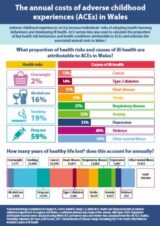
An infographic highlighting the annual costs of adverse childhood experiences (ACEs) in Wales. ACEs increase individuals’ risks of adopting health-harming behaviours and developing ill health. ACE survey data was used to calculate the proportion of key health risk behaviours and health conditions attributable to ACEs and estimate the associated annual costs to Wales.
This report explores the impact of COVID-19 and the associated health protection measures on children and young people through a review of the available literature and analysis of multi-agency data. It captures the inequitable and long-term impact that the pandemic could have on children and young people, and highlights considerations for mitigating these negative consequences.
Adverse childhood experiences (ACEs) have a negative impact on childhood health, but their impact on education outcomes is less well known. We investigated whether or not ACEs were associated with reduced educational attainment at age 7 and 11 years.
To examine the relationships between adverse childhood experiences (ACEs), chronic health and health service utilisation among a sample of general practice patients.
Prisoners are at increased risk of poor mental health and self-harming behaviours, with suicide being the leading cause of death in custody. Adverse childhood experiences (ACEs) such as child maltreatment are strong predictors of poor mental health and wellbeing yet despite high levels of ACEs in offender populations, relatively few studies have explored the relationships between ACEs and prisoners’ mental health and wellbeing.
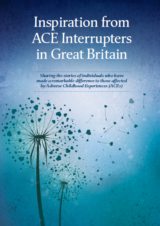
Sharing the stories of individuals who have made a remarkable difference to those affected by Adverse Childhood Experiences (ACEs).
A Study to estimate the health and financial burden of adverse childhood experiences (ACEs) in England and Wales.
This report aims to bring together what we know about ACEs in refugee and asylum seeking children arriving and settling into host countries, highlighting their nature, extent and impact.
An increasing number of studies are identifying associations between adverse childhood experiences (ACEs) and ill health throughout the life course. We aimed to calculate the proportions of major risk factors for and causes of ill health that are attributable to one or multiple types of ACE and the associated financial costs.
Examining the relationship between ACEs and future risk of homelessness.
A scoping review to explore the evidence base for retrospective routine enquiry in adults for ACEs, including feasibility and acceptability amongst practitioners, service user acceptability and outcomes from implementation.
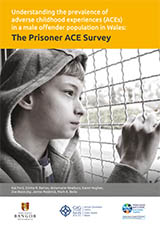
The prisoner ACE survey surveyed a prison population to understand how many ACEs they had experienced and the associations between ACEs and offending histories.
A study to examine if data routinely collected by child death overview panels (CDOPs) could be used to measure ACE exposure and examine any associations between ACEs and child death categories. Data covering four years (2012-2016) of cases from a CDOP in North West England were studied.
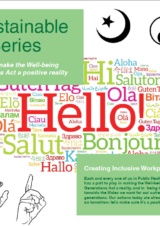
‘Creating Inclusive Workplaces’ highlights some of the practical ways in which we can contribute to Wales’ Well-being Goals by helping to create ‘a more equal Wales’ which enables people to fulfil their potential no matter what their background or circumstance.
Be the Change is a movement/campaign to encourage and support staff to take sustainable steps in the workplace to individually contribute towards Wales’ well-being goals.
Following the level of interest in the ‘Be the Change’ e-guides produced for Public Health Wales to-date, the Hub has developed a toolkit to help public bodies and wider stakeholders to adopt ‘Be the Change’ in their places of work. This toolkit aims to provide information and knowledge, but also support staff to become ‘agents of change’ by helping them to make small sustainable changes on an individual level, or by working together as teams.
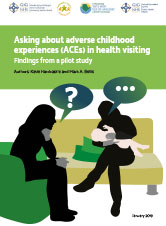
This report explores key findings from the evaluation of an initial pilot of ACE enquiry delivered with mothers during early engagement with health visiting services across Anglesey, North Wales. The pilot took place between October 2017 and July 2018 and engaged 321 mothers in a supportive, ACE-informed discussion about childhood adversity and its impacts on health, wellbeing and parenting.
A study to examine if, and to what extent, a history of adverse childhood experiences (ACEs) combines with adult alcohol consumption to predict recent violence perpetration and victimisation.
The ACE-informed Training for Housing resource was developed with partners in consultation with Housing representatives from different tenures across Wales, and aims to raise awareness of and increase confidence in responding to ACEs and vulnerability in the Housing sector. This report evaluates the training and makes recommendations for future ACE based training in the housing sector.
An initial exploration of the feasibility and acceptability of asking about a history of ACEs in a large multi-site GP practice in North West England. Findings explore practitioner experiences of delivery and potential impacts on patients.
The impact that Adverse Childhood Experiences (ACEs) have on children’s development and the consequent outcomes in later life have been widely evidenced. However, building resilience in children can help protect against the effects of trauma and reduce the risks of poor outcomes in adulthood. The ACE-informed whole school approach is a programme that has been developed to introduce and implement trauma-informed practices within schools. This report captures the findings from the independent evaluation of this pilot approach.
Adverse childhood experiences (ACEs) including maltreatment and exposure to household stressors can impact the health of children. Community factors that provide support, friendship and opportunities for development may build children’s resilience and protect them against some harmful impacts of ACEs. This paper examines if a history of ACEs is associated with poor childhood health and school attendance and the extent to which such outcomes are counteracted by community resilience assets.
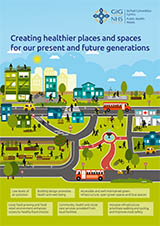
This resource demonstrates how the health and well-being opportunities afforded by the natural and built environment, such as walking and cycling infrastructure, food growing and access to nature, can contribute to a thriving, sustainable Wales for current and future generations.
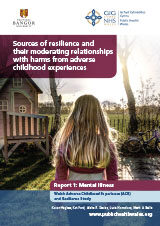
The Welsh Adverse Childhood Experience (ACE) and Resilience Survey was undertaken to examine individual and community factors that may offer protection from the harmful impacts of ACEs on health, well-being and prosperity across the life course.
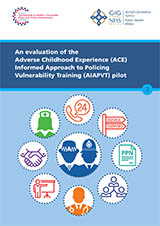
In recent years demand for policing in the UK has increased for occurrences relating to complex welfare, public safety and vulnerability. Research on the response to vulnerability by South Wales Police (SWP) identified a need for staff to be trained to understand the impact of Adverse Childhood Experiences (ACEs) and trauma to ensure that they have the right skills to assist vulnerable individuals in times of crisis and need. In response to these findings, the ACE-Informed Approach to Policing Vulnerability Training (AIAPVT) was developed. This report captures the independent evaluation of the training.
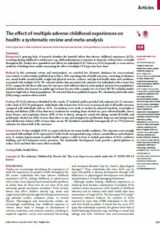
This systematic review and meta-analysis aims to synthesise findings from studies measuring the effect of multiple types of adverse childhood experiences (ACEs) on health outcomes throughout life.
This report aims to explore relationships between ACEs and both chronic disease development and health care use by adults in Wales.
This is the third in a series of reports examining the prevalence of Adverse Childhood Experiences (ACEs) in the Welsh adult population and their impact on health and well-being across the life course.
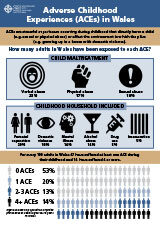
This is one in a series of reports examining the prevalence of Adverse Childhood Experiences (ACEs) in the Welsh adult population and their impact on health and well-being across the life course.