This article explores how men can be effectively supported to intervene as prosocial bystanders in incidents of sexual harassment within South Wales’ nighttime economy. Using interviews and focus groups with men aged 18–54, the research developed five behavioural “personas” that capture the diverse psychological perspectives influencing decisions to step in.
Through the COM-B model, the study identifies common barriers—particularly limited knowledge of safe intervention techniques and uncertainty around legal implications—as well as important motivational and contextual factors. The persona-based approach demonstrates that men cannot be treated as a single audience; instead, tailored strategies are needed to meet different support needs.
This social innovation narrative presents how the Violence Prevention Team and Behavioural Science Unit collaborated on the development of an implementation plan for the Wales Without Violence Framework (2023). By applying behavioural science—and specifically the COM-B model—the Violence Prevention Team worked with professionals across sectors to explore what supports and influences their ability to embed the framework’s nine principles of violence prevention into everyday practice.
The article outlines key insights into the behaviours, barriers, and facilitators identified by practitioners, and highlights how understanding capability, opportunity, and motivation can strengthen the adoption of a public-health approach across sectors. It also reflects on how this process helped the Violence Prevention Team clarify its role within the wider prevention landscape in Wales, supporting more effective coordination and resource use.
Authors: Bryony Parry, Lara Snowdon+ 5 more
, Emma Barton, Alex Walker, Joanne C. Hopkins, Alice Cline, Nicky Knowles
Recognising the importance of involving everyone in the solution, the Wales Violence Prevention Unit (VPU) has launched the ‘Engaging Men and Boys in Violence Prevention Toolkit’, in partnership with Plan International UK. This Toolkit brings together academic evidence and professional expertise to support the development of inclusive, accessible and engaging programmes for men and boys.
As part of the implementation of the Wales Without Violence Framework, the Toolkit will continue to develop to provide a range of accessible information for understanding, supporting, and critically assessing the role that programmes designed to specifically support men and boys can play in preventing violence. At this stage, the toolkit consists of two reports and an infographic:
-“You’ve given me the courage to challenge how boys treat girls” Key Findings from ‘Test and Learn’ Projects in Wales- this report shares findings from focus groups with Plan International UK’s Test and Learn projects. Primarily, it explores evidence from practice and from literature on enablers and barriers to engaging men and boys in violence prevention.
-Investing in allies and ambassadors- Engaging men and boys in violence prevention: A Review of Programmes in Wales- this report showcases Welsh programmes that aim to engage men and boys in violence prevention. These programmes were identified by professionals as part of a survey, and this report provides considerations for practitioners, researchers, policy makers and commissioners on project development, including evaluation, and project delivery.
-An infographic which draws out the key considerations from both reports for designing and delivering programmes to engage men and boys in preventing violence.
To explore the Toolkit, click here: https://waleswithoutviolence.com/resources
Authors: Alex Walker, Lara Snowdon+ 4 more
, Shauna Pike, Bryony Parry, Emma Barton, Anne-Marie Lawrence
#SafeToSay seeks to prevent sexual harassment through encouraging prosocial bystander responses towards sexual harassment or its warning signs in night life spaces.
Building on the evaluation of Phase One of #SafeToSay, Phase Two was delivered by the Wales Violence Prevention Unit, with funding from the South Wales Police and Crime Commissioner, as part of the Home Office Safety of Women at Night (SWaN) fund.
This evaluation has used findings from social media and website analytics, as well as the responses to a post-campaign public perception survey.
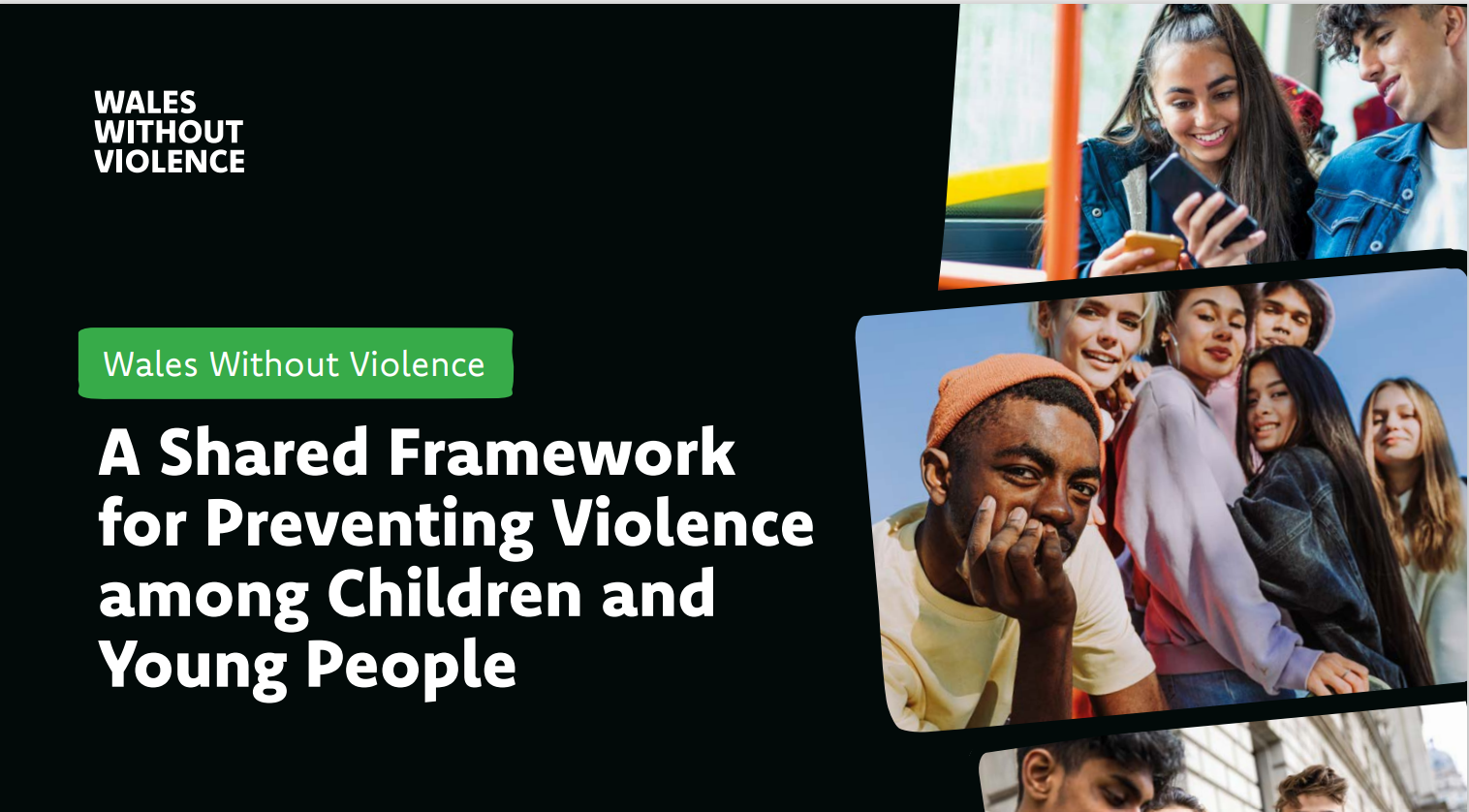
Preventing violence among children and young people requires collective and coordinated action.
The Wales Without Violence Framework outlines the key elements needed to successfully develop primary prevention and early intervention strategies to end violence among children and young people through a public health, whole-system approach.
The Wales Violence Prevention Unit developed a violence prevention campaign, #SafeToSay, in collaboration with Good Night Out Campaign and with support from Welsh Women’s Aid. The campaign sought to prevent sexual harassment and violence in the night time economy as COVID-19 restrictions eased in Wales.
This evaluation reports on Phase One of the campaign, which was delivered in Cardiff and Swansea between June and July 2021. The evaluation found that overall, the campaign met its four objectives by encouraging prosocial bystander behaviours in response to sexual harassment within the night time economy.
This study, conducted by the Wales Violence Prevention Unit (VPU) and University of Exeter, explores the experiences and behaviours of bystanders to domestic violence and abuse during the COVID-19 pandemic.
Authors: Alex Walker, Rachel A Fenton+ 5 more
, Lara Snowdon, Bryony Parry, Emma Barton, Catherine Donovan, Mark Bellis
To provide the best experiences, we use technologies like cookies to store and/or access device information. Consenting to these technologies will allow us to process data such as browsing behavior or unique IDs on this site. Not consenting or withdrawing consent, may adversely affect certain features and functions.
Functional Always active
The technical storage or access is strictly necessary for the legitimate purpose of enabling the use of a specific service explicitly requested by the subscriber or user, or for the sole purpose of carrying out the transmission of a communication over an electronic communications network.
Preferences
The technical storage or access is necessary for the legitimate purpose of storing preferences that are not requested by the subscriber or user.
Statistics
The technical storage or access that is used exclusively for statistical purposes.The technical storage or access that is used exclusively for anonymous statistical purposes. Without a subpoena, voluntary compliance on the part of your Internet Service Provider, or additional records from a third party, information stored or retrieved for this purpose alone cannot usually be used to identify you.
Marketing
The technical storage or access is required to create user profiles to send advertising, or to track the user on a website or across several websites for similar marketing purposes.