The Cost of Smoking in Wales

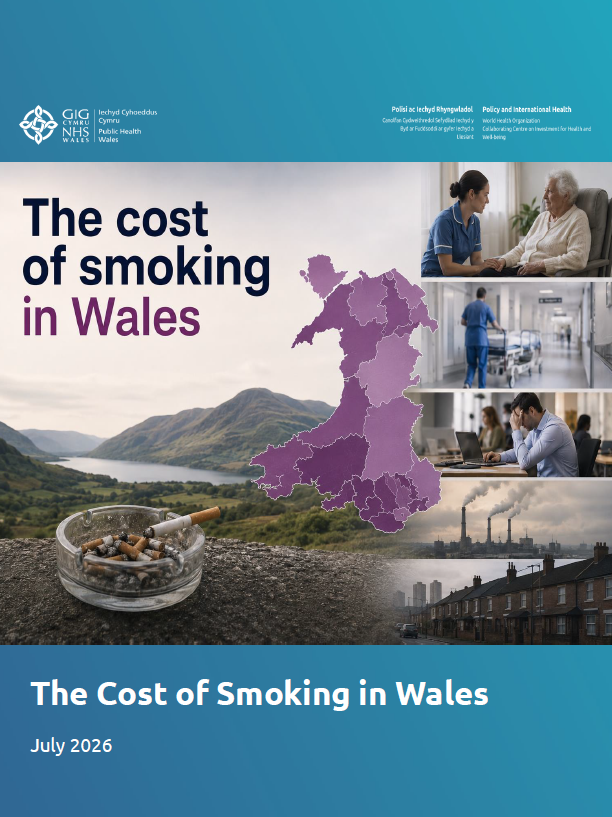
Smoking remains one of the leading causes of preventable illness, premature death and health inequalities in Wales. This report provides a comprehensive assessment of the costs of smoking across health and social care, productivity and environmental domains, offering robust evidence to support tobacco control policies, target action where the burden is greatest, and accelerate progress towards a smoke-free Wales.
Key highlights of the report:
1) Smoking causes a deep financial burden in Wales with total cost of £1.56 billion annually, including from health and social care, productivity, and environmental impacts.
2) Deprivation and area-related inequalities are a critical driver of the burden of smoking, which in turn increases health inequalities.
3) The cost of smoking in Wales is driven substantially by productivity losses and social care, and it vastly exceeds the revenue generated by tobacco taxation.
Authors: Rajendra Kadel, Brendan Collins+ 6 more
, Chris Emmerson, Mariana Dyakova, Hannah Thomas, Aronrag Meeyai, Cathy Madge, Sumina Azam

Social Return on Investment (SROI) of mental health related interventions—A scoping review

Social Return on Investment (SROI) is a methodological approach which incorporates all three aspects for evaluating interventions. Mental health problems are one of the leading causes of ill health and disability worldwide. This study aims to map existing evidence on the social value of mental health interventions that uses the SROI methodology. This scoping review is a first of its kind to focus on SROI of mental health interventions, finding a good number of SROI studies that show a positive return on investment of the identified interventions. An evidence brief has been produced outlining the key findings of the scoping review. The evidence brief highlights the social value of mental health interventions in high- and middle-income countries and outlines individual examples.

Authors: Rajendra Kadel, Anna Stielke+ 3 more
, Kathryn Ashton, Rebecca Masters, Mariana Dyakova

Investing in a Healthier Wales: prioritising prevention

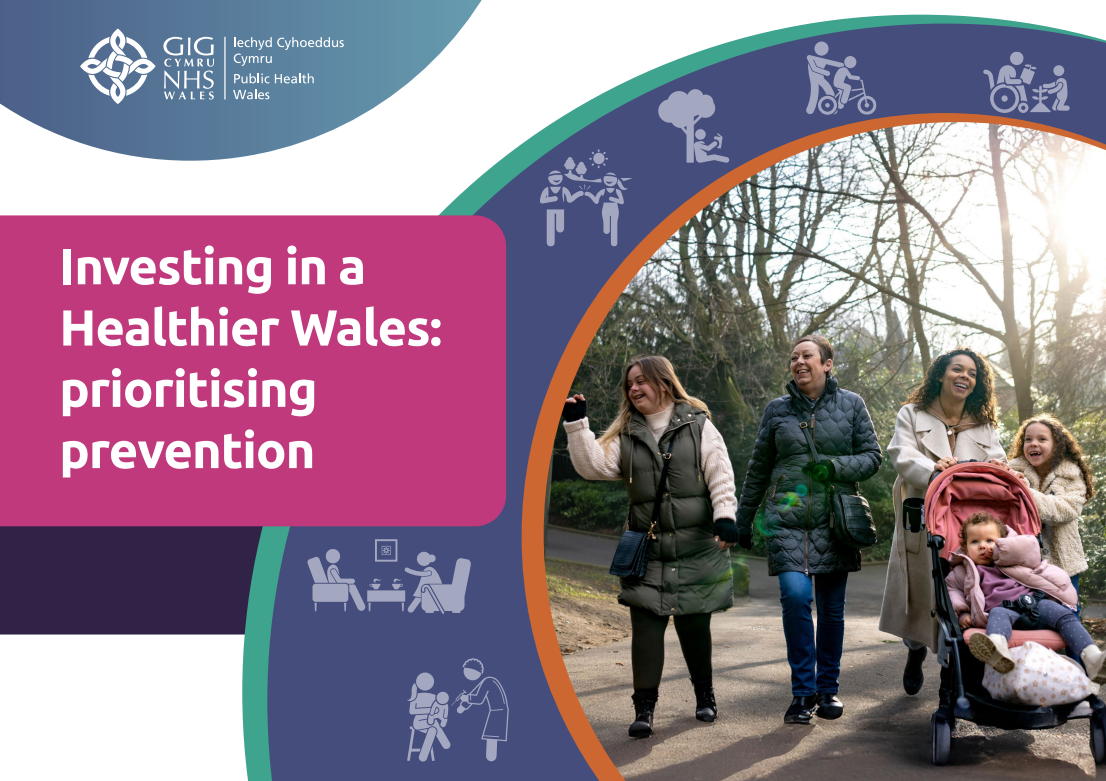
Good health is a fundamental right, but in Wales, health outcomes vary unfairly across communities. This report emphasises the importance of investing in prevention to help everyone live longer, healthier lives. Effective prevention programmes offer great value for money and essential for prioritising public funding. They can address health inequalities, reverse the nation’s health decline, and promote well-being.

The report integrates previous findings with recent research on value-for-money public health programmes, highlighting successful interventions across three life stages: early years, healthy adults, and healthy ageing. It highlights that prevention must be part of a broader strategy to reduce health inequalities, focusing on early years and poverty reduction, with targeted spending in Wales’ most deprived communities.

Authors: Rebecca Masters, Ann Jones+ 6 more
, Anna Stielke, Rajendra Kadel, Sumina Azam, Jo Davies, Leah Jenkins, Aseel Dardur
Welsh Health Equity Solutions Platform - acronym WHESP

Welsh Health Equity Solutions Platform (WHESP)

The Welsh Health Equity Solutions Platform will act as a repository of information, case studies, and previous interventions used to help combat inequity and share good practice in Wales.
The platform features searchable data tools and a report-generating function which allows users to input their search terms and produce outputs related to those terms. The platform also offers a spotlight feature that can be used to highlight particular solutions or themes.
The team will develop the platform over time to add additional content and features.

Authors: Rebecca Hill, Jo Peden+ 12 more
, Lauren Couzens (née Ellis), Mariana Dyakova, Daniela Stewart, James Allen, Liz Green, Rebecca Masters, Leah Wargent, Sara Cooklin-Urbano, Golibe Ezenwugo, Abigail Malcolm (née Instone), Jason Roberts, Rajendra Kadel

Cost of health inequality to the NHS in Wales

There are wide inequalities in health and healthcare use between people living in more deprived neighborhoods and those living in less deprived neighborhoods in Wales. Tackling health inequality through a combination of health promotion and early intervention policies targeted toward deprived communities could yield substantial improvement in health and wellbeing, as well as savings for the Welsh NHS.

Authors: Rajendra Kadel, James Allen+ 8 more
, Oliver Darlington, Rebecca Masters, Brendan Collins, Joanna M. Charles, Miqdad Asaria, Mariana Dyakova, Mark Bellis, Richard Cookson

Cost of Health Inequality to the NHS in Wales. Report 1: Cost Associated with Inequality in Hospital Service Utilisation

This report aims to estimate the financial cost associated with inequality in hospital service utilisation to the NHS in Wales to help inform decision-making and resource prioritisation towards prevention and early intervention through an equity lens, contributing to COVID-19 sustainable and inclusive recovery.
The report is accompanied by an interactive dashboard, allowing users to explore in detail, the costs associated with inequality by service category, sex, age and level of deprivation.
Please note, the dashboard is optimised for use on desktop devices.

Authors: Rajendra Kadel, Oliver Darlington+ 5 more
, James Allen, Benjamin Bainham, Rebecca Masters, Mariana Dyakova, Mark Bellis

Welsh Health Equity Status Report – WHESRi

This report aims to help inform and support a sustainable response and recovery from Coronavirus (COVID-19) in Wales, placing health equity at its heart.
It reinforces our understanding of how interdependent individual and societal well-being, and the wider economy are, towards achieving prosperity for all. The report also contributes to strengthening the leading role of Wales at the forefront of the health equity and sustainable development agenda in Europe and globally.

Authors: Mariana Dyakova, Lauren Couzens (née Ellis)+ 10 more
, James Allen, Mischa Van Eimeren, Anna Stielke, Andrew Cotter-Roberts, Rajendra Kadel, Benjamin Bainham, Kathryn Ashton, Daniela Stewart, Karen Hughes, Mark Bellis