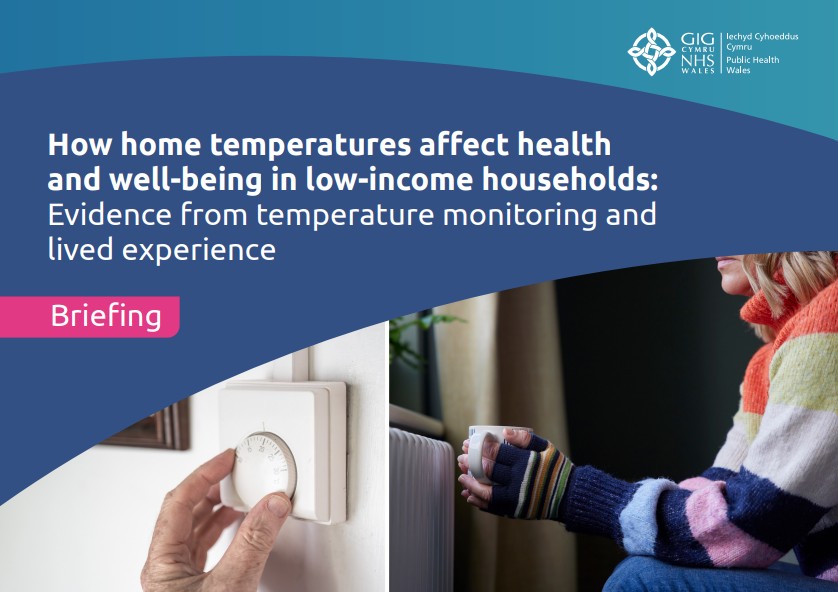
This briefing presents the experiences of 15 people living in low-income households. It draws on objective indoor temperature monitoring and interviews exploring awareness and understanding of healthy indoor temperature guidelines and the impacts of home temperature on health and well-being.
Authors: Hayley Janssen, Daniella Griffiths+ 1 more
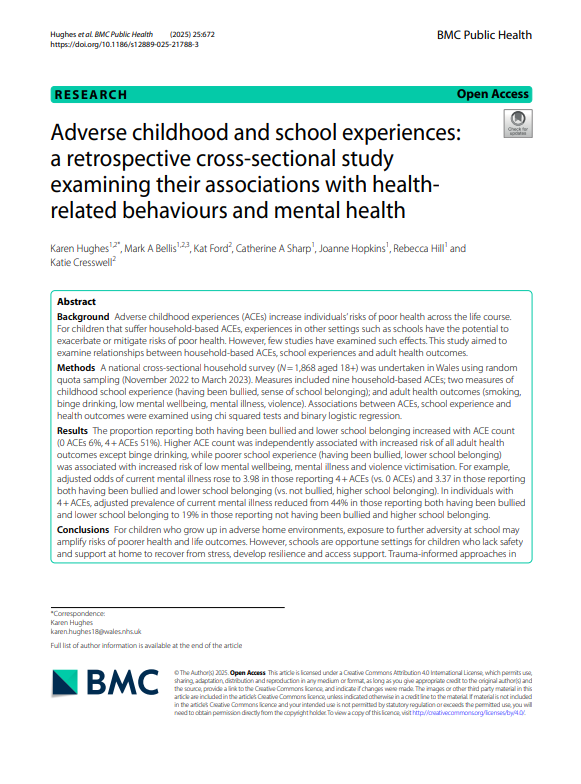
This study examined relationships between adverse childhood experiences (ACEs), school experiences and adult health outcomes in a sample of the Welsh adult general population. It found ACEs and negative school experiences (having been bullied and lower sense of school belonging) were independently associated with poorer adult mental health. Experiencing both ACEs and negative school experiences exacerbated risks of poorer mental health. The study indicates the protective role that schools may play in fostering resilience among children who experience adversity in home settings.
Authors: Karen Hughes, Mark Bellis+ 5 more
, Kat Ford, Catherine Sharp, Joanne C. Hopkins, Rebecca Hill, Katie Cresswell
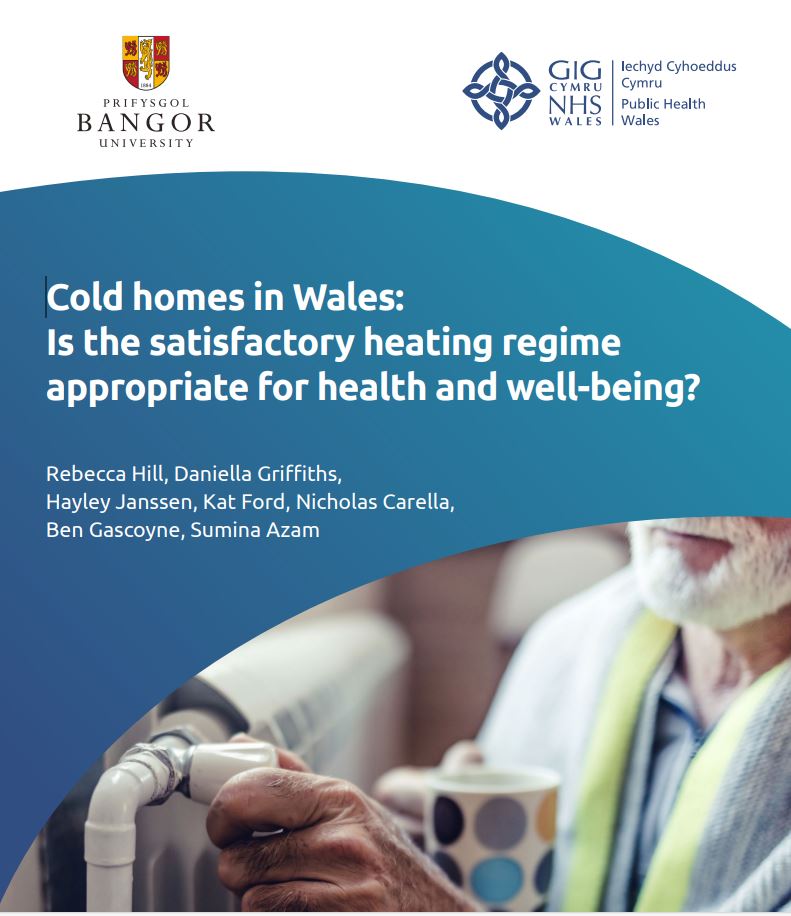
The report presents evidence that living in a colder home (at a temperature below 18°C) is linked with negative impacts on health and well-being, particularly for people who are older or who have health conditions or disabilities. The report also includes a set of recommendations on the satisfactory heating regime in Wales.
Authors: Rebecca Hill, Daniella Griffiths+ 5 more
, Hayley Janssen, Kat Ford, Nicholas Carella, Ben Gascoyne, Sumina Azam
Working towards health equity is a challenging but crucial task. Public Health Wales is seeking to support you in this work, whatever your role, by compiling a range of national and international tools that have been developed to guide this work in different contexts.
Public Health Wales has published an overview of 22 health equity frameworks and tools to support governments, organisations, and individuals to work towards health equity. Frameworks and tools were identified through searches of key international and national resources.
Authors: Jo Peden, Rhiannon Griffiths+ 3 more
, Sara Southall, Rebecca Hill, Lauren Couzens (née Ellis)
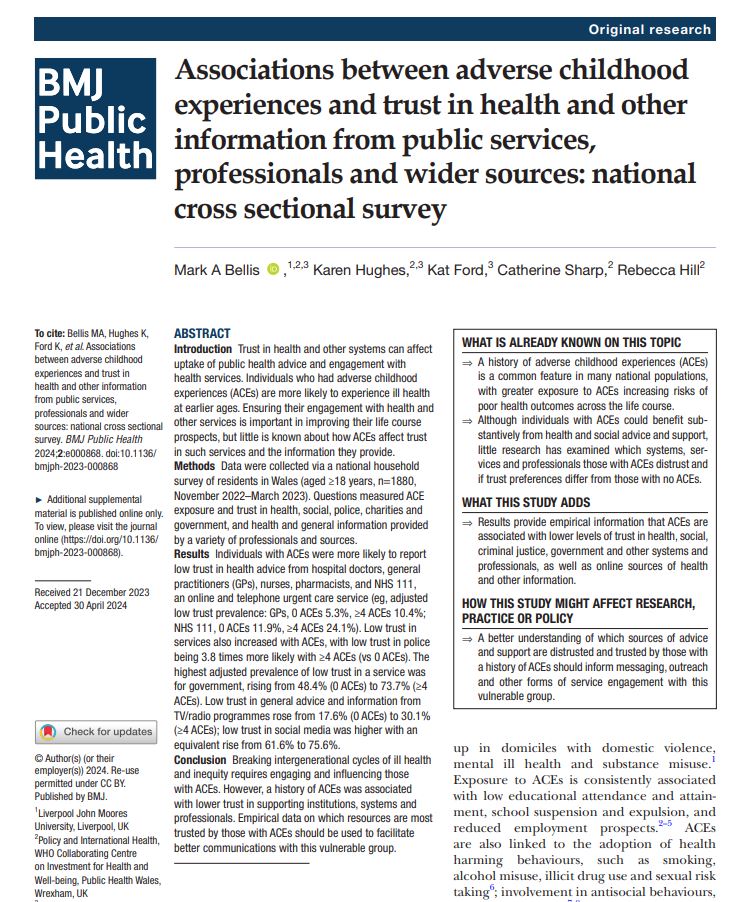
Trust in health and other systems can affect uptake of public health advice and engagement with health services. Adverse childhood experiences (ACEs) increase individuals’ risks of ill health, thus understanding how ACEs affect trust in sources of health advice and other support is important to inform engagement with this vulnerable group. This study examined associations between ACEs and trust in health advice, other information and public services in a nationally representative sample of 1,880 adults in Wales.
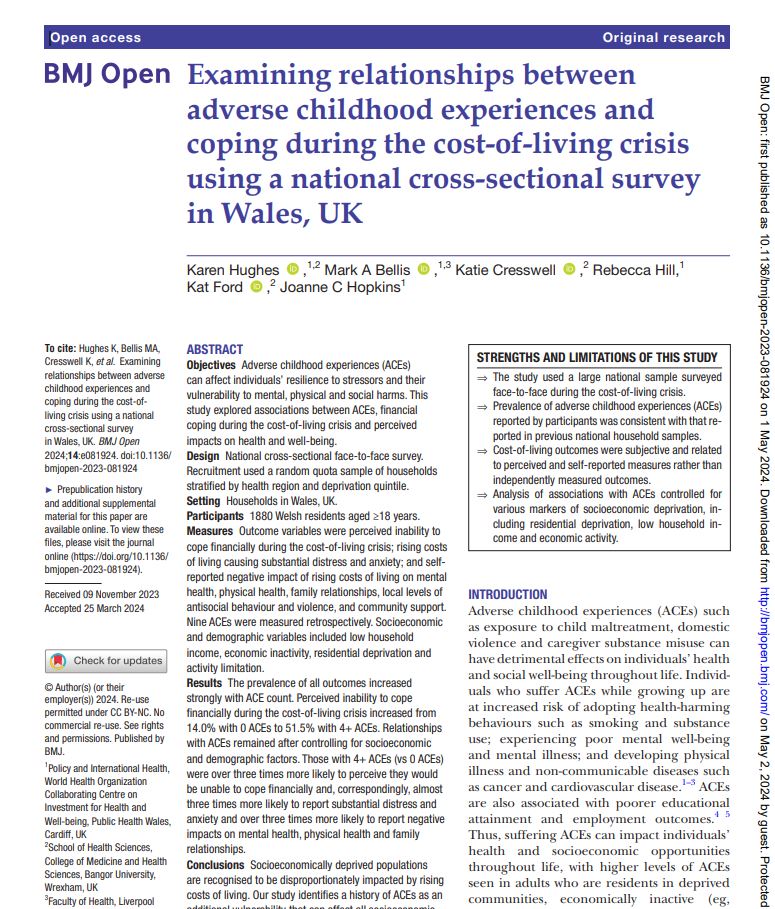
Adverse childhood experiences (ACEs) are stressful experiences during childhood such as child maltreatment and exposure to household difficulties including domestic violence, substance abuse, mental illness and family members being in prison. This study analysed data collected from 1,880 adult residents across Wales. It found that those who reported multiple ACEs in their childhood were significantly more likely to perceive they would be unable to cope financially during the cost-of-living crisis, independent of factors including household income level, employment status and residential deprivation.
Authors: Karen Hughes, Mark Bellis+ 4 more
, Katie Cresswell, Rebecca Hill, Kat Ford, Joanne C. Hopkins
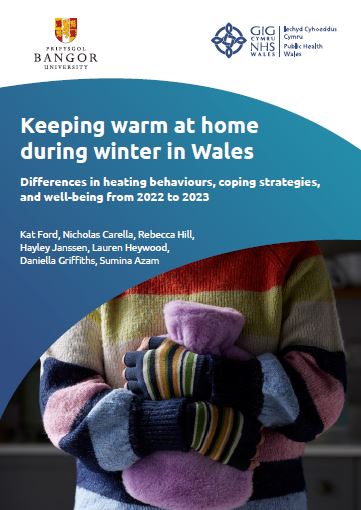
People’s homes can have a significant impact on their health and well-being. This includes the ability to keep warm at home during winter. This report describes the findings of a national household survey of residents in Wales aged 18 years and over between January to March 2022 (wave one) and repeated between January to March 2023 (wave two). The findings use a sample of 507 participants who completed both survey waves.
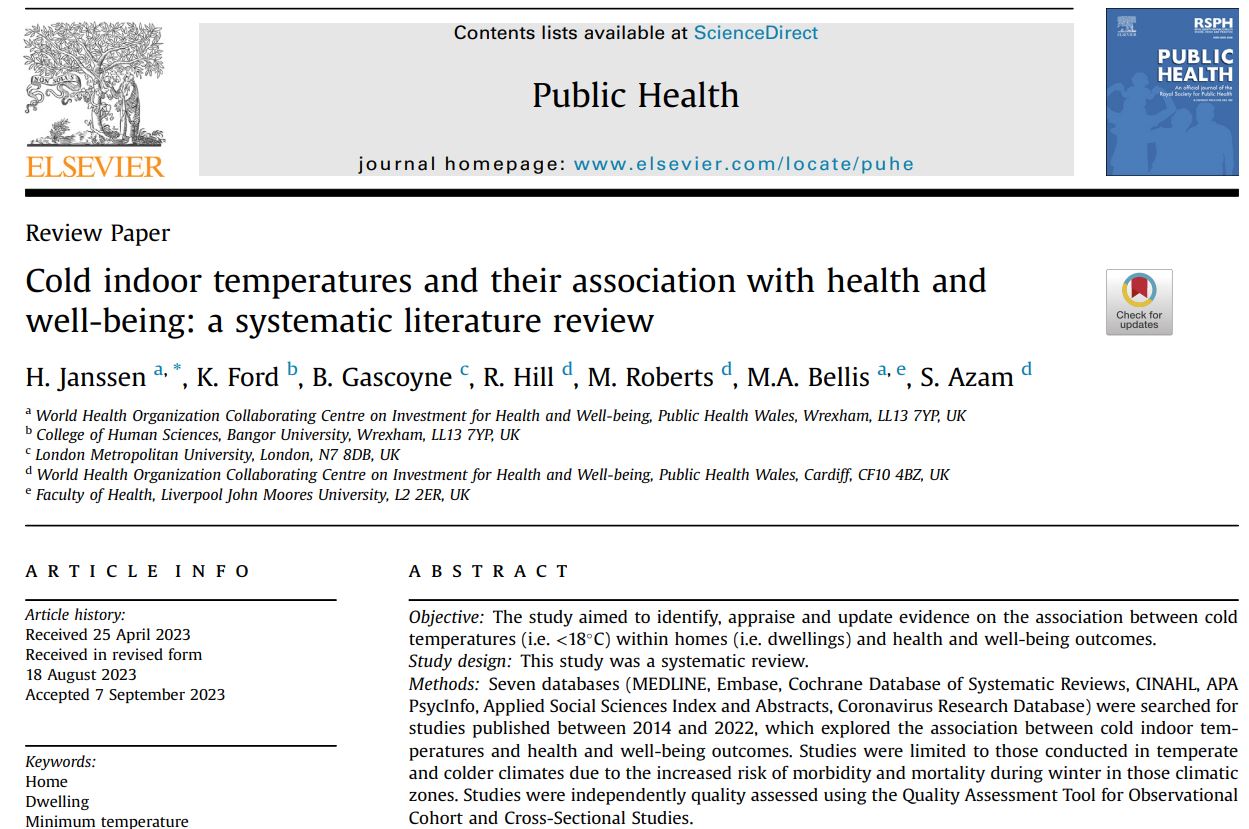
Evidence suggests that indoor temperatures <18°C are associated with negative health effects. This study aimed to identify, appraise and update evidence on the association between cold temperatures (i.e. <18°C) within homes (i.e. dwellings) and health and well-being outcomes. Significant gaps in the current evidence base are identified, including research on the impacts of cold indoor temperatures on mental health and well-being, studies involving young children, and the long-term health effects of cold indoor temperatures.
Authors: Hayley Janssen, Kat Ford+ 5 more
, Ben Gascoyne, Rebecca Hill, Manon Roberts, Mark Bellis, Sumina Azam
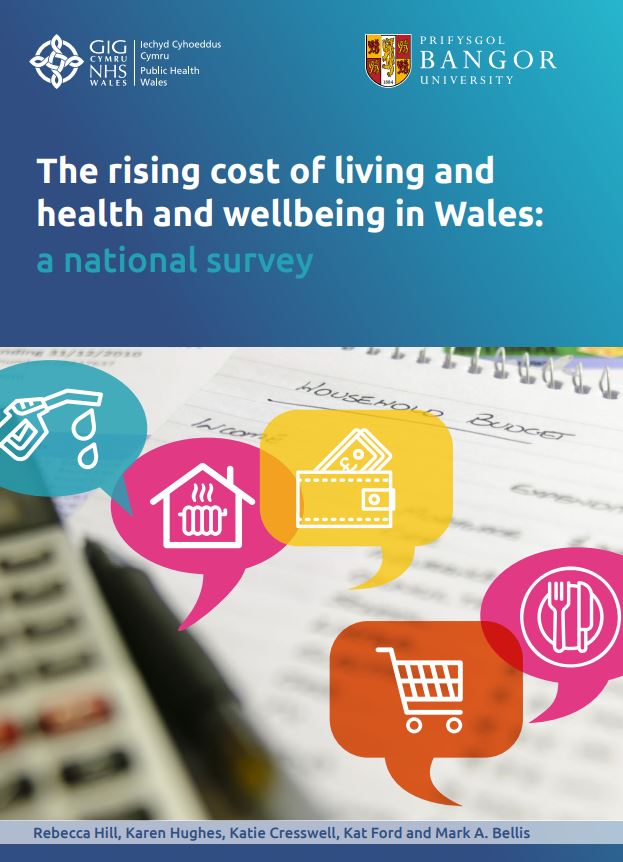
Households across Wales and worldwide are experiencing an increase in the cost of living. Since late 2021, price rises for basic items such as food and energy have outstripped increases in average wages and welfare payments, leading to a fall in real disposable incomes. As a result, increasing pressure on household budgets is making it harder for people to afford the basics and is often referred to as a ‘cost of living crisis’. This report presents the findings of a survey developed to understand how the cost of living crisis is affecting health and wellbeing among the Welsh public; their approaches and decision-making relating to rising living costs; and their awareness of and access to financial support and schemes.
This report examines the review-level evidence that is available to guide action on reducing socioeconomic inequalities in health. Evidence about public health interventions, programmes and policies applied to populations, groups and other geographically defined areas or jurisdictions was sought to explore whether they preferentially improve the health outcomes of people experiencing socioeconomic inequalities.
The Welsh Health Equity Solutions Platform will act as a repository of information, case studies, and previous interventions used to help combat inequity and share good practice in Wales. The platform features searchable data tools and a report-generating function which allows users to input their search terms and produce outputs related to those terms. The platform also offers a spotlight feature that can be used to highlight particular solutions or themes. The team will develop the platform over time to add additional content and features.
Authors: Rebecca Hill, Jo Peden+ 12 more
, Lauren Couzens (née Ellis), Mariana Dyakova, Daniela Stewart, James Allen, Liz Green, Rebecca Masters, Leah Wargent, Sara Cooklin-Urbano, Golibe Ezenwugo, Abigail Malcolm (née Instone), Jason Roberts, Rajendra Kadel
As part of a wider project to determine whether current indoor temperature standards for households in Wales are optimal for people’s comfort, health, and well-being, this review aims to identify and appraise the current evidence on the association between cold homes and health and well-being.
Authors: Hayley Janssen, Ben Gascoyne+ 4 more
, Kat Ford, Rebecca Hill, Manon Roberts, Sumina Azam
This report presents initial findings from a survey of adult residents in Wales on their perceptions of climate change and health. Whilst work to understand and mitigate climate change is gaining momentum in Wales, there remains a lack of information on population views and behaviours. Such data are critical for the co-creation of effective and acceptable approaches to climate change that help protect public health; the targeting of key messages and information; and the establishment of long-term solutions across Wales that will continue to be supported across multiple generations. To address this gap, a public survey was developed to seek the population’s views about climate change, its relationship with health, their current climate friendly behaviours, their willingness to engage in action, and views on policy solutions. This report presents initial findings from the survey, providing population-level views on climate change among adult residents in Wales.
In response to successive COVID-19 restrictions in Wales, the Welsh ACE Support Hub launched the #TimeToBeKind campaign in March 2021. The campaign used a short film broadcast on national television and promoted on social media to encourage behaviour change for kindness. This manuscript evaluates the #TimeToBeKind campaign film. Findings strongly indicated that film can be an effective tool to promote behaviour change for kindness and that even films that provoke strong emotional reactions can be positively perceived and lead to behaviour change. The findings of the evaluation are relevant to how public health messaging can adapt and utilise online space to target individuals and promote behaviour change.
The aim of this report is to strengthen knowledge and understanding of the implications of the United Kingdom’s (UK) exit from the European Union (EU) – ‘Brexit’ – on poverty, and health and well-being in Wales.
Authors: Sumina Azam, Katie Hardcastle+ 6 more
, Laura Morgan, Rebecca Hill, Michael Fletcher, Tom Johnson, Liz Green, Mark Bellis
To provide the best experiences, we use technologies like cookies to store and/or access device information. Consenting to these technologies will allow us to process data such as browsing behavior or unique IDs on this site. Not consenting or withdrawing consent, may adversely affect certain features and functions.
Functional Always active
The technical storage or access is strictly necessary for the legitimate purpose of enabling the use of a specific service explicitly requested by the subscriber or user, or for the sole purpose of carrying out the transmission of a communication over an electronic communications network.
Preferences
The technical storage or access is necessary for the legitimate purpose of storing preferences that are not requested by the subscriber or user.
Statistics
The technical storage or access that is used exclusively for statistical purposes.The technical storage or access that is used exclusively for anonymous statistical purposes. Without a subpoena, voluntary compliance on the part of your Internet Service Provider, or additional records from a third party, information stored or retrieved for this purpose alone cannot usually be used to identify you.
Marketing
The technical storage or access is required to create user profiles to send advertising, or to track the user on a website or across several websites for similar marketing purposes.