How to Make the Case for Sustainable Investment in Well-being and Health Equity: A Practical Guide

Health inequities are not inevitable. Coordinated policy action on the determinants of health combined with well designed and implemented governance approaches have a dual effect on reducing the health gap and improving overall population health. This guide is the first product developed under Public Health Wales’ WHO Collaborating Centre (WHO CC) on Investment for Health and Well-being work programme and outlines four key phases on how to synthesize, translate and communicate public health economics evidence into policy and practice. The interrelated four phases guide the reader through the process of developing evidence-informed products, which are context and target audience specific. The guide aims to (i) prevent disinvestment in health; (ii) increase investment in prevention (public health); and (iii) and mainstream cross-sectoral investment to address the wider determinants of health and equity, driving sustainable development for  prosperity for all. It has been developed based on a mixed-method approach including an evidence review, interviews with national and international experts, and a multisectoral stakeholder consultation which ensured relevance and transferability across sectors, contexts, settings and countries.
Authors: Mariana Dyakova, Kathryn Ashton+ 2 more
, Anna Stielke, Mark Bellis

Driving Prosperity for All through Investing for Health and Well-being – An Evidence Informed Guide for Cross-sector Investment

This guide identifies ten key evidence-informed policy opportunities for investment in Wales. Opportunities identified in the report address areas of high burden and cost in Wales, delivering economic as well as social and environmental returns, and supporting sustainable inclusive economic growth. The guide will help decision-makers to implement the Welsh Government’s Prosperity for All national strategy.

Authors: Mariana Dyakova, Mark Bellis+ 4 more
, Sumina Azam, Kathryn Ashton, Anna Stielke, Elodie Besnier

Do emotions related to alcohol consumption differ by alcohol type? An international cross-sectional survey of emotions associated with alcohol consumption and influence on drink choice in different settings

This article examines the emotions associated with drinking different types of alcohol, whether these emotions differ by socio demographics and alcohol dependency and whether the emotions associated with different drink types influence people’s choice of drinks in different settings.

Authors: Kathryn Ashton, Mark Bellis+ 3 more
, Alisha Davies, Karen Hughes, Adam Winstock

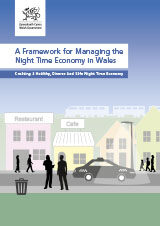
A Framework for Managing the Night Time Economy in Wales

The night time economy in Wales concerns the economic activity occurring between the hours of 6pm to 6am. This encompasses a range of activities from restaurants and establishments serving food, the on and off trade sale of alcohol, music venues and clubs with dancing and entertainment, cinemas and other leisure activities.

Authors: Kathryn Ashton, Janine Roderick+ 2 more
, Lee Parry-Williams, Liz Green

Developing a framework for managing the night-time economy in Wales: a Health Impact Assessment approach

This case study outlines the approach of a prospective Health Impact Assessment (HIA) to re-develop an existing reactive framework for managing the night-time economy in Wales. Inclusion of a range of stakeholders in the process enabled the reformulation of realistic proactive objectives which account for both health and well-being. This article highlights the benefits of HIA and can be used to inform future policy developments.

Authors: Kathryn Ashton, Janine Roderick+ 2 more
, Lee Parry-Williams, Liz Green

Investment for health and well-being: A review of the social return on investment from public health policies to support implementing the Sustainable Development Goals by building on Health 2020

There are growing public health, inequality, economic and environmental challenges across the WHO European Region that require urgent and priority-focused investment if sustainable development (meeting current needs without compromising the ability of future generations to meet their needs) is to be achieved and health and well-being ensured for present and future generations.

Authors: Mariana Dyakova, Christoph Hamelmann+ 6 more
, Mark Bellis, Elodie Besnier, Charlotte Grey, Kathryn Ashton, Anna Schwappach, Christine Charles