
Most decisions in policy, service or communications development are made by people who are not behavioural science experts, and they do not need to be. However, behavioural science can add value to the efforts of nearly all practitioners and policy makers – supporting that development is a major goal for the Unit. Developing an understanding of the basic principles of behavioural science and how to enable its application within a project, team, or organisation are key to increasing its use across the system.
Interest in behavioural science is quickly building, there are some great resources, tools, and guidance already out there for you to learn from and apply in your everyday practice. In addition to sharing our own resources, we have collated what we have found useful in the pages below.
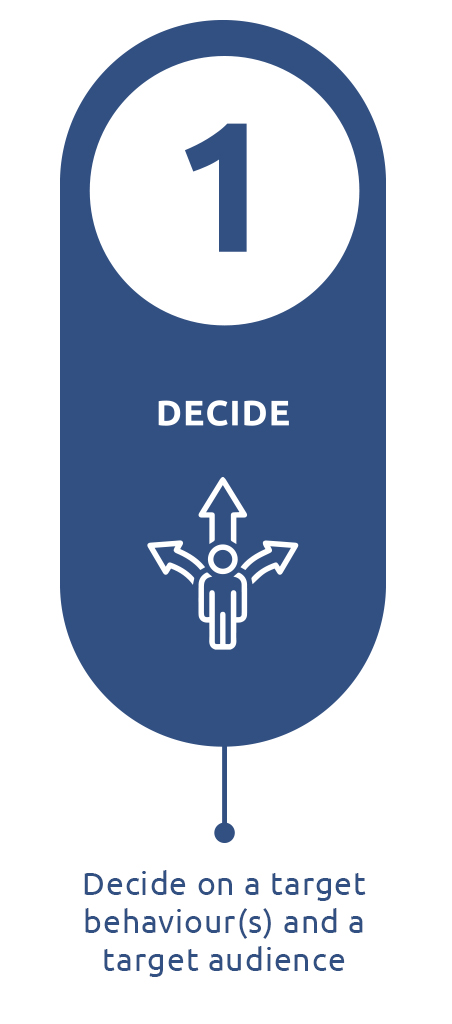
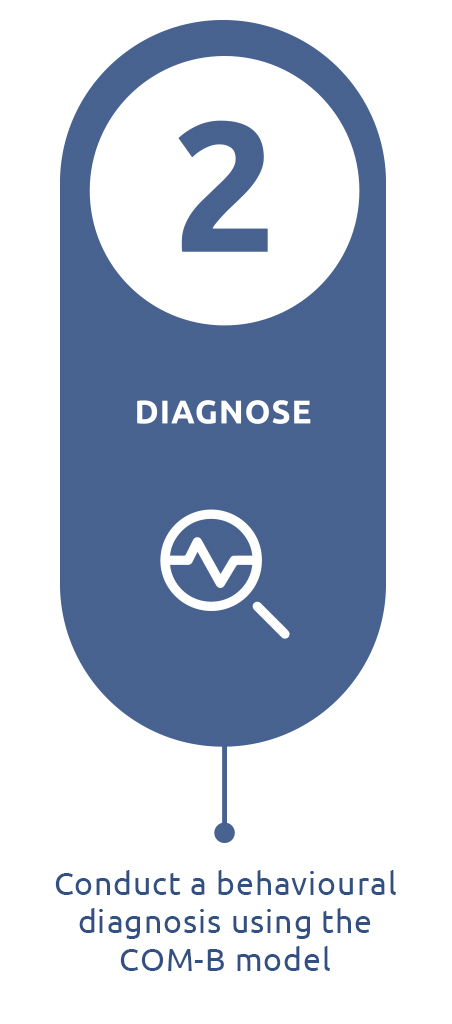
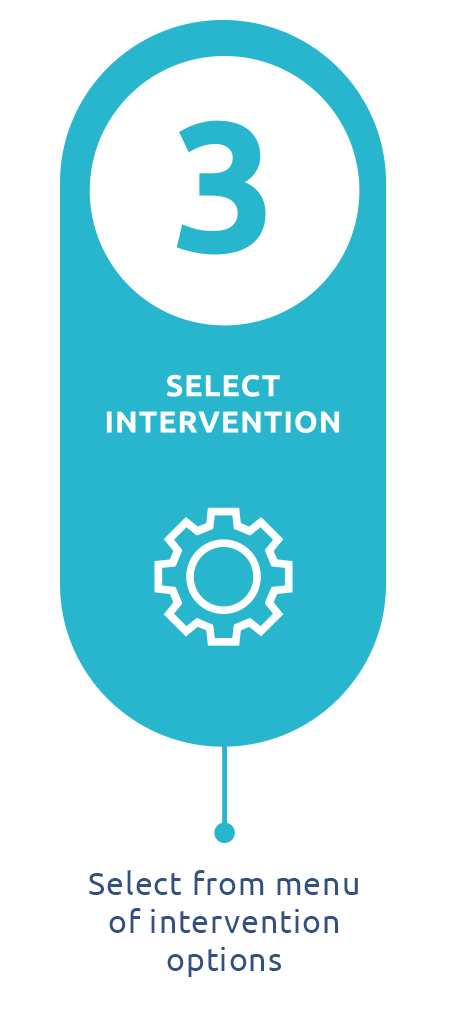
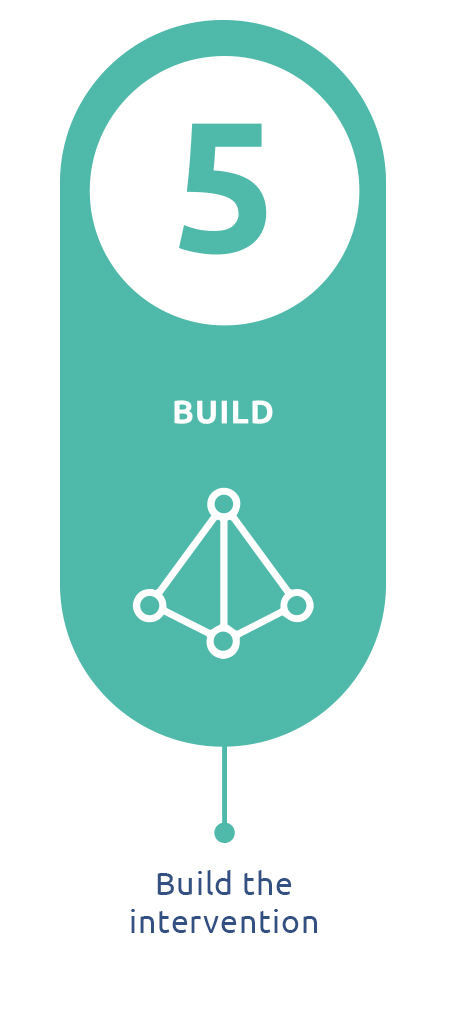
We’ve split them up depending on which step in the behavioural science process you’re currently at, more details about the steps can be found here.
Please note that some of the information links included are from external organisations and no Welsh language equivalent is available. We apologise for this.

| Title | Author | Description | Resources |
|---|---|---|---|
| Achieving Behaviour Change: A Guide for Local Government | Public Health England | A guide to applying behavioural science for local governments | View resource |
| Approaches to Behaviour Change | Health Education England | A video introducing behaviour change techniques | View webpage |
| Behaviour Change and the Environment | Local Government Association | A webpage containing useful resources to support delivering a climate behaviour change project with local government settings. | View webpage |
| Behaviour Change Techniques and Their Mechanisms of Action | Carey RN, Connell LE, Johnston M, Rothman AJ, de Bruin M, Kelly MP, Michie S. | This study identifies the links between Behaviour Change Techniques and Mechanisms of Action described by authors of a corpus of published literature. | View webpage |
| Behaviour Change Techniques Review: Descriptive Studies | Office for Health Improvement & Disparities | Guidance that explains how to use a behaviour change techniques review to evaluate your digital health product. | View webpage |
| Behaviour Change Theory | Choosing Wisely (Australia) | This document provides an overview of behaviour change theory, and the steps you need to take to apply it in practice | View resource |
| Behavioural Discovery Tool | Behavioural Science Unit | A practical, online tool to walk you through the essential considerations to understanding and influencing behaviours that may be at play in your better-health issue. | View webpage |
| Behavioural Evidence Hub | Behavioural Evidence Hub | A repository of behaviour change projects, resources and checklists | View webpage |
| Behavioural Insight Projects | Local Government Association | A repository of case studies funded by the Local Government Association, including public health, climate change, children and young people, community safety and more | View webpage |
| Cost of Living Crisis in Wales; Applying Behavioural Science (Behavioural Science Unit) | Behavioural Science Unit | An infographic explaining how COM-B can be used to increase access to services | View resource |
| Culture Change Through Communications: Applying Behavioural Science to Communications in Police Forces to Help Combat Sexism and Misogyny | College of Policing, University College London Centre for Behavioural Change | An easy-to-use reference document that draws on behavioural science principles and evidence to provide actionable advice, with the aim of supporting people working in – and with – police communications teams. | View resource |
| Designing and Evaluating Behaviour Change Interventions: The 5 Step Approach to Evaluation | Scottish Government | An evaluation resource aimed at both service providers and funders who aim to promote behaviour change. | View webpage |
| Employing Behaviour Change Roles in Local Authorities | Chadwick P, Constable M, and McManus J | A guide to understanding the key considerations to make when recruiting for behaviour change roles within local authorities including types of skill sets, job descriptions and checklists. | View resource |
| Evaluating Behaviour Change Interventions | Behavioural Science Unit | Written in collaboration with the Central Evaluation Team and Public Health Wales, this is a practical and interactive tool that identifies key points to take into consideration when you’re planning how to test and evaluate your behaviour change intervention. | View resource |
| Evidence Review: The Contribution of Behavioural Science to Addressing the Social and Wider Determinants of Health | World Health Organisation | This report was commissioned by the Behavioural Insights Unit. It discusses the contribution of behavioural sciences, broadly defined, to addressing social and wider determinants of health, and describes findings about differences and similarities between the two approaches. | View webpage |
| Exploring factors influencing the application of behavioural science within public health practice across Wales: A summary report | Behavioural Science Unit | A report into the exploration of factors influencing the application of behavioural science within public health practice across Wales. | View resource |
| From Theory to Frameworks: Putting Behavioural Science to Work | The Decision Lab | This article discusses the popular theories and frameworks used in behavioural science. | View webpage |
| Good Practice Principles for Ethical Behavioural Science in Public Policy | Organisation for Economic Co-Operation and Development | This good practice guide offers practitioners and policy makers step-by-step guidance to prompt deliberations into how to use behavioural science ethically for public policy. It is designed to be a practical resource to promote the responsible use of behavioural science in the public sector. | View webpage |
| Identifying and Applying Behaviour Change Techniques | Behavioural Science Unit | A practical, interactive tool that introduces Behaviour Change Techniques, considered to be the ‘active ingredients’ of behaviour change interventions. The tool walks you through how to identify and deliver Behaviour Change Techniques, drawing on the COM-B model and Behaviour Change Wheel. | View resource |
| IHI Psychology of Change Framework | The Institute for Healthcare Improvement | This paper is for anyone interested in understanding the underlying psychology to change and leveraging its power to impact quality improvement efforts | View resource |
| Improving health and wellbeing: A guide to using behavioural science in policy and practice (Behavioural Science Unit) | Behavioural Science Unit | A guide for practitioners and policy makers explaining how behavioural science can be used and applied in practice | View resource |
| Improving People’s Health: Applying Behavioural and Social Sciences to Improve Population Health and Wellbeing in England | Public Health England | A guide to applying behavioural and social science | View resource |
| Managing False Information in Health Emergencies: An Operational Toolkit | World Health Organisation | This toolkit provides procedures for the detection and handling of false information, using a step-wise process involving signal detection, verification, risk assessment, response design and outreach. A valuable resource to help facilitate active infodemic management, promoting accurate information dissemination and informed public health decision. | View webpage |
| MINDSPACE | The Behavioural Insights Team | This document sets out nine robust influences on behaviour, captured in a mnemonic – MINDSPACE – which can be used as a quick checklist when making policy. | View webpage |
| Nudges for Social Good: Practical Tips and Learning from the LGA’s Behavioural Insights Programme | Local Government Association | This report highlights some key learning identified by the Local Government Association through their behaviorual insights programme. | View resource |
| Podcast: Behavioural Design | Aline Golzwarth and Samuel Salzer | A podcast exploring applied behavioural science and designing for behaviour change | View webpage |
| Podcast: Behavioural Economics Team | Australian Government | A podcast discussing behavioural economics and insights with a range of academics, experts and practitioners | View webpage |
| Podcast: Nudges for Social Good | Local Government Association | A podcast hearing from council officers about their pointers and practical examples on using behavioural insights techniques in various council services | View webpage |
| Podcast: Real World Behavioural Science | Stu King | A podcast exploring how behavioural and social sciences are being used in the real world to help change the public's health | View webpage |
| Responding to the Climate Crisis: Applying Behavioural Science (Behavioural Science Unit) | Behavioural Science Unit | A guide designed to support policy makers and professionals use behaviour science to create effective interventions to respond to the climate crisis | View resource |
| The BASIC Toolkit: Tools and Ethics for Applied BehSci | Observatory for Public Sector Innovation | Methodology that looks at behaviours, analysis, strategies, interventions and change (BASIC) | View resource |
| The I-Frame and the S-Frame: How Focusing on the Individual-Level Solutions has led Behavioural Public Policy Astray | Chater, N and Loewenstein, G | This resource highlights the role of behavioural science in creating system-level change. | View webpage |
| The Implications of Behavioural Science for Effective Climate Policy | Climate Change Committee | This report reviews existing research about the effectiveness of different interventions to promote low-carbon behaviours across eight key areas. | View webpage |
| The Method Book | Monash Univeristy and Behaviour Works, Australia | Guidance on the methods and tools Behaviour Works use to change behaviour | View webpage |
| Understanding Behaviour Change | Health Education England | A collection of resources/further reading that outline why behaviour change is central to promoting health and wellbeing and addressing health inequalities. | View webpage |
| Using Behavioural Science to improve and protect health in Wales | Behavioural Science Unit | This tool is designed to capture case studies of how behavioural science has been used to optimise that impact. | View resource |
| What’s Behavioural Science Got To Do With Me? | Sheffield Hallam University | A short video introducing behavioural science, and how it's relevant to your role | View webpage |